When Thanksgiving Cooking Becomes a Boundary and Why That’s OK
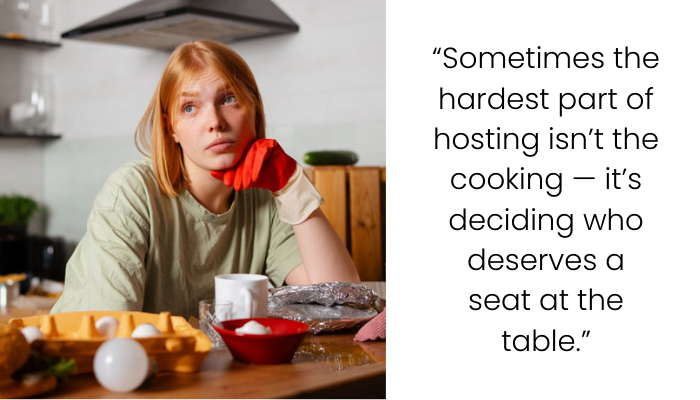
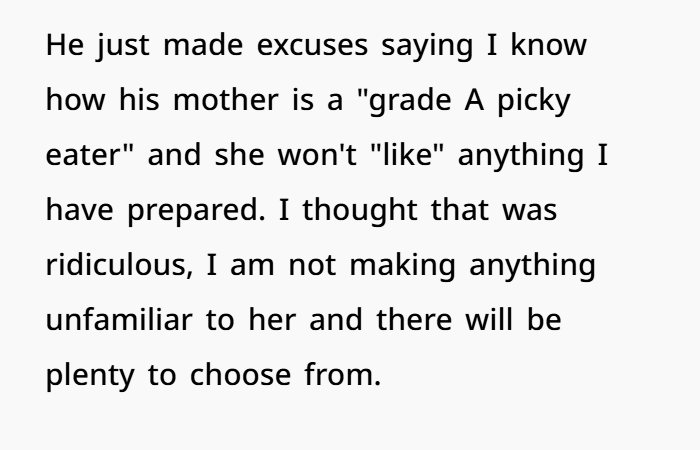
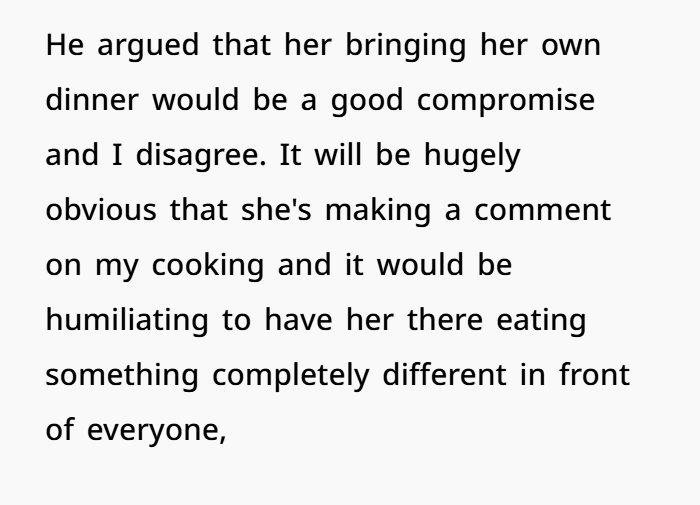
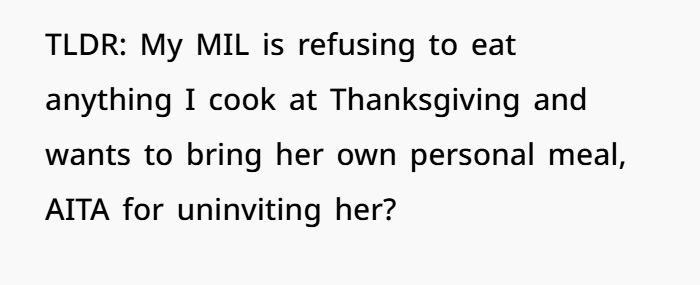
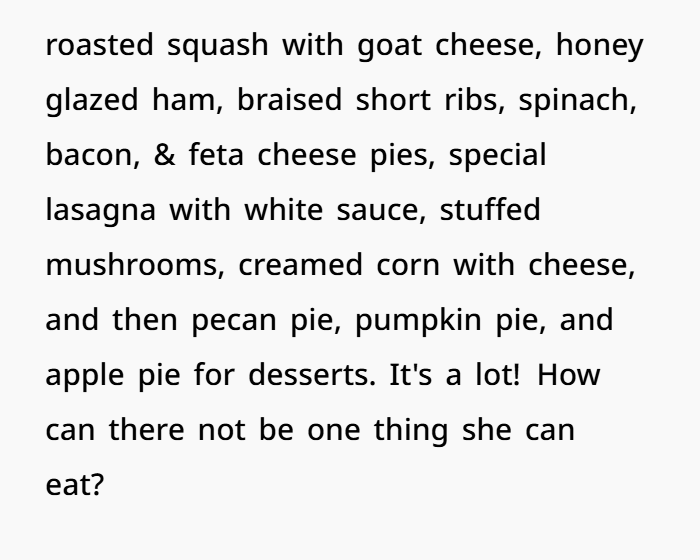
This year, a 32‑year-old woman worked all month planning a Thanksgiving feast at her home. She carefully picked recipes, tested dishes, and was genuinely excited to host — hoping to share a lovingly prepared meal with her husband, family, and friends. Everything seemed set until her husband dropped a bomb: his mom (MIL) wanted to bring her own personal meal to the dinner, because she allegedly wouldn’t “like” anything she’d eat.
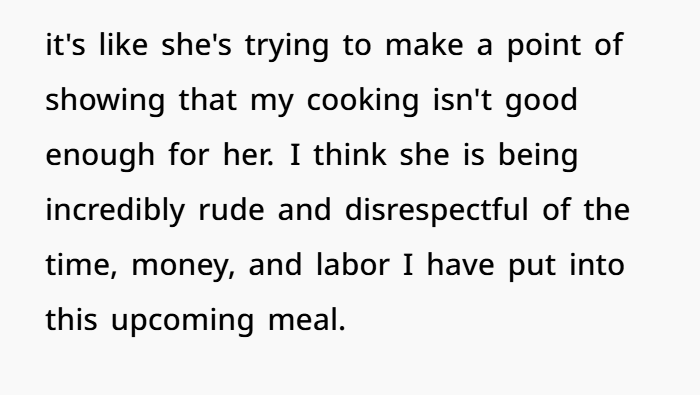
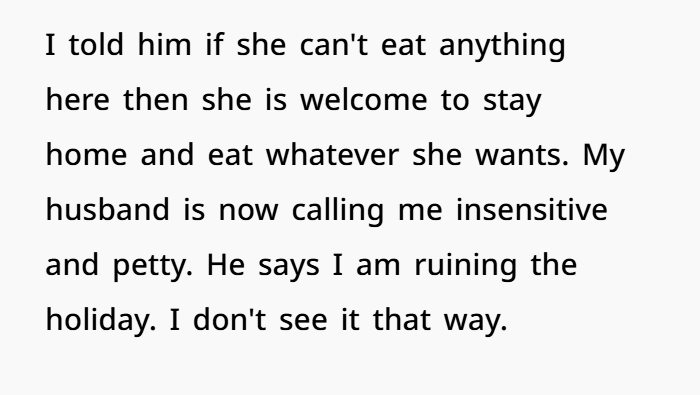
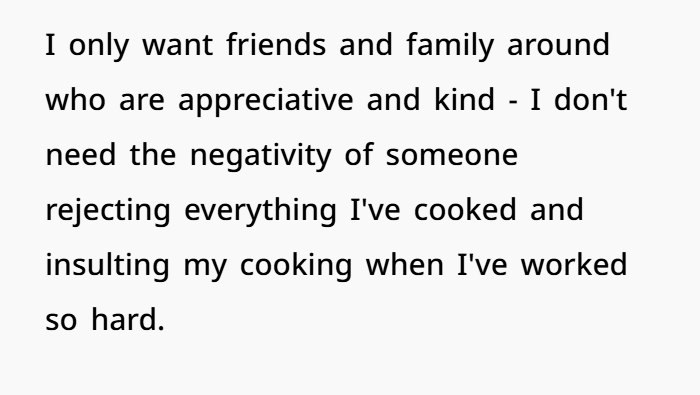
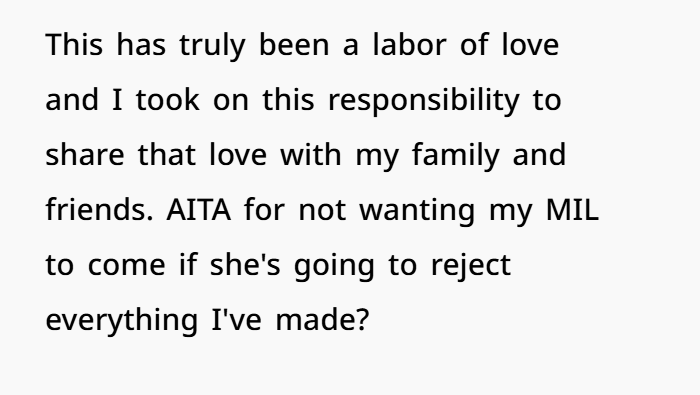
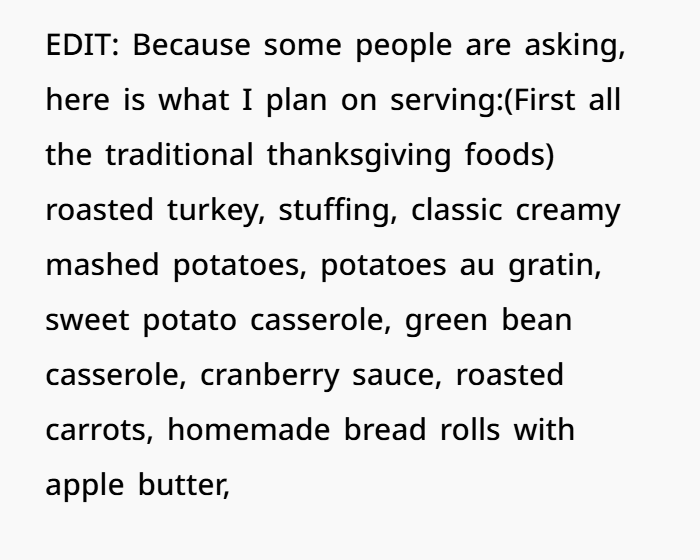
The OP felt blindsided. She had bought all the ingredients, crafted a diverse menu of traditional and creative dishes, and saw the MIL’s request as a disrespectful jab at her cooking. To her, having someone sit at the table eating separate food — especially food they brought themselves — would be more than awkward; it would be humiliating. She drew a line: if the MIL wouldn’t eat what was served, she shouldn’t come. Her husband accused her of being petty and ruining the holiday. But the OP believes she’s protecting her effort and self‑respect, and doesn’t want negativity overshadowing her hard work.
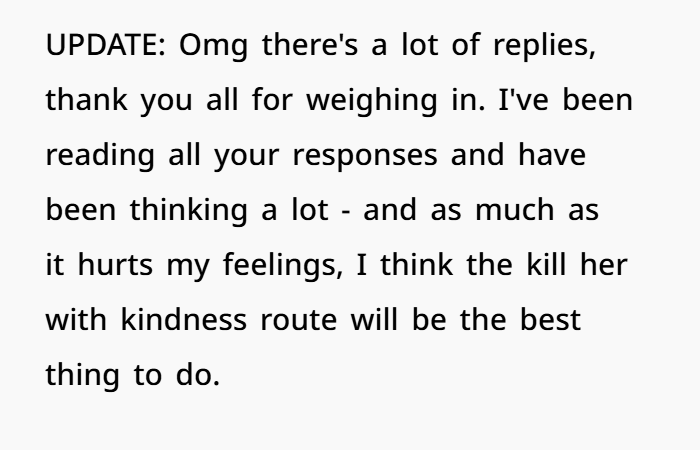
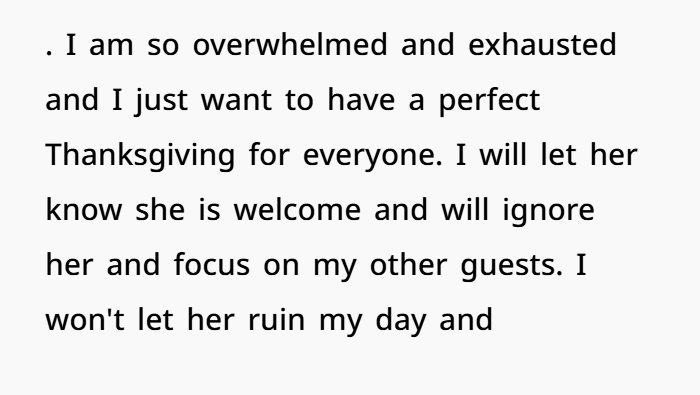
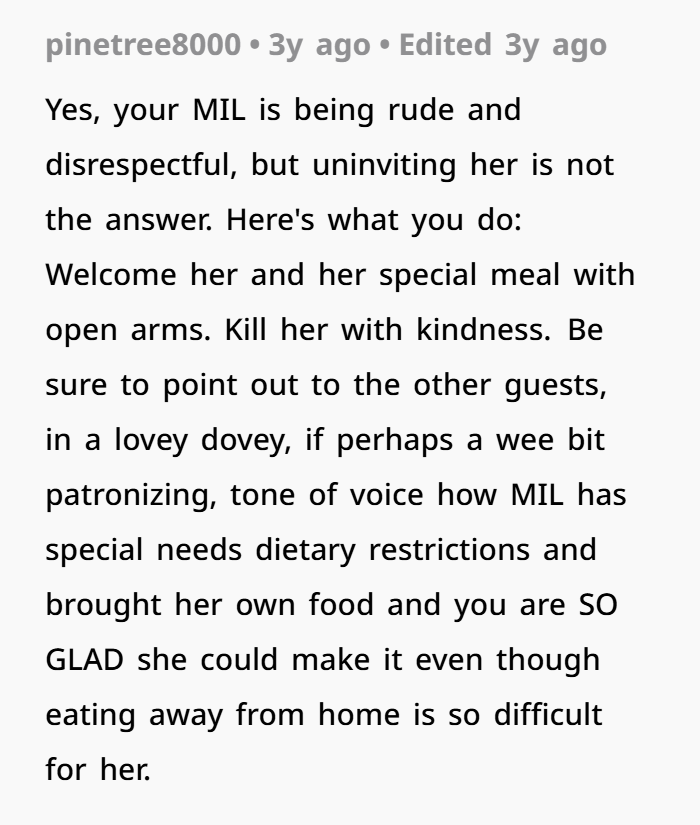
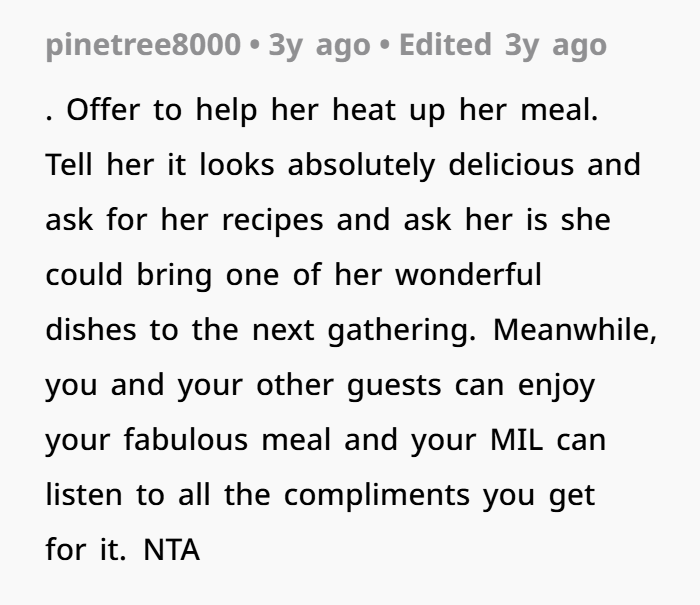
After reading feedback (including from a Reddit thread recounting a nearly identical scenario), she realized maybe the “kill‑them‑with‑kindness” route is better. So she decided to let MIL come — but only if she could try the food and be respectful. Internally, though, she’ll be focusing on her other guests, hoping the holiday stays about gratitude, not grudges.
Thanksgiving Day is by default the time for tasty food, friendly talks, joy, and peace – but sometimes all this actually does a 180

The author of the post and her husband were recently preparing to host a family Thanksgiving party, and did their best to prepare some really delicious food
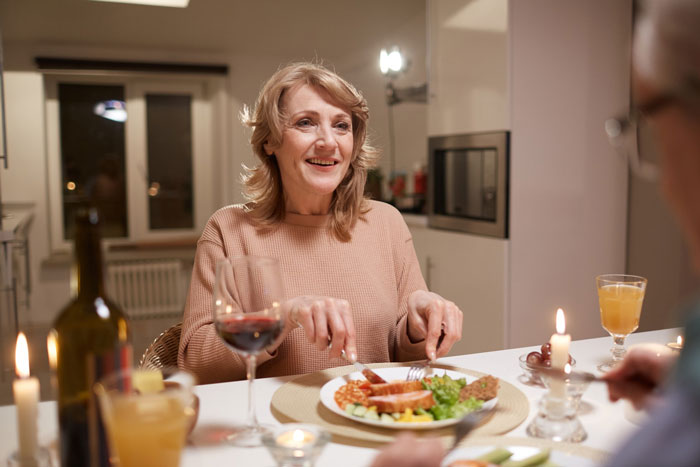
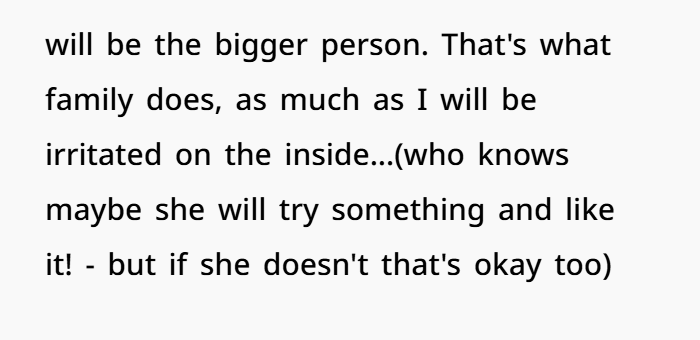
When you put on a big holiday dinner — especially something as symbol‑heavy as Thanksgiving — it isn’t just about cooking food. It’s emotional labor, tradition, hospitality — and yes, often a test of boundaries. Hosting a feast can feel like laying out a piece of yourself: your time, energy, hopes for warmth and connection. So when someone wants to come to the table with their own plate, it feels more than weird. It feels like rejection.
🍽️ Food, identity, and respect
Food — especially in a big cultural/holiday meal — carries weight. It’s more than calories. It carries memory, family heritage, comfort, sharing. When someone says, “No thanks, I brought my own,” it isn’t just a dietary preference: in some contexts, it’s a judgment. For a host who slaved over a menu, it can feel like a silent “I don’t trust your cooking,” or even “I don’t trust you.”
There’s research that people’s eating habits and preferences are shaped by upbringing and family environment. MDPI+1 But those patterns don’t always translate smoothly into social settings — and that friction can create real tension around group meals.
In families where one person is very particular (a “picky eater” or someone with food‑related anxieties), mealtimes can be especially charged. Studies on picky eating mostly focus on children, but the dynamics aren’t totally different with adults — someone may avoid foods due to discomfort, anxiety, or habit. ResearchGate+1
And when you mix that with a large feast, with many unfamiliar dishes — and possibly expectations from the host — it becomes a social minefield.

Why insist on “you eat what we serve”?
- Respect for the host’s effort. The host spends time, money, emotional energy and creativity to prepare for the gathering. Expecting separate food can feel like you’re dismissing their work. In the OP’s case, months of planning and hours of cooking were on the line.
- Maintaining the vibe of togetherness. Holiday meals — whether Thanksgiving, Eid, Christmas, or family dinners — are often symbolic: a time to break bread together, share laughter, stories, and presence. When one person isn’t eating what everyone else is, it fractures that shared space.
- Avoiding implicit criticism. Even if the picky eater tries to be polite, bringing own food sends an unspoken message: “I don’t trust this food.” That can hurt, even if it’s just about personal preference or dietary restriction.
- Setting clear boundaries. Social invitations are optional. Hosting doesn’t come with a moral obligation to include someone unwilling to participate in the shared activity. If someone can’t meet the unspoken norms — in this case, eat what’s prepared — it’s fair to disinvite.
On Reddit, people who’ve faced similar dilemmas often feel validated choosing not to invite someone who’s unlikely to eat anything. As one commenter put it in a slightly different but related scenario: “You don’t owe anyone an invite.” Reddit+1
It’s not cruel — it’s picking a crowd that will actually enjoy the dinner and the vibe.
The “picky eater” label: Not THAT simple
Calling someone a picky eater often conjures up images of kids rejecting veggies or refusing new foods. But for adults, picky eating (or something similar) can stem from deeper issues — sensory sensitivities, digestive problems, anxiety around sharing food, past trauma with meals, or simply a comfort zone built over decades. PMC+1
Because of this, social meals can trigger discomfort: pressure to conform, fear of judgment, or even shame about one’s preferences. That’s why when hosting for a big group, it helps to remember empathy — and sometimes to offer flexibility (within reason) for close family or loved ones. But that flexibility doesn’t always need to be unlimited.
According to experts on managing meals with picky eaters, one helpful strategy is to have “safe” options — simple, familiar dishes that a picky eater is likely to enjoy — while serving the bigger spread for others. Kids Creek Therapy+1 This could mean having plain bread rolls, buttered potatoes, or simple salads alongside more elaborate dishes.
But there’s a difference between accommodating an occasional guest and changing the entire event. If a “safe option” becomes an expectation every time — or if someone indicates they won’t even try anything — the host may legitimately feel disrespected.
The emotional cost of compromise
Accepting a “compromise” (your cooking + someone’s own food) might seem like the diplomatic choice — but people often underestimate the emotional cost. For the host, it can feel like:
- Their effort was undervalued.
- Their cooking is being judged before being tasted.
- Their traditions (holiday dinner together) are being diluted.
In the OP’s case, the MIL didn’t even ask for adjustments or substitutions. She simply wanted to bring her own meal — which, intentionally or not, sent a clear message: “I don’t trust your food.”
For a host who planned something with love and pride, that’s a hard pill to swallow. Especially when you’ve invested so much in the event.
Setting boundaries isn’t unkind — it’s self‑respect
There’s often pressure to “be the bigger person,” “keep the peace for the holidays,” or “just let it go for family.” And yeah, sometimes that’s worth it. But boundaries exist for a reason. They protect emotional energy. They preserve dignity. They let you enjoy your own home, your own cooking, your own time.
In social and family settings, you aren’t obligated to give everyone a seat at your table — especially if their presence consistently dampens the vibe, disrespects your efforts, or makes you uncomfortable.
Choosing who to invite (or un‑invite) isn’t cruelty. It’s exercising agency. It’s saying, “This celebration is for those who appreciate the love I put into it.”
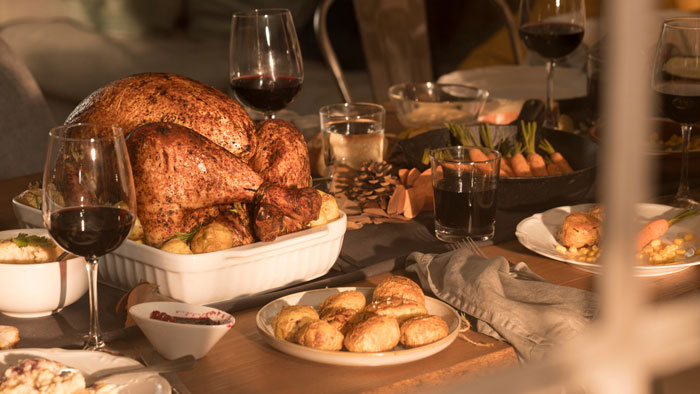
But there’s also grace in letting people try
In real life, things aren’t black‑and‑white. What if the picky eater is really important to you? A close family member, someone with health or anxiety issues, or someone whose presence is meaningful for other reasons? Then sometimes a softer approach may work:
- Offer a few “safe dishes.”
- Talk beforehand — ask if there are foods they actually like.
- Set clear expectations but stay open to compromise, if it doesn’t compromise your sanity and effort.
For many hosting-family experts, balance is key: you don’t have to toss out all your plans, but you might make minor accommodations so everyone can share at least some part of the meal. Malina Malkani+1
In the OP’s updated decision — to let the MIL come but not beg her to stay if she rejects the food — she’s choosing exactly this kind of middle ground. She doesn’t let hurt feelings and disrespect ruin her plans, but she also gives an olive branch: show up, try the meal, and if it doesn’t work — fine.
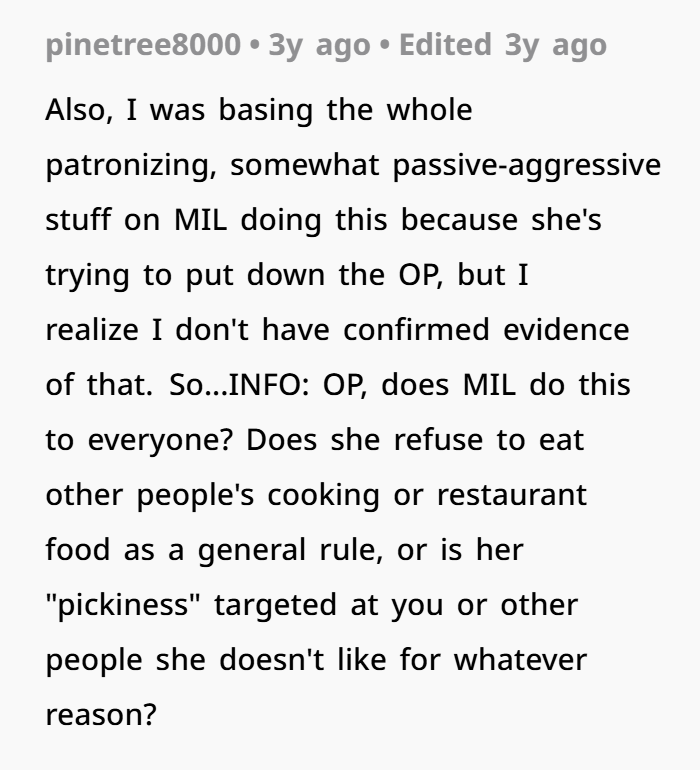
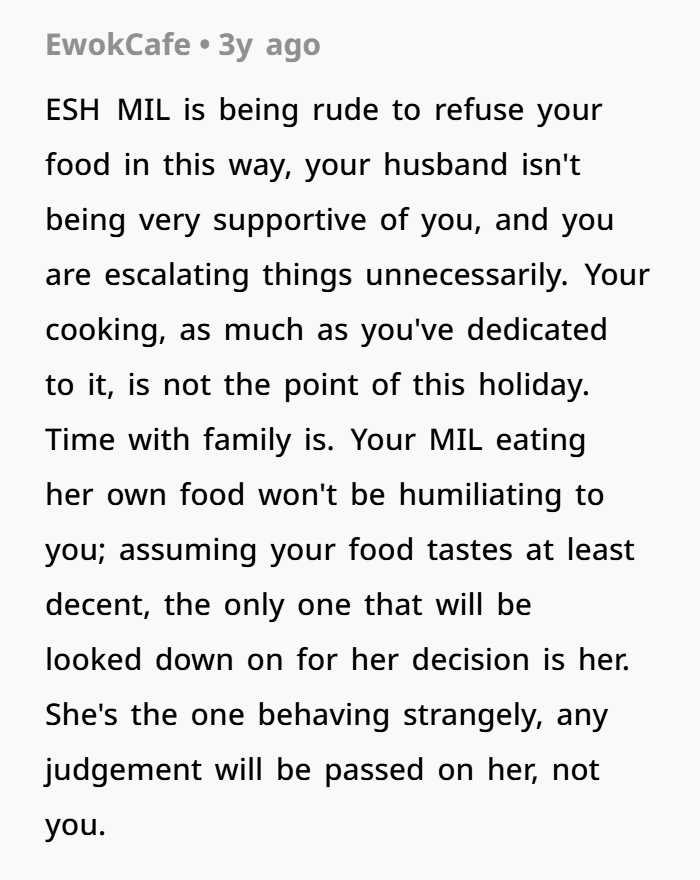
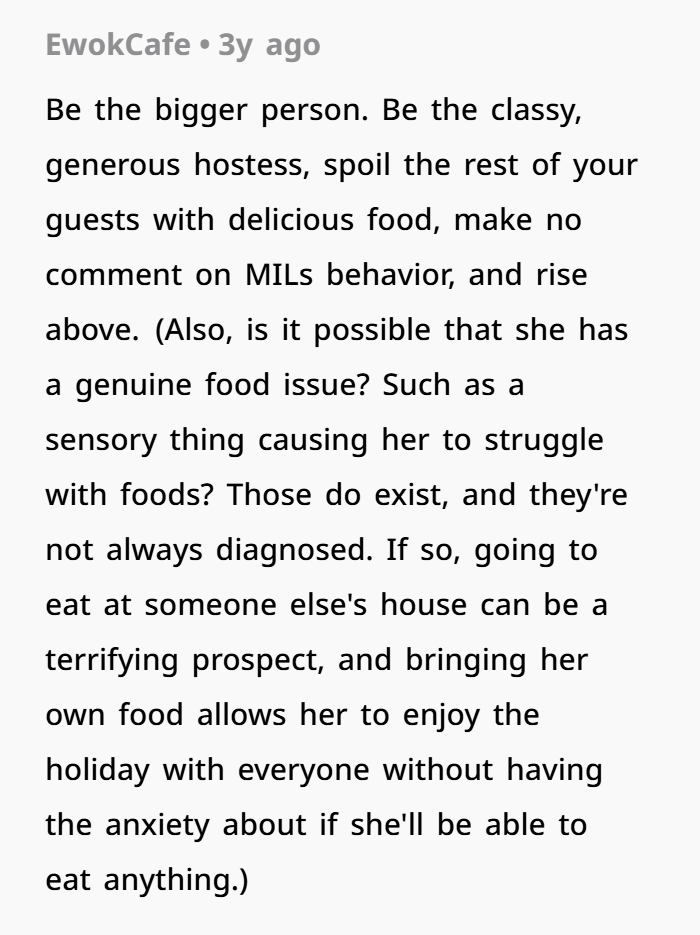
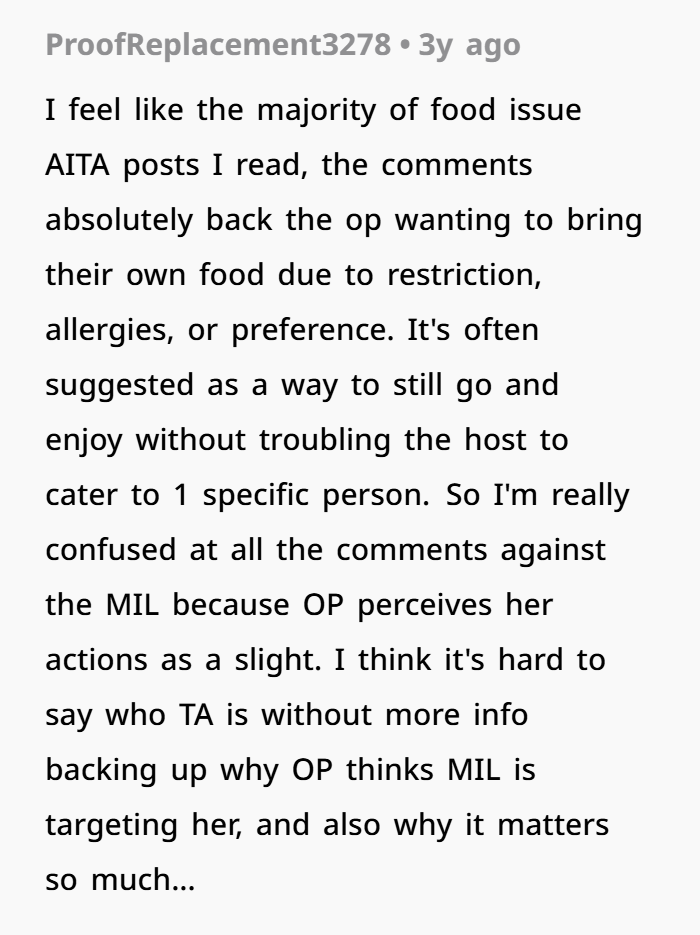
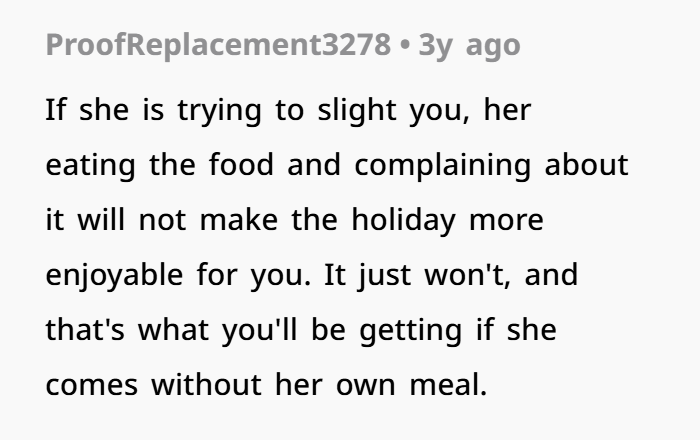
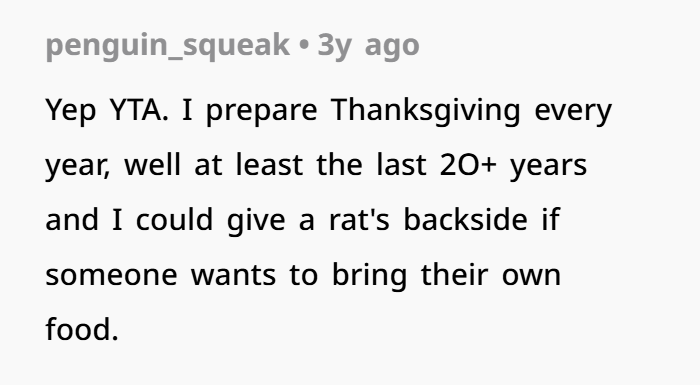
The commenters were actually very divided here, but the author herself then added, that she’ll follow the Thanksgiving traditions and invite the mother-in-law anyway


Your table reflects your values
At the end of the day, hosting a meal is a statement. Not just about food, but about respect, care, effort, and community. If someone enters that space but refuses to engage with it — literally refusing to eat the food — they’re kind of refusing to join the community.
And that’s okay. You don’t have to invite everyone. You don don’t owe participation. You have the right to set the tone, choose the guests, protect your energy — and expect a little gratitude for your time and labor.
So if you host, cook with love, and hope for warm company… it’s not unreasonable to ask for common courtesy: a taste, some openness — or politely stay home.