My Boss Ordered Me Back to the Office, So I Went to My Official Office
A senior IT professional finds himself in a difficult situation when his company suddenly changes its remote work policy. He had worked from home for six years, helping his team complete major technology projects and maintain strong results. The remote work setup had also helped the company reduce office-related costs.
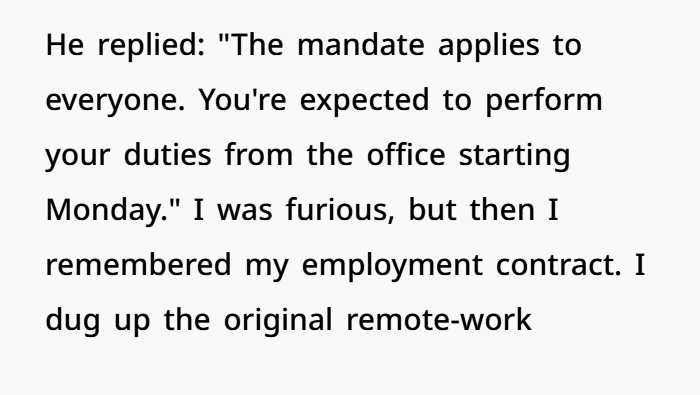
The situation changed when a new operations executive announced that everyone must return to the office full-time. The company believed that having employees together would improve collaboration and productivity. However, the employee lived far from the office and already had a written agreement allowing him to work remotely.
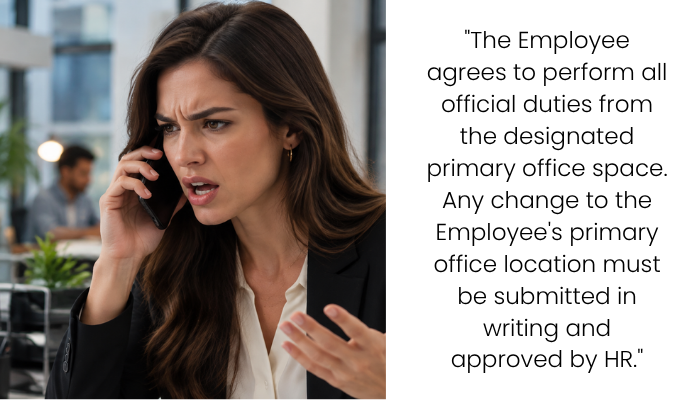
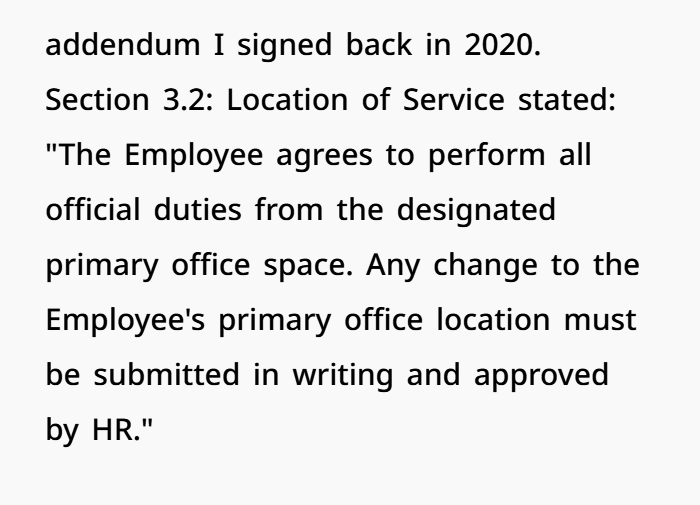
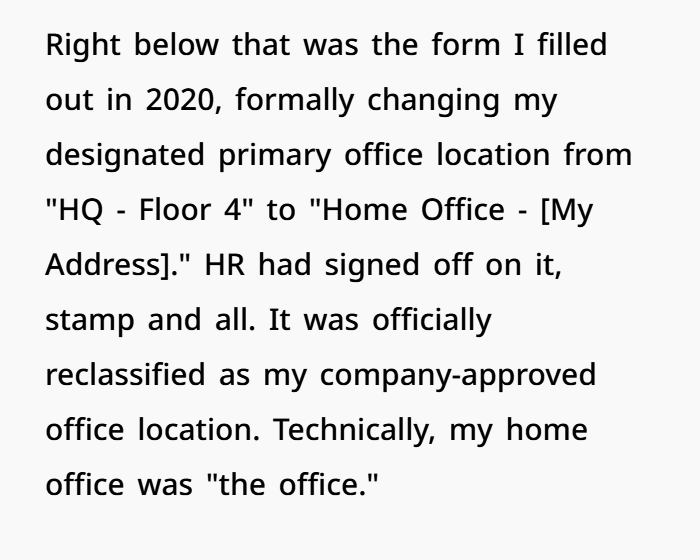
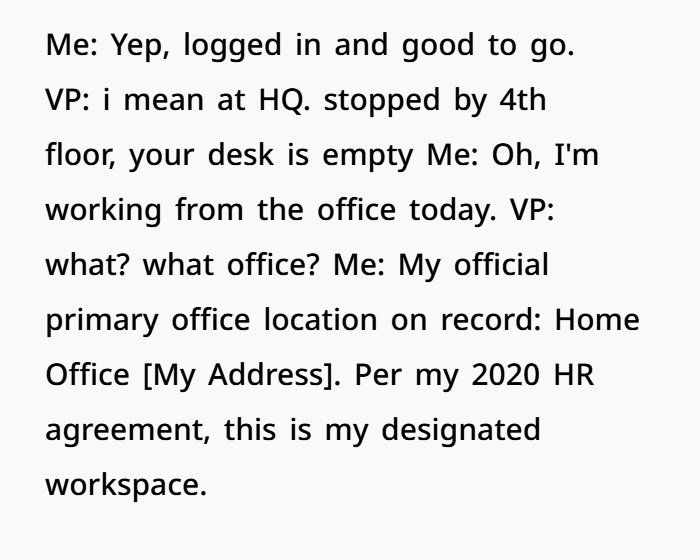
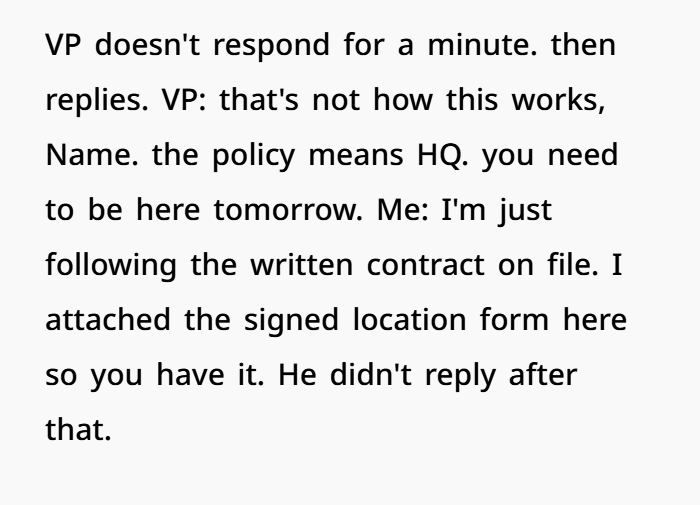
He decided to check his official employment documents before responding. He found that his remote work arrangement was formally approved by the company and that his home office was listed as his primary work location. This gave him confidence that he was following the original agreement.
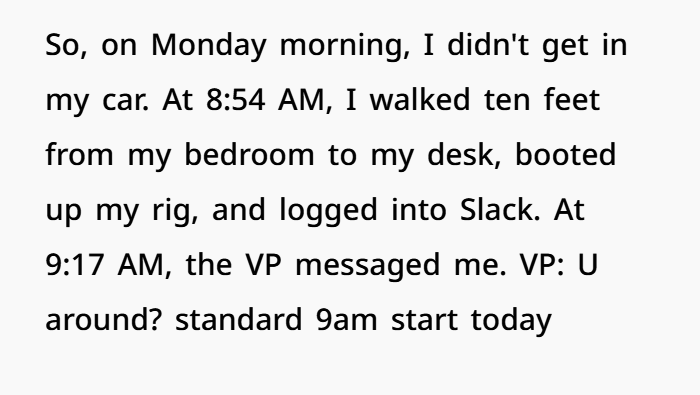
The employee continued working from his approved location and followed the company’s instructions carefully. The story shows why clear workplace policies, employee agreements, and respectful communication are important in modern jobs, especially when companies manage remote and hybrid work environments.

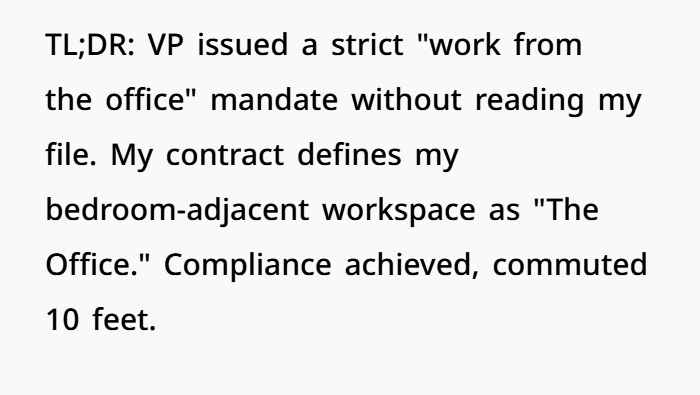
Return to Office Rules and Why Written Work Agreements Matter
The way people work has changed a lot in recent years.
During the COVID-19 pandemic, many companies moved employees to remote work. For many workers, working from home became a normal part of their job. They created home offices, changed their routines, and continued doing their work successfully.
Later, many companies introduced return-to-office policies. Some leaders wanted employees back in the workplace because they believed in-person work could improve teamwork, communication, company culture, and employee connection.
However, problems can happen when a company creates a new policy that affects employees who already have different work arrangements.
The Importance of Written Employment Agreements
One of the biggest lessons from workplace disputes is that written agreements matter.
There is a major difference between:
- A company allowing remote work temporarily
- A company officially approving a long-term remote work arrangement
A casual agreement or verbal promise may be understood differently by different people.
A written employment agreement provides clear information about what both the employer and employee agreed to.
Important workplace documents may include:
- Remote work agreements
- Employment contracts
- Work location approvals
- Flexible work arrangements
- Relocation agreements
- Workplace accommodation documents
Having these details in writing helps prevent confusion later.
Why Documentation Is Important at Work
Many workplace disagreements become a situation of:
“You said this.”
“No, that was not what we agreed.”
This is why documentation is so valuable.
Written records provide a clear reference for both employees and employers.
In this situation, the employee did not simply complain about commuting or say that remote work was more comfortable.
Instead, the employee checked the official workplace agreement and used the written terms that were already approved.
This shows an important workplace principle:
Written agreements are usually stronger than memories or assumptions.
Company Policies vs Individual Agreements
Companies often create policies to guide large groups of employees.
A return-to-office policy may apply to most workers, but some employees may have different arrangements.
For example, exceptions may exist because of:
- Previous remote work approvals
- Job requirements
- Geographic location
- Recruitment agreements
- Employee performance
- Accessibility needs
A general company policy and an individual employment agreement do not always say the same thing.
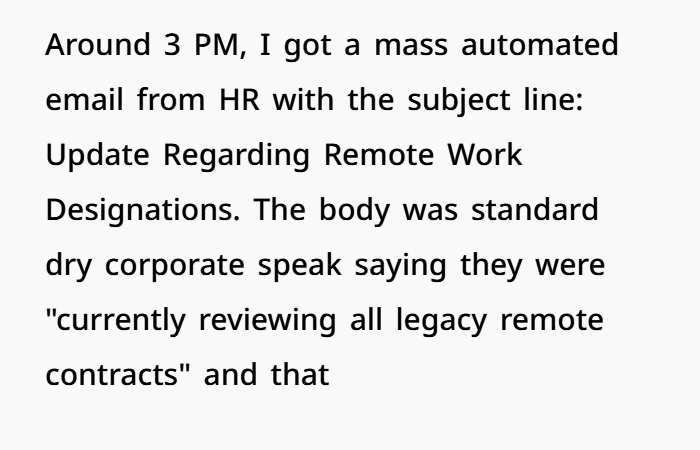
When this happens, employers usually need to review existing agreements and determine how changes should be handled.
The Challenge of One-Size-Fits-All Policies
A company-wide rule may seem simple, but workplaces often include many different situations.
Not every employee has the same:
- Job responsibilities
- Location
- Work history
- Contract terms
- Business needs
For example, many technology roles can be performed remotely because employees can complete their work using digital tools.
Jobs like:
- Database administration
- Software engineering
- Cybersecurity
- Technical support
often depend more on skills, results, and system access than physical location.
However, return-to-office decisions are not always only about productivity.
They are also about how company leaders view teamwork, communication, and workplace culture.
Why Return-to-Office Debates Continue
The discussion about remote work is often more complicated than simply asking:
“Is working from home better?”
Different leaders have different opinions.
Some believe employees work better when teams share the same physical space.
They may believe offices help with:
- Collaboration
- Training new employees
- Building relationships
- Team communication
Others believe employees should be judged by their results rather than where they work.
They may focus more on:
- Productivity
- Performance goals
- Work quality
- Employee accountability
The disagreement is often about management style and workplace expectations.
Following the Rules Carefully
Sometimes employees respond to workplace changes by following the exact wording of a policy or agreement.
This is sometimes called malicious compliance, where someone follows a rule exactly to show a problem with how that rule was created or applied.
In this type of situation, the employee is not refusing to follow instructions.
Instead, they are pointing out that the company’s own documents may support their position.
This can shift the discussion from:
“Is the employee being difficult?”
to:
“Did the company consider existing agreements before changing the policy?”
What Employers Can Learn
Companies can avoid many workplace conflicts by reviewing existing agreements before making major policy changes.
Helpful steps include:
- Keeping accurate employee records
- Reviewing remote work agreements
- Communicating changes clearly
- Training managers about existing arrangements
- Working with HR before changing employment terms
Good communication can prevent misunderstandings between employees and leadership.
What Employees Can Learn
Employees can also protect themselves by understanding their employment documents.
Important steps include:
- Reading workplace agreements carefully
- Keeping copies of approved arrangements
- Asking questions about policy changes
- Confirming important decisions in writing
Knowing your employment terms can help you make better decisions about your career.
The Bigger Lesson About Workplace Changes
The workplace continues to change, and companies will continue adjusting their policies.
However, successful workplace changes require clarity, communication, and respect for existing agreements.
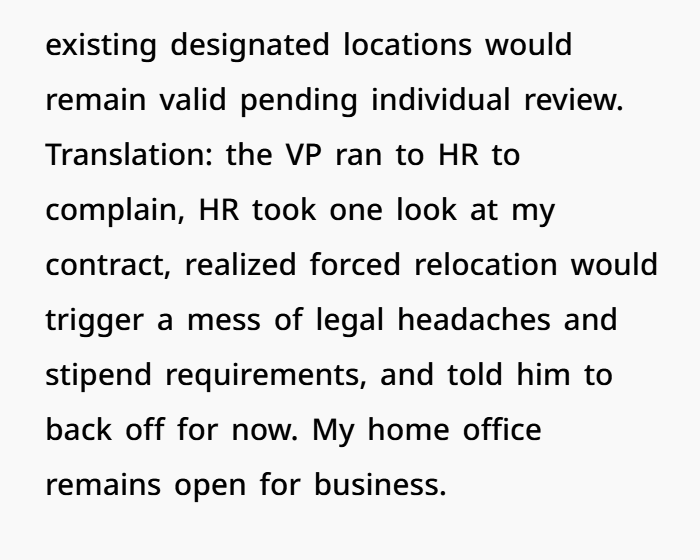
In this situation, the conflict was not solved through an argument.
It was solved through documentation.
The employee did not ignore the company’s policy. Instead, they showed that the policy did not fully consider an agreement that was already in place.
The biggest lesson is simple:
Clear written agreements help protect both employees and employers.
Comments You Can’t Miss