AITA for Asking “Why Would I Invite You?” After My Child-Free Sister Got Mad About My Daughter’s Volleyball Trip?

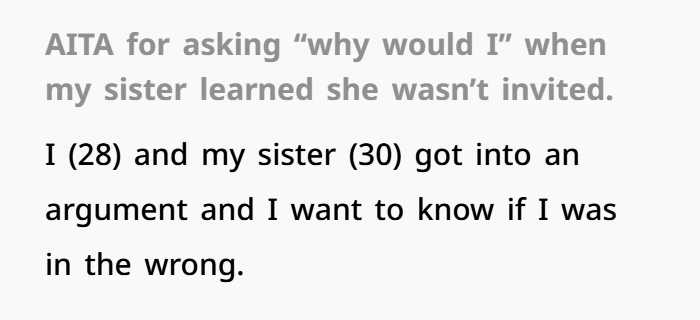
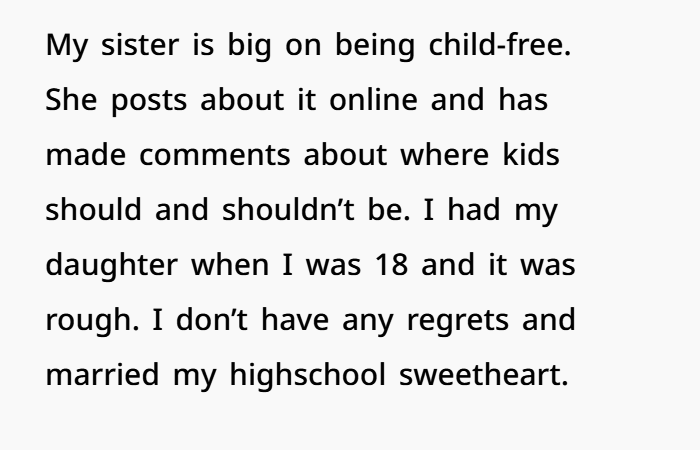
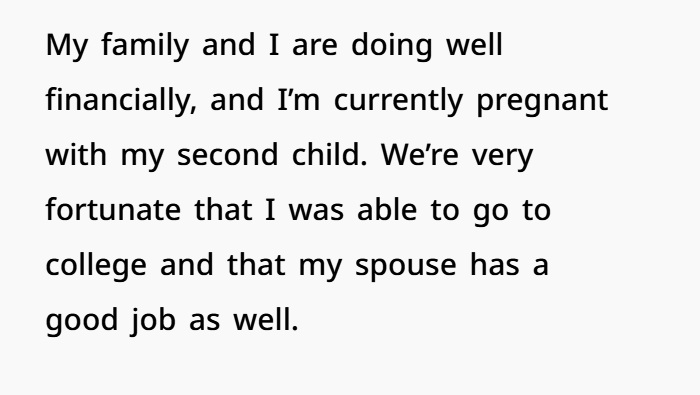
At first, this may look like a small disagreement about a weekend trip. But the real problem goes back many years. The 28-year-old woman became a mom at 18 and later married her high school sweetheart. She finished her college education, and together they worked toward financial stability while raising their daughter. She is now expecting their second child. Her older sister, however, chose a child-free lifestyle and often made it clear that parenting was not for her.
The woman says her sister rarely showed much interest in spending time with her niece. She also became frustrated when family plans had to change because of the child. Over the years, this affected their family relationship, and the two sisters slowly stopped spending as much time together. Their different lifestyle choices were not the only problem. The woman also felt that her sister did not respect the responsibilities that come with raising a family.
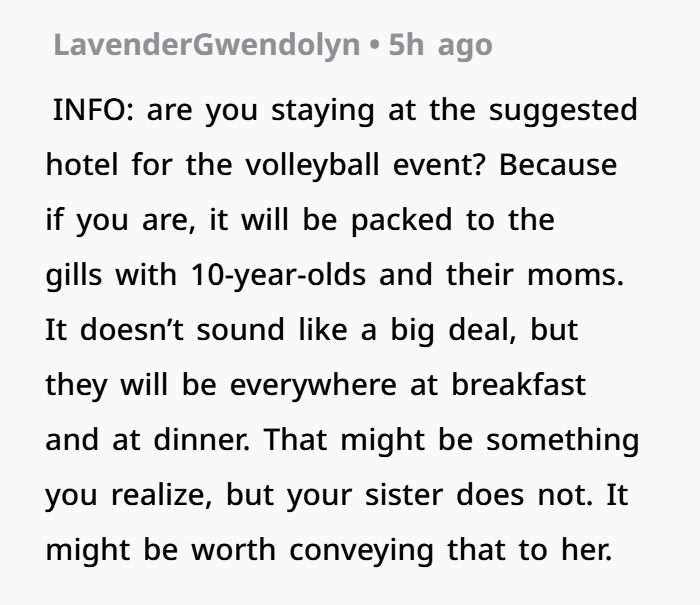
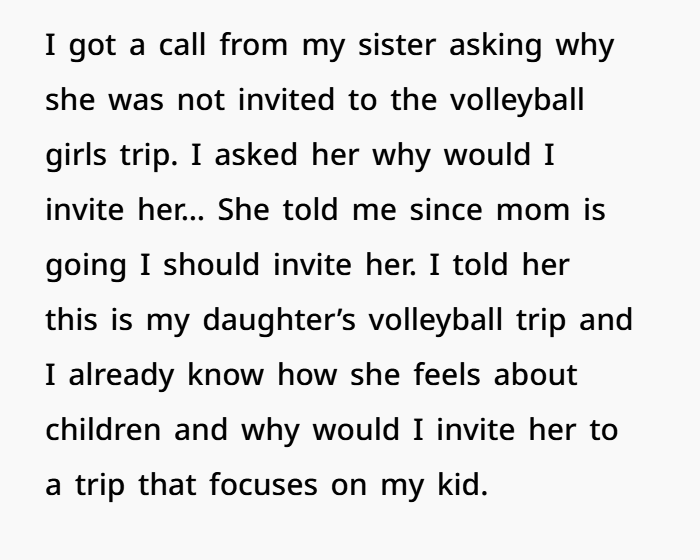
Things became uncomfortable again when the woman planned a weekend trip for her daughter’s volleyball training. Since her daughter would be busy with youth sports practice for several hours each day, she invited their mother to join the trip. They planned to explore the city together during training and meet the daughter later for dinner. When the older sister learned about the family travel plans, she was upset that she had not been invited.
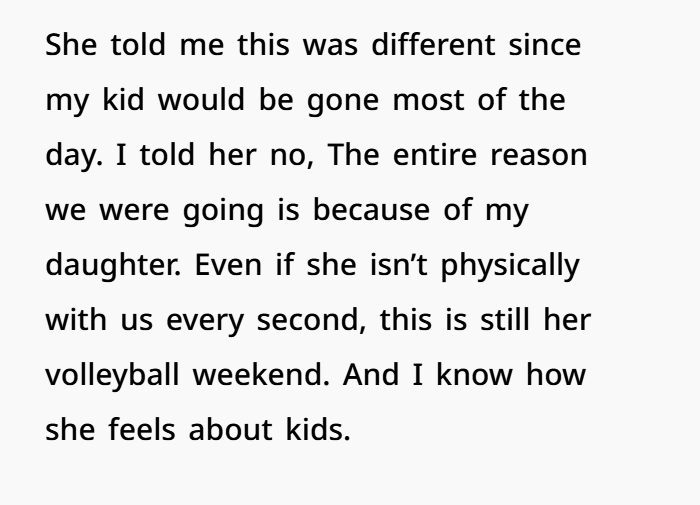
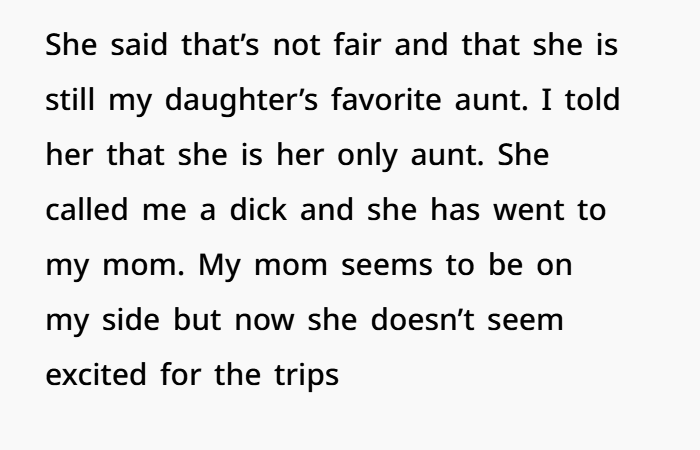
The sister explained that she wanted to come because her niece would be busy for much of the weekend. She also said she was still the girl’s favorite aunt. The woman reminded her that she was actually her daughter’s only aunt. Their mother seems to understand both sides, but the disagreement has changed the mood around the trip. Now the woman is wondering whether she set a fair family boundary or allowed years of frustration to affect a simple weekend getaway.

Being Child-Free Isn’t the Problem—Relationships Have Consequences
Being child-free does not mean someone dislikes children.
A person can choose not to become a parent and still love their nieces and nephews. They can attend birthdays, support school activities, show up for sports, and become an important part of a child’s life.
In fact, research on aunts and uncles shows that these relationships can be meaningful. An aunt or uncle can sometimes become another trusted adult, mentor, or source of emotional support for a child.
That is why the real issue here is not the sister’s decision to be child-free.
It is about the relationship she has built with her family over the years.
This Is About Her Past Actions
According to the narrator, her sister has not shown much interest in plans that revolve around children.
She also made comments about motherhood that the narrator found hurtful.
That history matters.
Family relationships rarely change because of one small argument. Distance can slowly grow after years of disagreements, different priorities, hurt feelings, and poor communication.
Research on adult sibling relationships also shows that relationships between brothers and sisters can change as they get older.
Marriage, parenting, careers, education, and other major life changes can affect how often siblings see each other and how close they feel.
So this disagreement did not necessarily begin with one missed invitation.
There was already history behind it.
This Wasn’t Really a Sisters’ Vacation
The sister seems upset because their mother was invited and she was not.
At first, that may sound understandable.
But this was not simply a vacation for the mother and her two daughters.
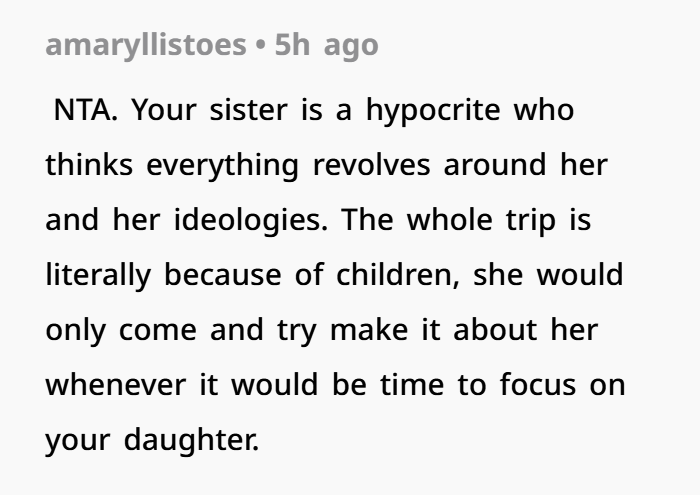
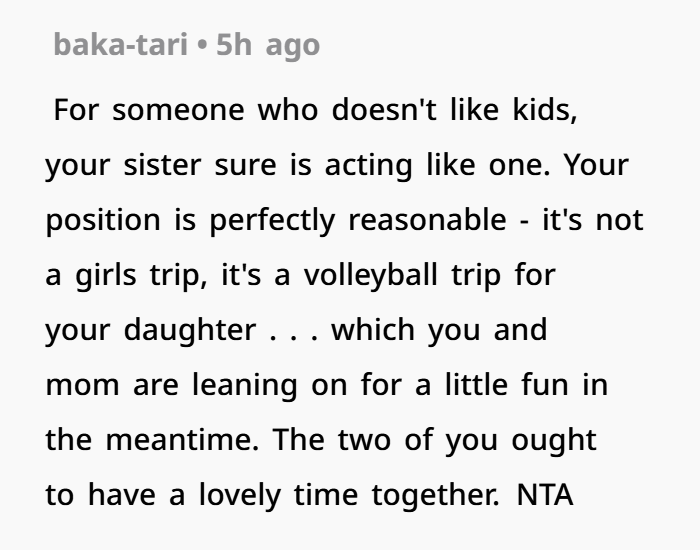
The main reason for the trip was the narrator’s daughter’s volleyball tournament.
The sightseeing was planned around that event.
Without the volleyball tournament, there probably would not have been a trip in the first place.
That makes this more of a family travel and youth sports weekend than a traditional family vacation.
Parents who travel for children’s sports know how much planning these weekends can require.
There may be hotel reservations, transportation, meals, game schedules, travel costs, and other family responsibilities to manage.
The child’s schedule usually comes first.
The Weekend Still Revolves Around Her Daughter
The sister pointed out that her niece would be busy for much of the day.
But that does not mean the weekend suddenly becomes an adults-only vacation.
The family still needs to work around the volleyball schedule.
Dinner may depend on when the games finish. Sightseeing may need to happen during certain hours. Travel times, hotel plans, and even bedtime may depend on the tournament.
The daughter is still the reason everyone is there.
That is why the narrator may not have thought of inviting someone who had previously shown little interest in child-centered activities.
Being an Aunt Doesn’t Automatically Mean Being Close
The sister also called herself the niece’s “favorite aunt.”
The narrator replied that she was the child’s only aunt.
That comment was sarcastic and probably made the argument worse.
Still, there is an important point underneath it.
Being someone’s aunt gives you a family connection. It does not automatically create a close relationship.
Strong family relationships usually need time, interest, communication, and effort.
Research on extended family relationships suggests that the relationship between parents and their siblings can also affect how close children become to their aunts and uncles.
If the adults have a difficult relationship, creating a strong aunt-niece relationship can become harder.
A family title tells people how they are related.
Their actions show how close they actually are.
Healthy Family Boundaries Matter
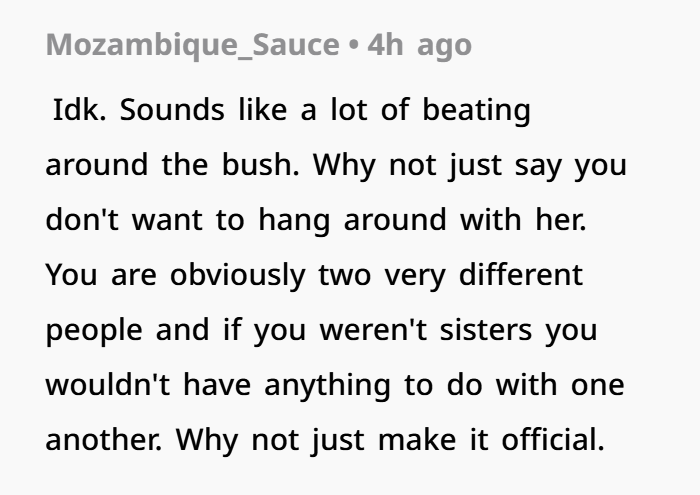
Being sisters does not mean they have to do everything together.
Healthy family relationships need both connection and boundaries.
Adults should be able to make their own plans without feeling that every sibling must automatically receive an invitation.
This becomes especially important when people are at different stages of life.
A parent’s schedule may revolve around school, childcare, sports, work, medical appointments, and other family responsibilities.
A person without children may have a very different schedule.
Neither lifestyle is wrong.
Problems usually begin when people stop respecting those differences.
Healthy boundaries can make family relationships easier because everyone understands what they can reasonably expect from each other.
The Narrator Could Have Chosen Kinder Words
The narrator’s decision may have been reasonable, but her delivery could have been better.
Starting with “Why would I invite you?” was likely to make the conversation more tense.
The “only aunt” comment probably did the same thing.
She could have explained herself in a calmer way.
For example, she could have said that her sister had never seemed interested in activities centered around her daughter, so she honestly did not think she would want to join a volleyball weekend.
The message would have been the same.
But the conversation might have been much less hurtful.
Good communication and conflict resolution do not require people to give up their boundaries. They simply help people explain those boundaries with respect.
Maybe Her Sister Wants to Be More Involved Now
There is another side worth considering.
People change.
The sister may genuinely want a closer relationship with her family now.
Adult sibling relationships are not frozen in time. Research suggests that sibling relationships continue changing throughout adulthood.
Someone who was not interested in family activities several years ago may feel differently today.
Maybe the sister’s reaction was not only about missing a trip.
Maybe she felt left out and realized she wants to be more involved with her mother, sister, and niece.
If so, that could eventually be a positive thing.
But rebuilding a family relationship takes more than asking for an invitation.
A Better Relationship Can Start With Small Actions
If the sister wants to become closer to her niece, she has many opportunities to show it.
She can attend volleyball games when possible. She can ask how the season is going. She can remember important events and learn about her niece’s interests.
She can also spend time with her niece when there is no vacation or sightseeing involved.
Small actions often matter more than big statements.
The same applies to her relationship with her sister.
Better communication, respect for parenting choices, and consistent effort could help repair some of the distance between them.
Nobody has to agree on everything.
They simply need to respect each other’s lives.
Being Child-Free Was Never the Real Issue
This is an important distinction.
The sister should not be criticized simply because she does not want children.
Choosing to be child-free is a personal life decision, just as choosing to become a parent is personal.
The real problem is the history between these two sisters.
If someone repeatedly appears uninterested in child-centered plans, the family may eventually stop inviting that person to those activities.
That is not necessarily punishment.
Sometimes people simply respond to the pattern they have seen.
Final Verdict: NTA, But the Delivery Could Have Been Better
The narrator was not required to invite her sister on this trip.
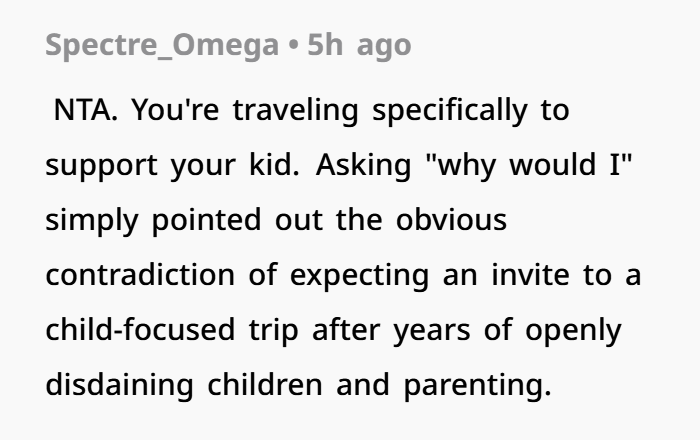
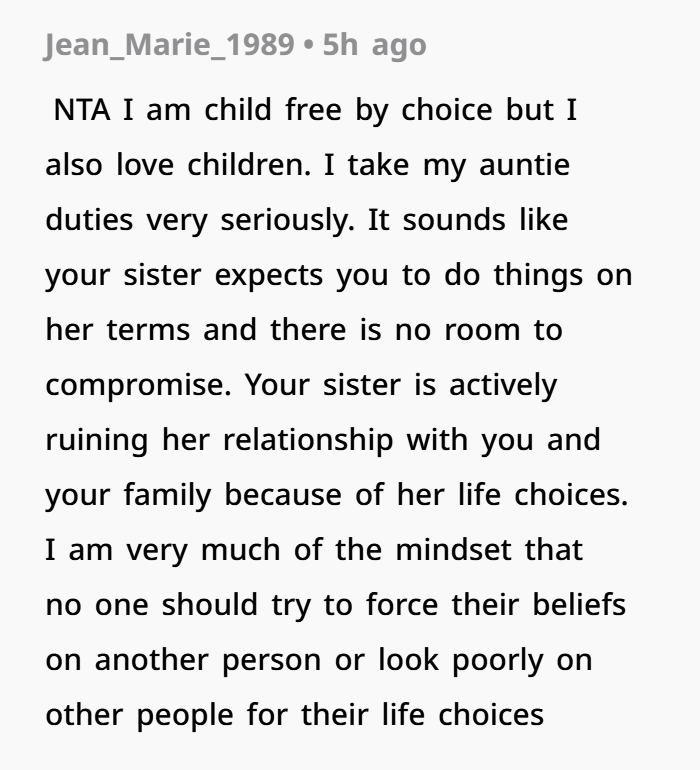
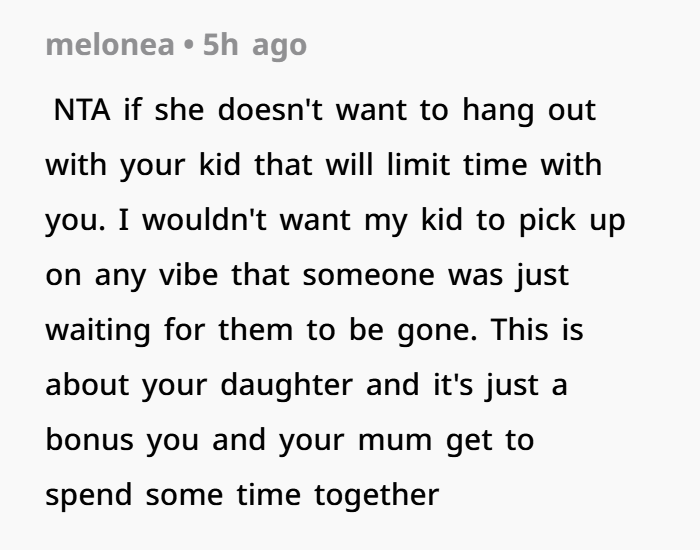
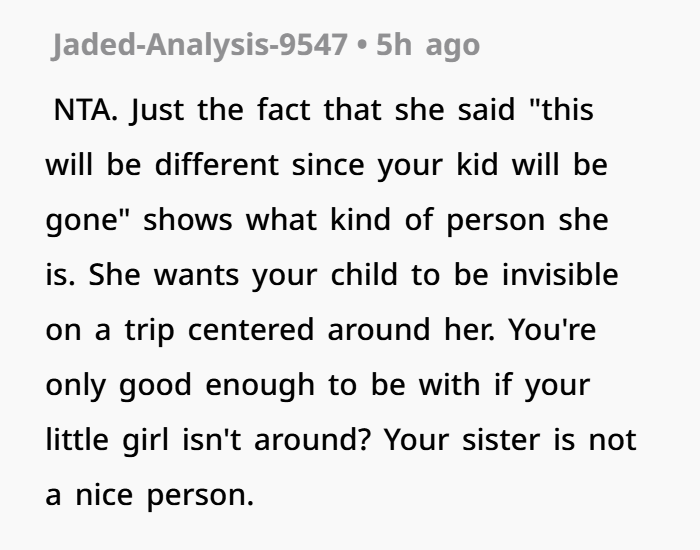
It was mainly a volleyball weekend for her daughter, not a sisters’ getaway. Based on their history, it makes sense that she did not automatically think her sister would want to come.
However, the narrator could have handled the conversation more kindly.
The “Why would I invite you?” and “You’re her only aunt” comments were sharper than necessary. They added tension without helping either sister understand the other.
Still, those comments do not change the main issue.
The sister had previously given the impression that child-centered activities were not important to her. It is understandable that her family eventually started making plans based on that impression.
If she wants things to change, they can.
Adult family relationships can grow and improve. Better communication, healthy boundaries, mutual respect, and consistent effort can go a long way.
And if the sister truly wants to become a bigger part of her niece’s life, the next volleyball game may be a much better place to start than an argument over an invitation.
What The Comments Reveal