The $3,000 Christmas Wish Lists That Made Me Want to Skip Gift Exchange
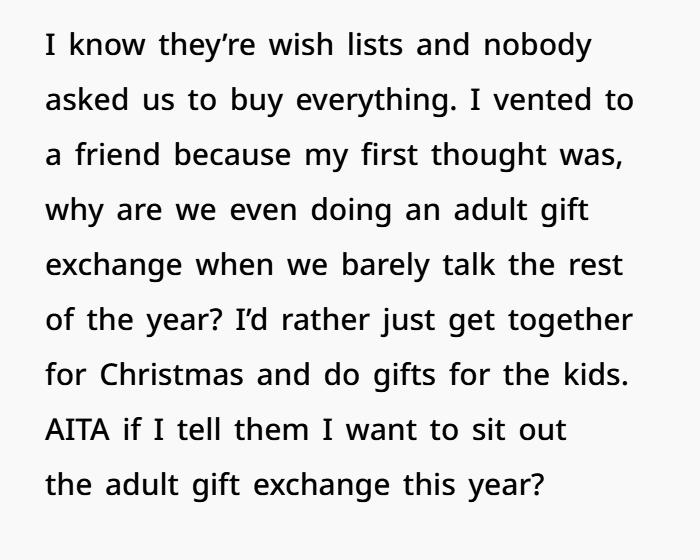
Christmas is meant to be a happy time filled with family gatherings, thoughtful gifts, and special memories. But one woman recently found herself dealing with an awkward family gift exchange. Her mother-in-law wanted everyone to share Christmas wish lists, but the requests were much more expensive than she expected. What started as a simple holiday gift idea soon made her question whether adult gift exchanges were even necessary.
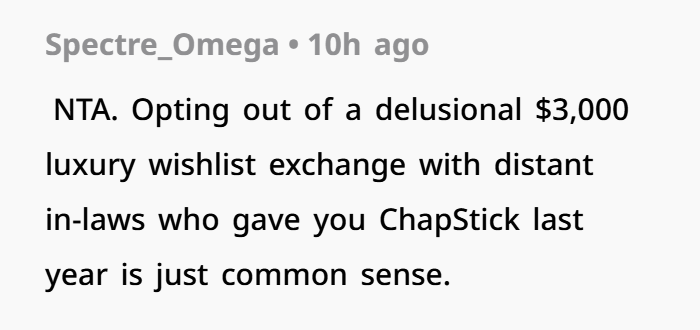
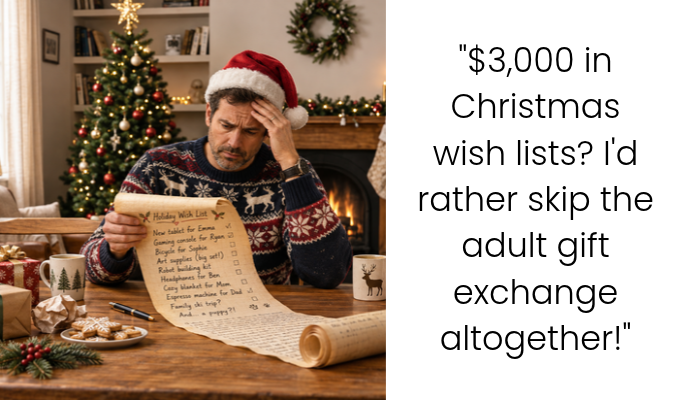
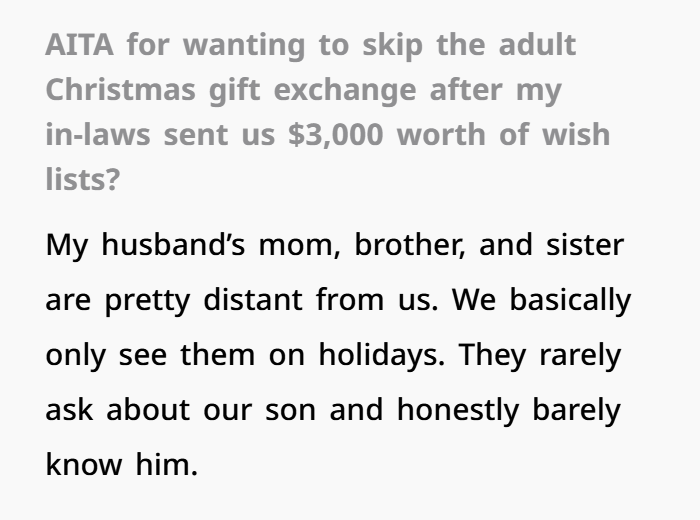
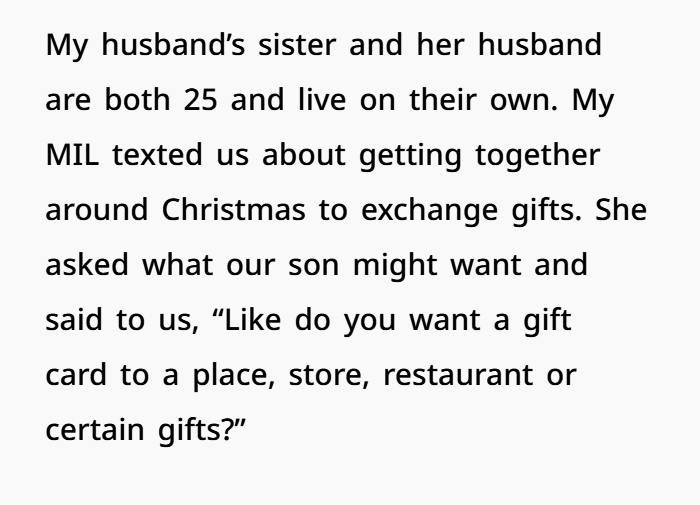
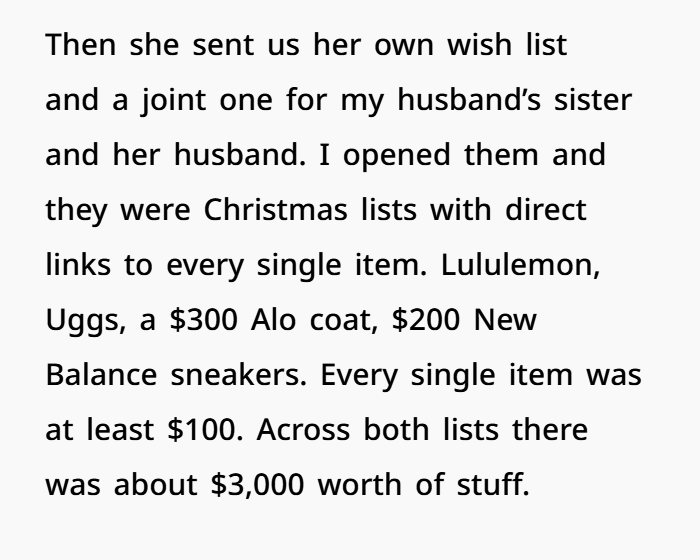
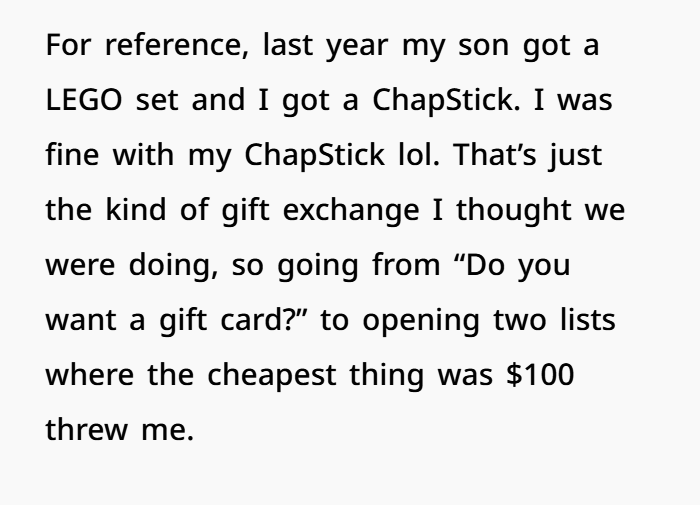
The woman explained that her husband’s family is not very involved in their daily lives. They usually get together during the holidays and do not spend much time with their young son. So when her mother-in-law asked about Christmas presents for the child and whether they preferred gift cards or other gifts, she thought it would be a small family exchange. Instead, she received two detailed shopping lists. One belonged to her mother-in-law, and the other was for her husband’s sister and brother-in-law. The lists featured expensive clothing and lifestyle brands, including Lululemon, Ugg, Alo, and New Balance. Most items cost at least $100, and the total value was close to $3,000. She found this especially surprising because last year’s gifts were much simpler. Her son received a LEGO set, while she got a tube of ChapStick.
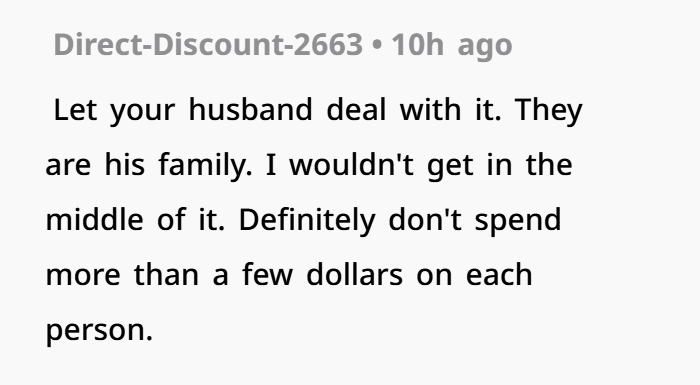
She does not mind people sharing Christmas gift ideas, but she believes everyone should feel comfortable with their holiday spending budget. She would prefer to use that money for her child, home needs, or family activities instead of buying expensive presents for adults. For her, Christmas should be about spending quality time together rather than following costly gift traditions. Now she is considering politely stepping away from the adult gift exchange. However, she worries that setting this family boundary might upset her in-laws or make her seem unkind.

The Psychology of Gift-Giving, Reciprocity, and Family Boundaries
Giving gifts is a way to show love and care. But sometimes, gift-giving can also create pressure and uncomfortable expectations.
This often happens during Christmas when families exchange presents. What should be a happy holiday tradition can become stressful when people have different ideas about how much they should spend.
The truth is that an expensive gift does not always mean more love or appreciation. Many people care more about the thought behind a present than its price.
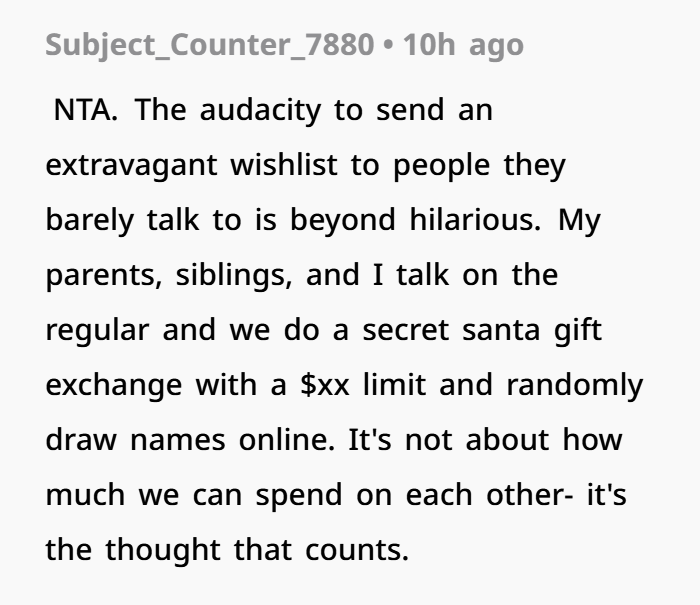
This can become a bigger issue in families where people are not very close. For example, when relatives rarely call or visit throughout the year, receiving a long Christmas wish list filled with expensive items may feel uncomfortable.
The person receiving that list may wonder whether the family is celebrating Christmas together or simply expecting everyone to buy gifts.
Why Expensive Gifts Do Not Always Mean More Love
Research suggests that gift-givers and gift-receivers often think differently about presents.
A 2009 study published in the Journal of Experimental Social Psychology, titled Money Can’t Buy Love, looked at how people connect gift prices with appreciation.
Researchers Francis Flynn and Gabrielle Adams found that people who buy gifts often believe that expensive presents show more thought and care.
However, people receiving those gifts do not always agree.
In simple words, spending more money does not automatically make someone feel more loved.
A small gift that matches someone’s interests may feel more special than an expensive item that has little personal meaning.
A related 2024 research review, titled Exploring Gift Gaps, looked at 153 research findings from 114 studies and 29 research papers.
It also found that gift-givers and gift-receivers often have different views about the same gift exchange.
This helps explain why some families see expensive Christmas wish lists as useful shopping guides, while others see them as an extra financial responsibility.
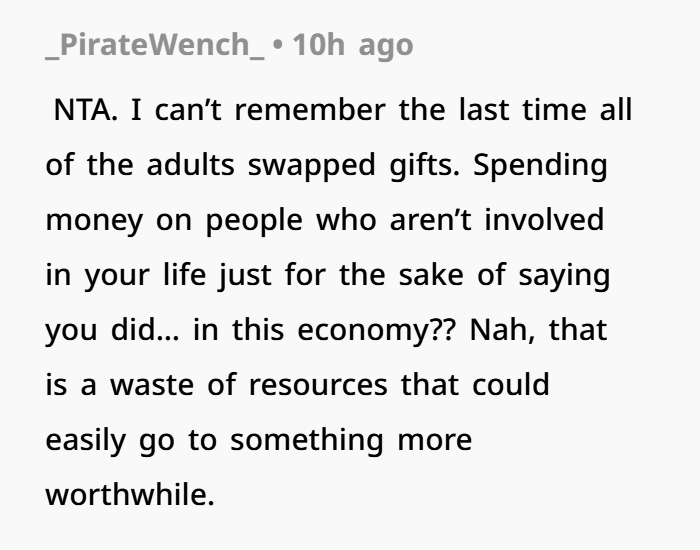
Everyone has a different holiday budget. A gift exchange should not make anyone feel uncomfortable about their personal finances.
The Pressure to Give Something in Return
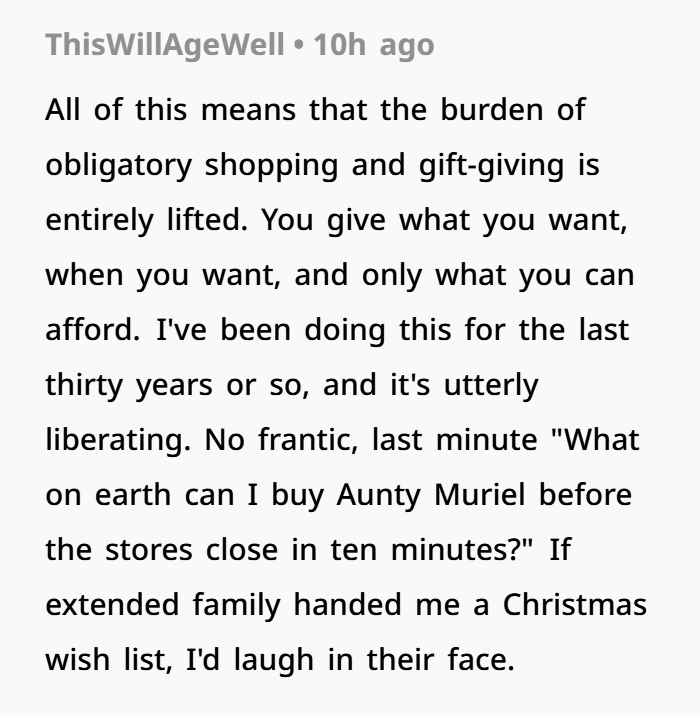
Another problem with family gift exchanges is the feeling that you must give something back.
When someone gives you a present, you may feel that you should buy them something of similar value.
This pressure can be even stronger during Christmas because many families exchange gifts every year.
A 2021 study published in the Journal of Business Research looked at how people feel when they receive gifts but do not have something similar to give in return.
The research found that gift-givers may underestimate how uncomfortable this situation can make the receiver feel.
This is especially important when family members share expensive wish lists.
Imagine receiving a Christmas list filled with items that cost $100 or more.
Even if nobody directly asks you to purchase every item, you may still feel pressure to spend more money than you planned.
You might also worry about giving a less expensive present than the one you receive.
This can turn a simple Christmas tradition into a stressful experience.
Every household has different financial responsibilities. Some families can comfortably spend more on holiday shopping, while others need to save money for bills, savings, education, and everyday expenses.
There is nothing wrong with setting a gift budget that fits your financial situation.
Family Relationships Are About More Than Gifts
There is also a bigger relationship issue behind this situation.
The woman is not only upset about the expensive gift lists. She is also thinking about the relationship she has with her in-laws.
If relatives rarely stay in touch throughout the year, it can feel strange to suddenly have expensive gift expectations during Christmas.
Gift-giving can help people feel closer, but it cannot replace regular communication and genuine care.
For example, giving a child a Christmas present is a kind gesture. But being involved in that child’s life is important too.
Calling to ask about school, remembering special occasions, and spending time together can mean just as much as buying a present.
A gift can make someone happy for a day, but a strong family relationship needs regular effort.
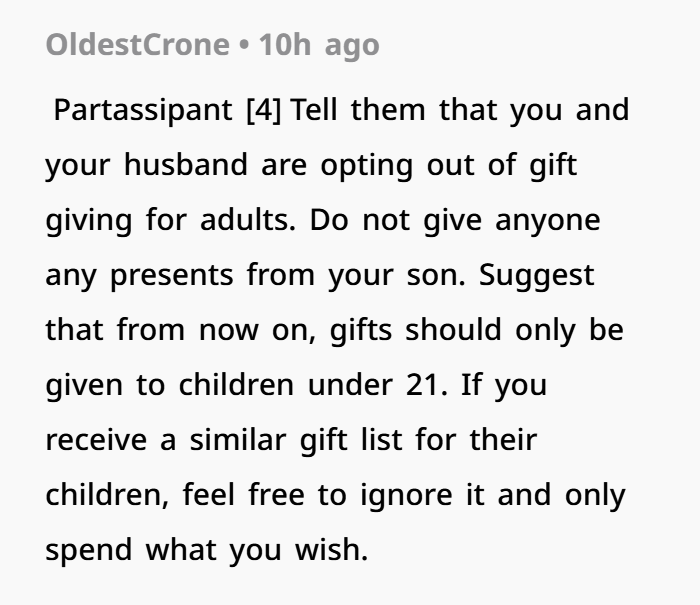
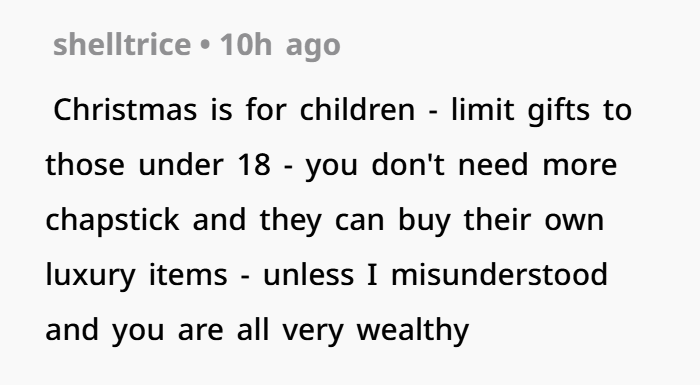
This is why keeping Christmas gifts focused on the children can be a reasonable idea.
It allows everyone to enjoy the holiday without making adults feel pressured to spend money on presents they may not even need.
It can also make Christmas shopping easier because families can plan their spending around the children.
How to Set Family Gift Boundaries Without Creating Drama
Talking about money and family traditions is not always easy.
Nobody wants to upset relatives or create an argument before Christmas. However, it is better to discuss gift expectations early rather than waiting until the holiday gathering.
The couple does not need to criticize anyone’s wish list or complain about how much other people spend.
They can simply explain what works best for their household.
Here are a few simple ways to handle the situation.
1. Thank the family for planning Christmas.
Start by showing appreciation for the family gathering. Let everyone know that you are happy to spend time together.
2. Explain your decision clearly.
Tell the family that you would prefer to skip adult gifts this year. There is no need to share private details about your household budget.
3. Suggest exchanging gifts for the children.
This is a simple way to keep the Christmas tradition going without creating extra financial pressure for adults.
4. Keep the conversation friendly.
Avoid criticizing expensive gift choices or bringing up old disagreements. Focus on what you would like to do this year.
5. Make it clear that family time still matters.
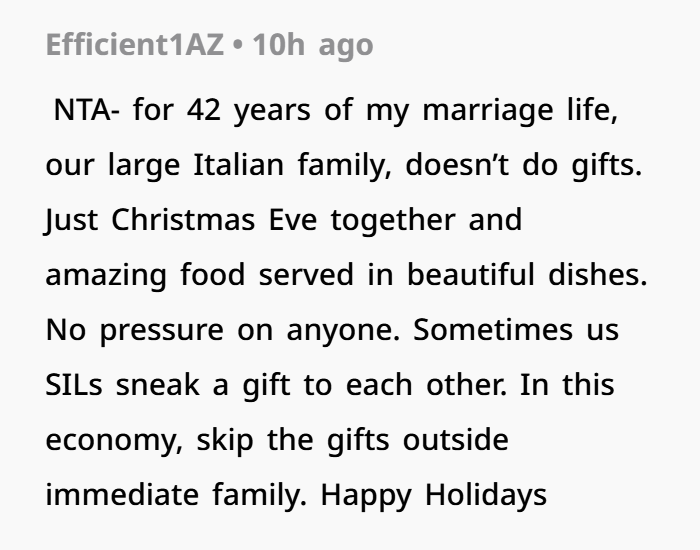
Skipping adult presents does not mean you want to avoid Christmas celebrations. You can still enjoy dinner, conversations, and other holiday activities together.
Setting a clear boundary does not have to turn into a family argument.
Sometimes, a simple and polite conversation is enough to prevent misunderstandings.
3. Final Verdict: Is She the AITA?
No, she is not wrong for wanting to skip the adult gift exchange.
The in-laws are allowed to share their Christmas wish lists and enjoy receiving expensive presents.
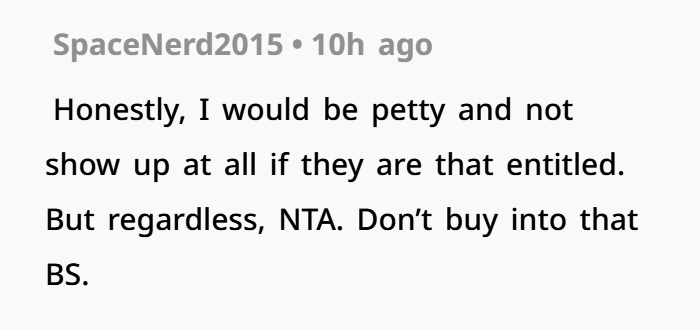
However, the couple also has the right to decide how much money they want to spend and whether they want to participate in the adult gift exchange.
There is nothing wrong with liking expensive gifts. But other family members should not feel responsible for buying them.
Nobody is required to purchase everything on someone else’s Christmas wish list.
The real issue is not simply the price of the presents. It is whether the gift exchange feels comfortable and fair for everyone involved.
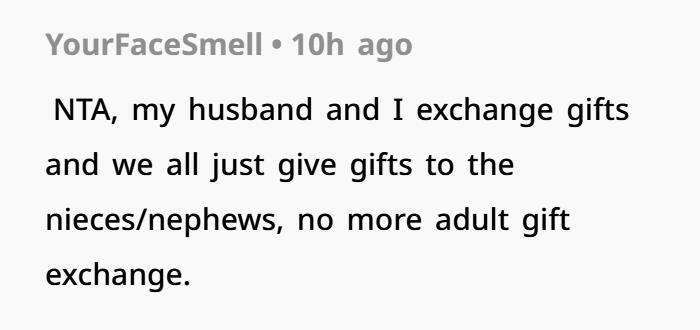
A good solution would be to continue celebrating Christmas together, exchange gifts for the children, and allow adults to buy their own presents.
This way, everyone can enjoy the holiday without worrying about gift prices or spending more than they can afford.
If the in-laws feel disappointed, they can talk about their feelings. But that does not make the couple’s decision unreasonable.
At the end of the day, Christmas should be about enjoying time with family, creating happy memories, and showing appreciation.
It should not become a financial obligation that makes people uncomfortable.
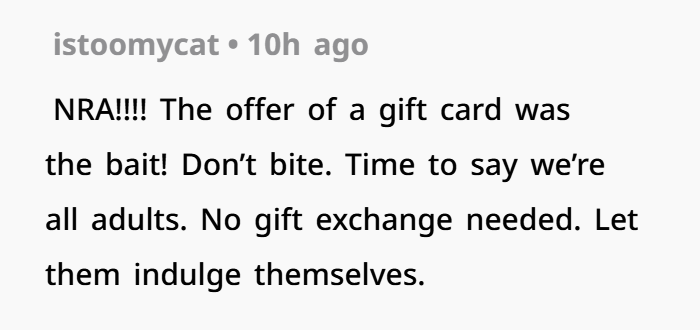
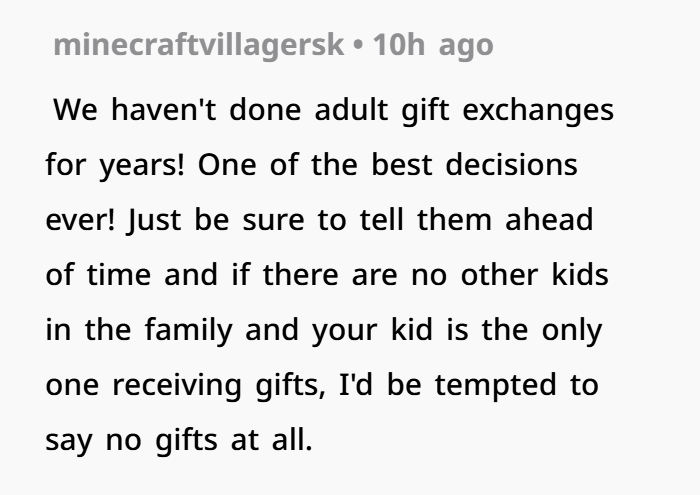
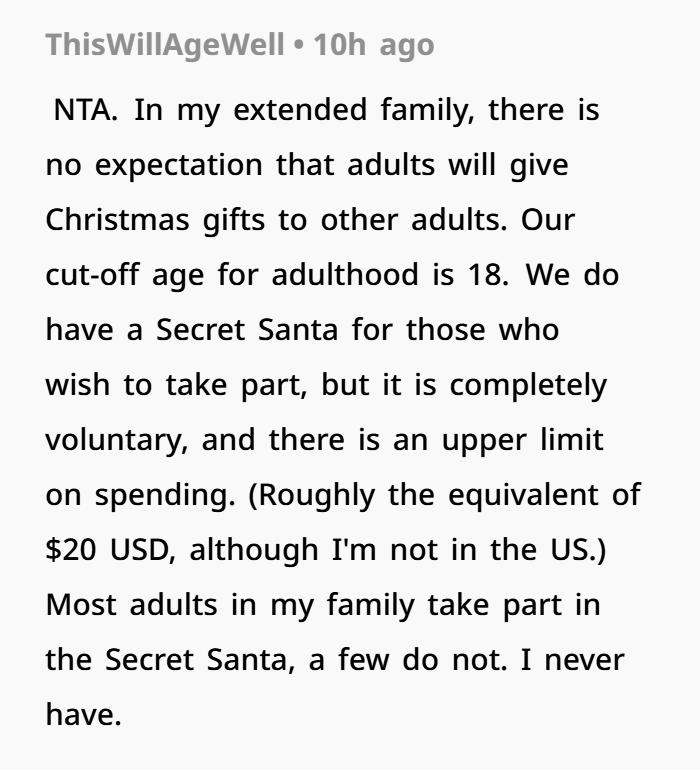
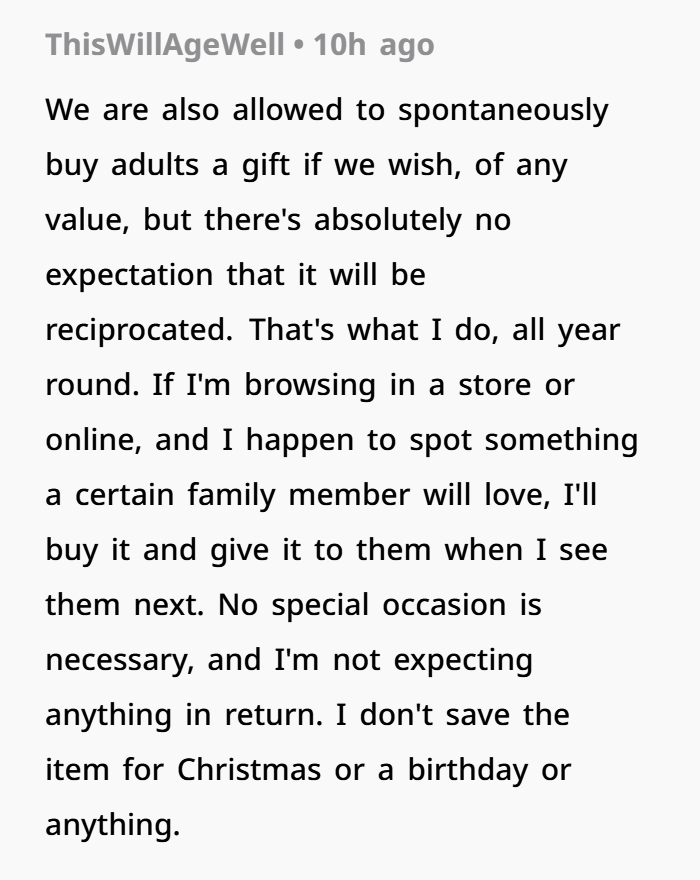
See The Comments Below