Woman Discovers She Can’t Afford Her “Miracle Baby,” Begs Half-Brother to Adopt Gets Angry When He Says No

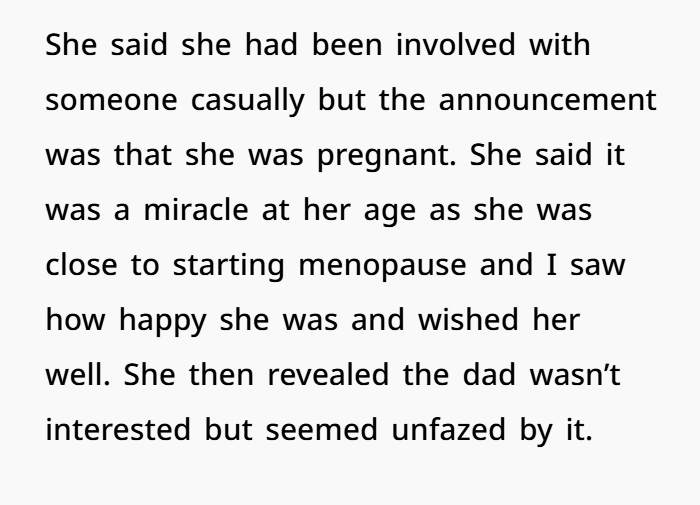
This story is about a difficult family situation between OP (25M) and his older half-sister Lisa (48F). After many years of infertility and emotional struggle, Lisa finally becomes pregnant. What should have been a happy moment for the family quickly turns into stress and conflict because of the decisions that follow.
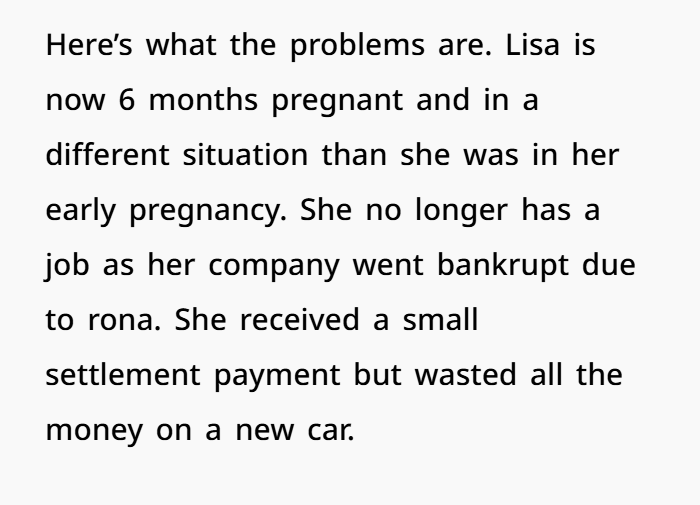
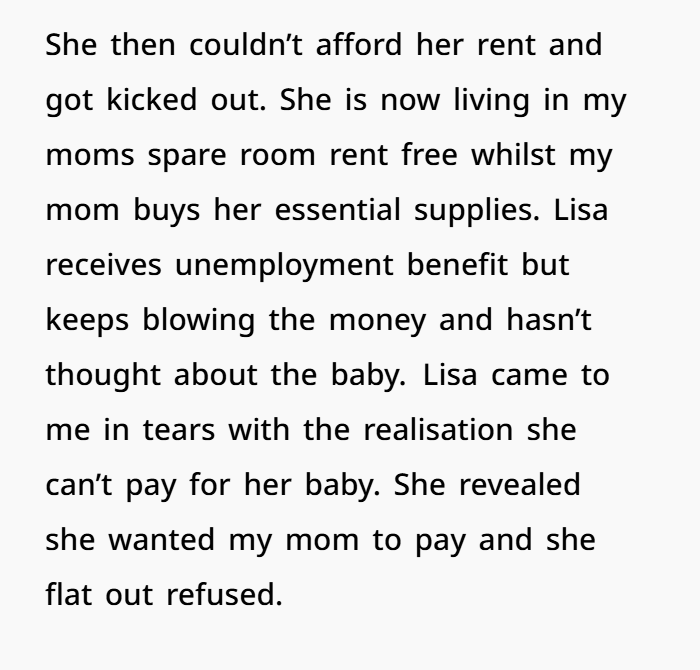
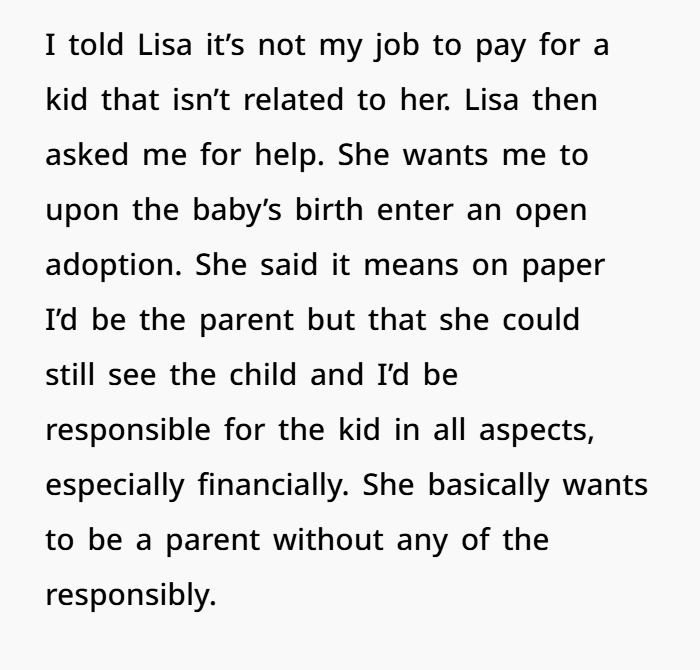
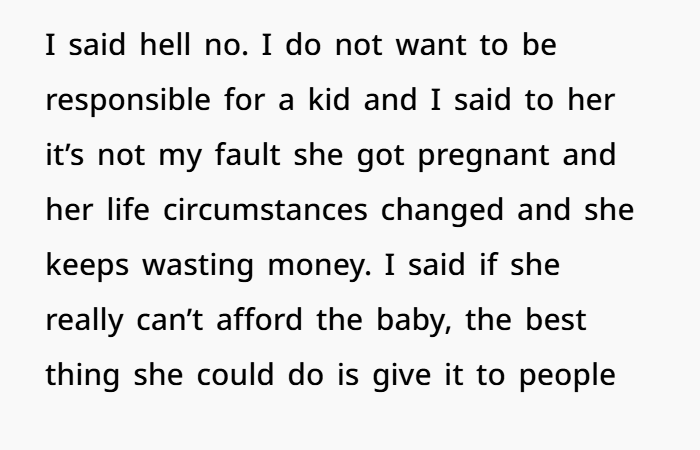
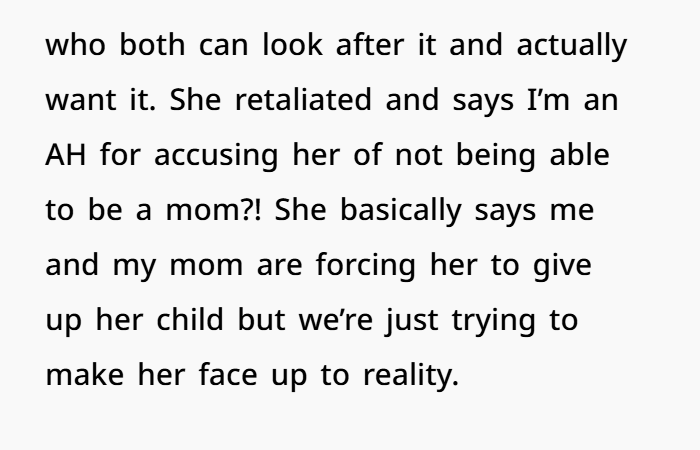
Lisa is going through a very unstable time. She loses her job, spends most of her savings, and does not make long-term plans for the baby. Because of her situation, she asks OP to adopt the baby. She wants him to take full legal and financial responsibility as the child’s parent, while still allowing her to stay involved in the child’s life.
OP understands that his sister is going through a hard time and feels sympathy for her struggles. However, he does not agree to take on full parental responsibility, especially when it would change his entire future and life plans. He feels that adopting the baby is too big of a decision to be made under pressure.
After OP refuses, the situation becomes tense within the family. Lisa feels hurt and betrayed, and other family members are also divided over the issue. Now OP is left questioning whether setting this boundary makes him wrong, or if it is a reasonable decision in a complicated situation involving family responsibility, parenting choices, and long-term financial and emotional impact.
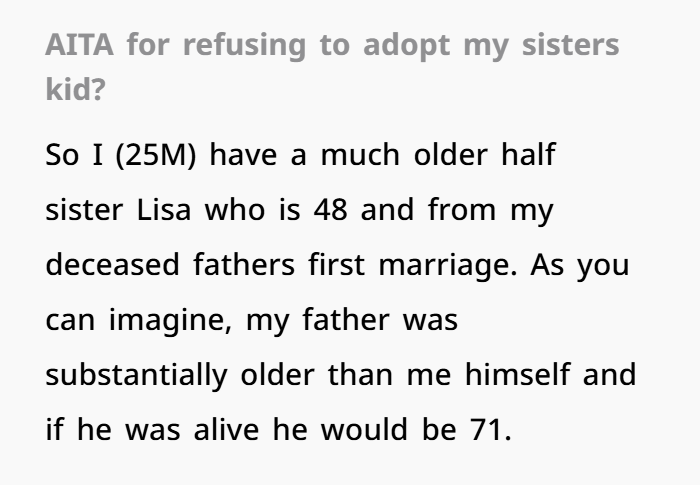
The author of the post has a 48-year-old half-sister, way older than him, and she recently became pregnant

Late Pregnancy, Family Pressure, and Responsibility (Easy English)
This situation is about a woman having a baby later in life and asking family members to take responsibility for raising the child. It involves family pressure, financial responsibility, parenting decisions, and emotional boundaries.
1. A Difficult Pregnancy Situation
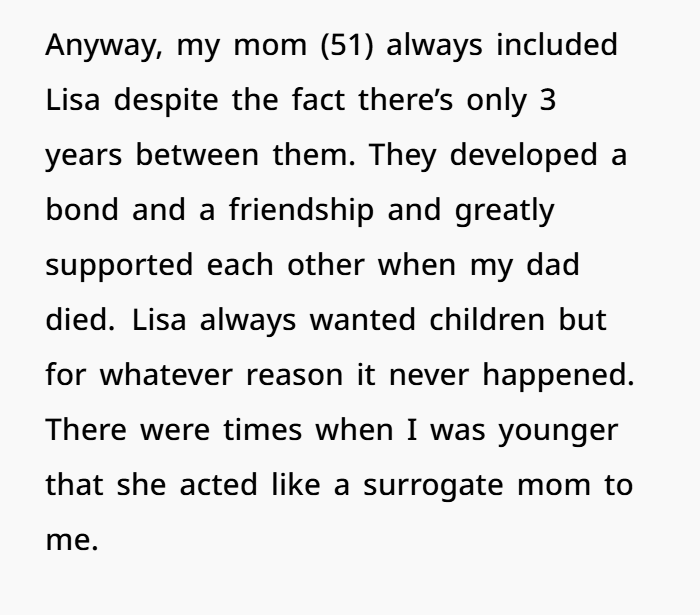
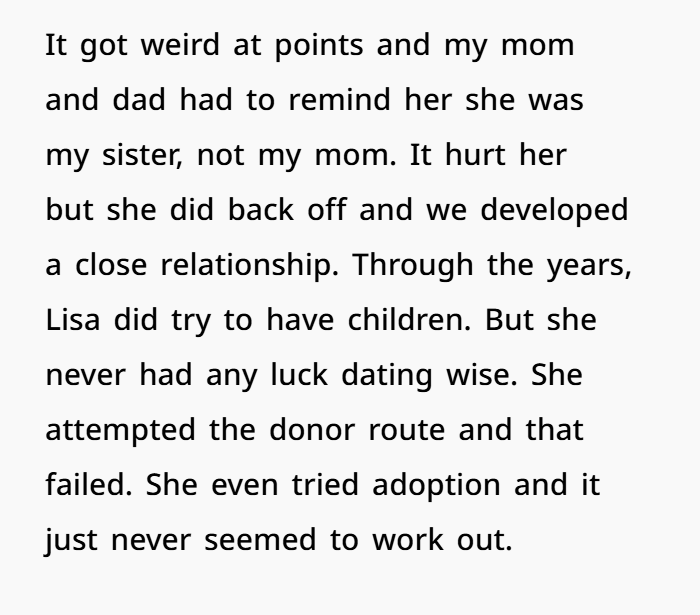
Lisa has always wanted to become a mother. She tried different options like:
- Dating
- Donor options
- Adoption
But it did not work out for her.
Now she is pregnant at 48. This can be a very emotional and difficult time, especially without strong support.
However, pregnancy alone does not remove the need for planning and responsibility.
2. Lack of Planning and Financial Stability
From the situation, Lisa:
- Does not have a job
- Used her money on a car instead of baby needs
- Lost her housing
- Is staying with family for free
- Does not have a clear plan for raising the child
This has created concern about financial stability and parenting readiness.
Raising a child needs:
- Money
- Stable housing
- Daily care planning
- Long-term responsibility
Without these, it becomes very difficult.
3. The Adoption Idea and Family Pressure
Lisa is asking OP to:
- Legally take responsibility for the baby
- Raise the child fully
- While she still stays involved casually
This is not a normal adoption plan.
In real adoption and family law situations, the adoptive parent:
- Takes full responsibility
- Provides full care and support
- Is the legal parent
Asking someone to do everything while still staying in control is unfair and unrealistic.
4. Emotional Pressure and Guilt
Lisa’s reaction includes blaming OP and saying he is forcing her.
This is a form of emotional pressure or guilt-based communication.
It often happens when someone:
- Feels overwhelmed
- Does not want to accept responsibility
- Tries to shift blame onto others
But guilt does not change who is responsible for parenting decisions.
5. OP’s Position and Boundaries
OP is 25 and still building his own life.
He may have:
- Career goals
- Personal plans
- Future family plans
Taking full responsibility for someone else’s child would change his entire life.
Saying “no” is not cruelty. It is healthy boundary setting and personal responsibility protection.
It is also important for the child, because children need:
- Stable parents
- Clear responsibility
- Long-term care commitment
6. Role of the Mother (Family Support)
OP’s mother is helping by:
- Providing housing
- Offering basic support
- Setting limits on long-term financial help
This is an example of balanced family support and boundary setting.
She is helping, but not taking full responsibility for everything.
7. Family Responsibility vs Personal Choice
Family members can support each other, but:
- They are not required to take over someone else’s life
- They are not responsible for poor planning decisions
- They should not be forced into parenting roles
Healthy families have:
- Support
- Respect
- Clear boundaries
Not pressure or forced responsibility.
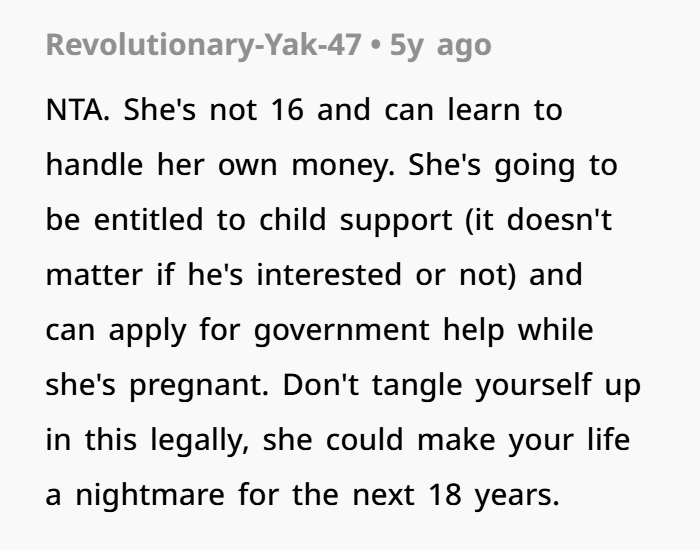
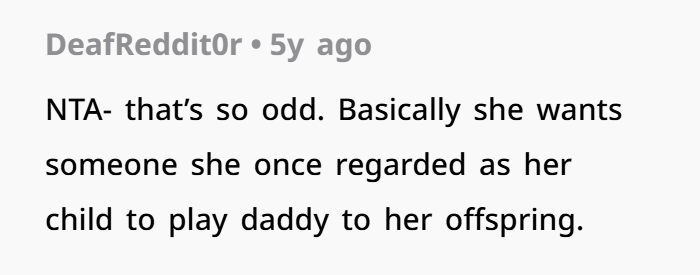
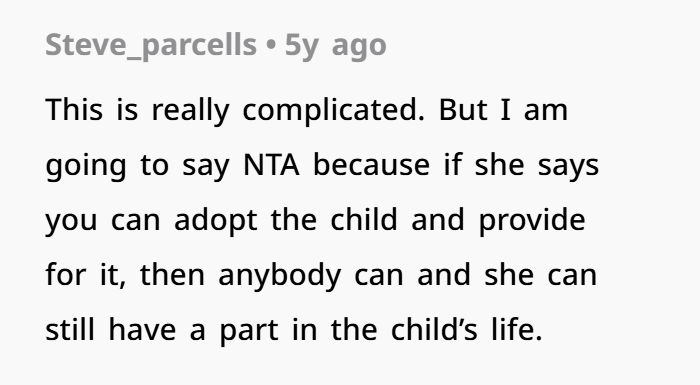
Most commenters said that the author made a hard yet right decision by not taking another person’s responsibility onto his shoulders





Final Thought
This situation is about late pregnancy, financial responsibility, adoption pressure, and family boundaries.
The main point is simple:
Support is important in families, but no one should be forced to become a full-time parent for a child they did not agree to raise.
Healthy parenting requires planning, stability, and full commitment from the person choosing to be the parent.