My Future MIL Refuses to Attend Our Wedding Unless It’s “Prestigious Enough”

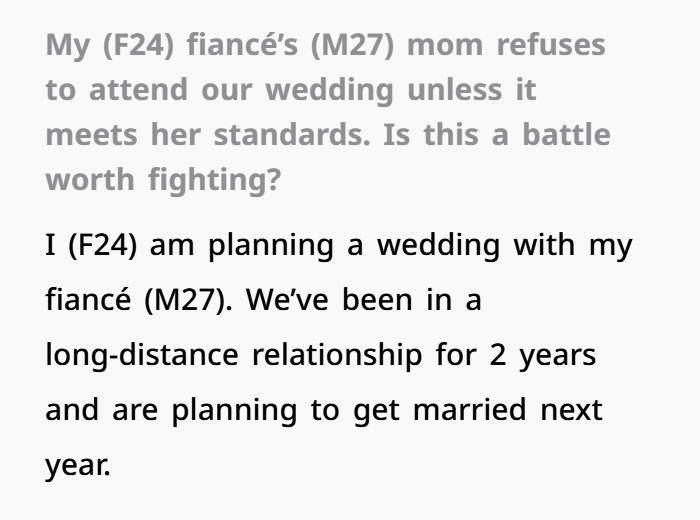
Wedding planning can be very stressful, especially when family opinions start causing conflict. In this case, a young couple in a long-distance relationship is trying to plan their wedding in a way that fits their budget, financial situation, and personal values.
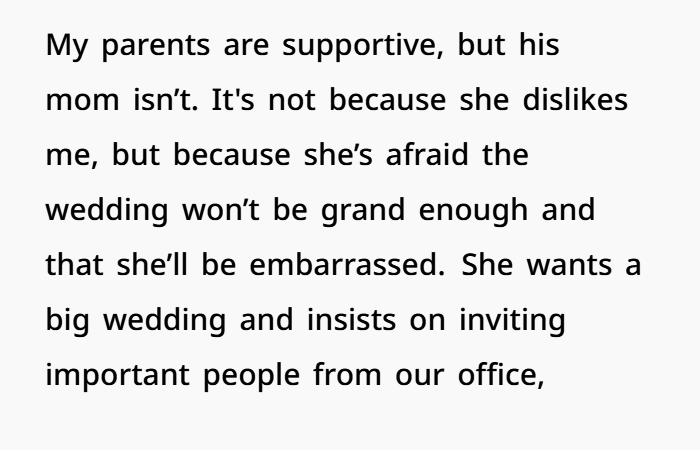
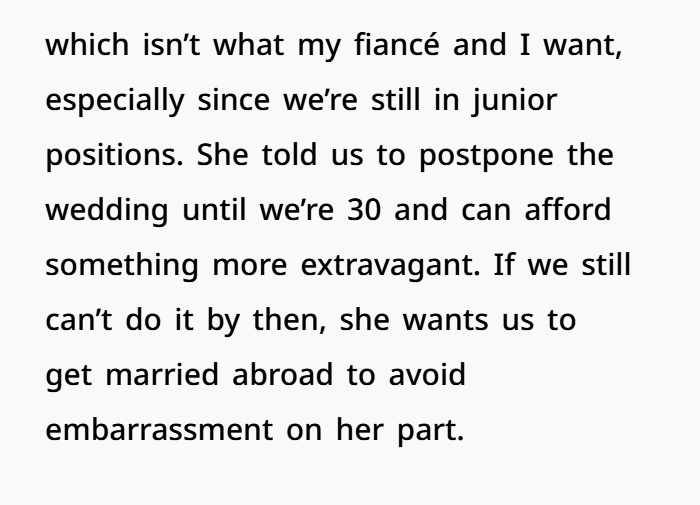
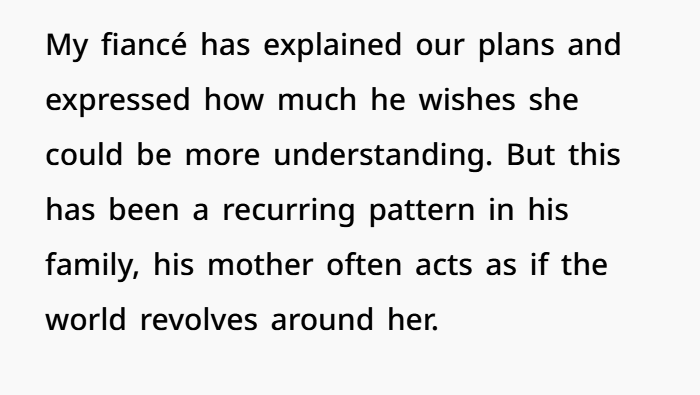
The groom’s mother, however, wants a much larger and more luxurious wedding. She feels the event should look impressive and reflect well on the family. Her focus seems more on social expectations and how others will view the wedding, rather than on the couple’s actual wishes or the meaning of the marriage itself.
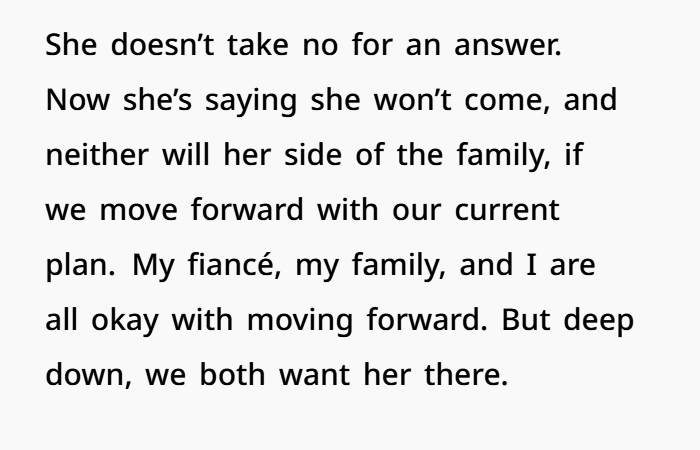
The couple has tried to handle the situation calmly. They have included her in discussions, tried to compromise, and understood her concerns. Still, the same issue keeps coming up. She continues to push for her version of the wedding and has said she may not attend if things do not go her way.
This has left the bride feeling emotionally stressed and stuck in the middle of family pressure. She does not want her fiancé to feel torn between his family and his future wife. At the same time, she feels hurt that their wedding, which should be about love and commitment, is being treated more like a display of social status than a personal celebration.
This situation highlights the importance of clear communication, wedding planning boundaries, family expectations, and emotional balance in relationships.

This situation is not just about wedding planning. It is really about family control, emotional pressure, and different expectations about how a wedding should look.
A Strong Couple Relationship
One positive part of this story is that the couple is united.
The fiancé is supporting his future wife and still wants to marry her, even with the family conflict. This is very important in a marriage because many problems start when one partner does not stand by the other.
Wanting Family Support
Even with conflict, they still want his mother at the wedding.
Most people hope their parents will support them on important life days like weddings. Many children still want love, approval, and presence from their parents, even when relationships are difficult.
Different Views About Weddings
The main problem is that the mother sees the wedding very differently.
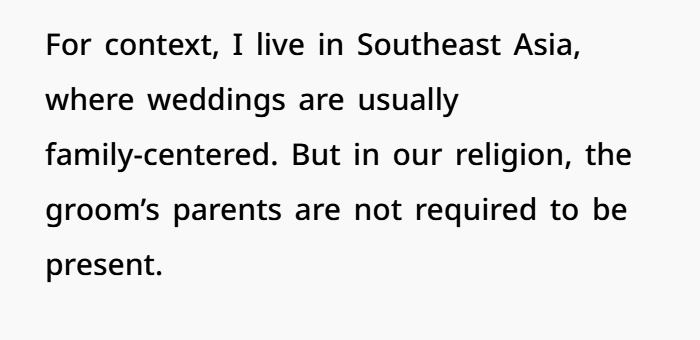
In many traditional and Southeast Asian families, weddings are seen as big social events. They are often connected to:
- Family reputation
- Social status
- Community expectations
- Appearance and image
This can create pressure for parents to want a “perfect” or impressive wedding.
When Expectations Become Pressure
The issue is not just disappointment.
The problem is that the mother is making her support feel conditional. It feels like she will only fully accept the wedding if it looks the way she wants.
This creates emotional pressure for the couple.
Money and Independence Matter
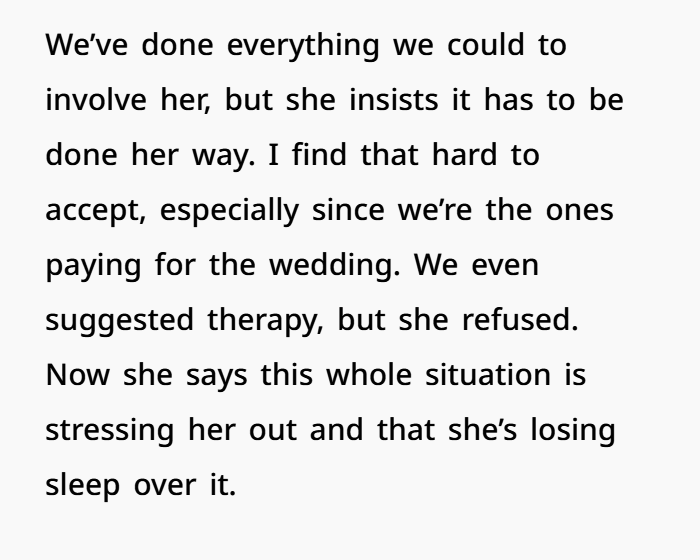
The couple is paying for the wedding themselves.
When a couple pays for their own wedding, they usually want more control over decisions. This is normal in modern wedding planning.
Problems happen when parents still expect full control even without contributing financially.
Weddings vs Marriage
A wedding is one day.
A marriage is a long-term relationship.
A successful marriage depends on:
- Trust
- Communication
- Emotional support
- Respect
- Teamwork
Expensive decorations or luxury venues do not guarantee a strong marriage.
Focus on Image and Status
The mother also seems focused on appearance and social status.
She wants to invite important people and create a wedding that looks impressive to others. This shows the wedding is partly about public image for her.
This is different from what the couple wants.
Therapy and Communication Efforts
Therapy was suggested, which shows the couple tried to solve the problem in a healthy way.
But the mother refusing therapy while still applying pressure makes the situation harder. It suggests she does not see herself as part of the conflict.
The Real Boundary Problem
The main issue is not communication anymore.
It is boundaries.
The couple wants to make their own decisions. The mother wants more control over those decisions.
These two views are now in conflict.
Why This Situation Is So Hard
Many couples think that if they explain things clearly, the other person will understand.
But in reality, understanding is not the problem. The real issue is disagreement.
She may already understand. She just does not agree.
Risk of Giving In
If the couple gives in completely, it may create a bigger problem later.
It can teach that pressure and emotional demands are the way to get control. This can affect future decisions like:
- Where the couple lives
- Parenting choices
- Money decisions
- Family traditions
Healthy Way Forward
The healthiest option is clear and calm communication.
They can say something like:
“We love you and want you there. But this is the wedding we can afford and the way we want to celebrate. We hope you will still join us.”
Then the decision is left to her.
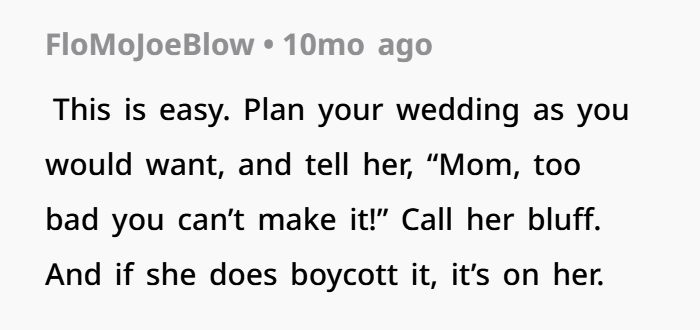
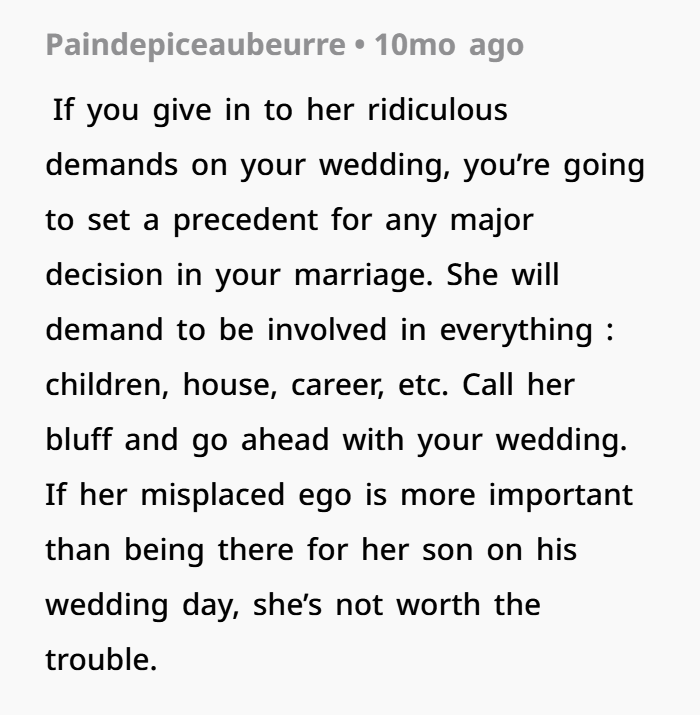
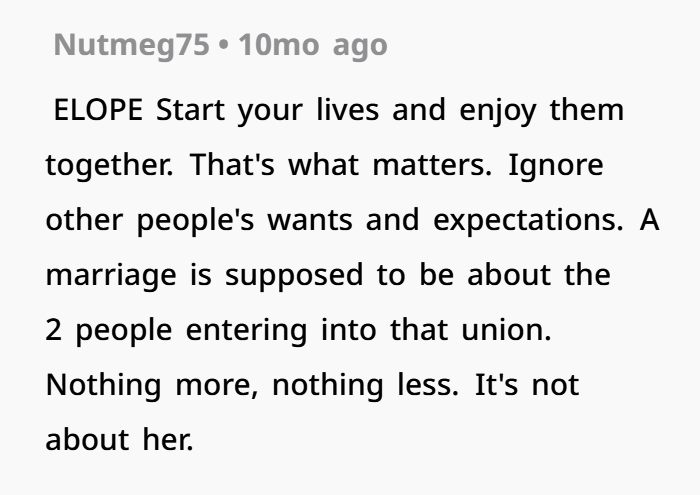
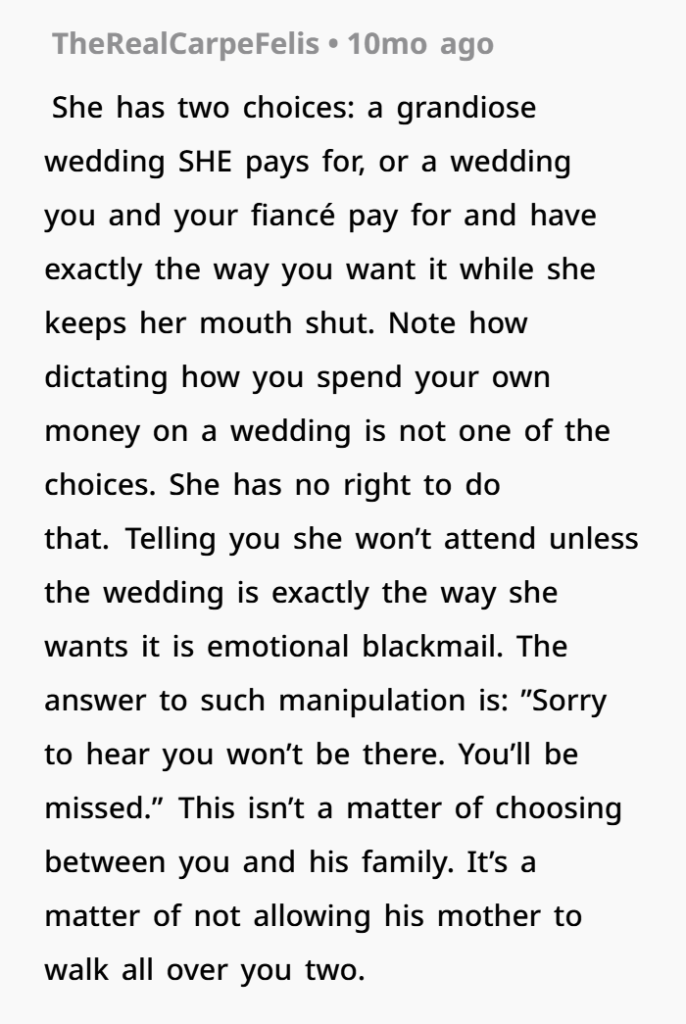
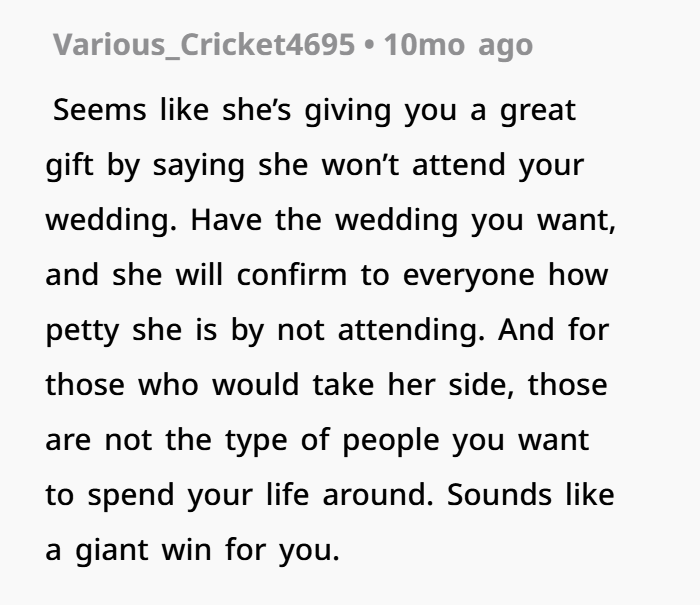
Readers had plenty to say, and the woman responded to some of them in the comments





Final Thoughts
This story is not only about a wedding. It is about:
- Family boundaries
- Emotional pressure
- Control and expectations
- Financial independence
- Respect in relationships
In the end, a wedding should be about the couple starting their life together. It should not become a place for family pressure or control.
A strong marriage is built on love, respect, and support — not approval from others.