
AITA: Refusing to change work arrangements after ex relocates 100 miles away and struggles with childcare logistics

A co-parenting disagreement has become more serious between two separated parents who share 50/50 custody of their daughter. For a few years, they had a stable routine that worked well for both of them.
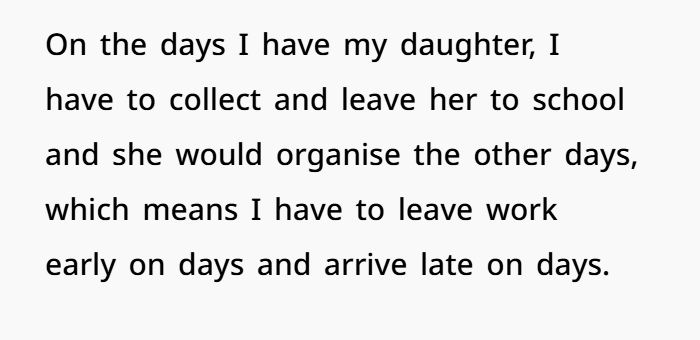
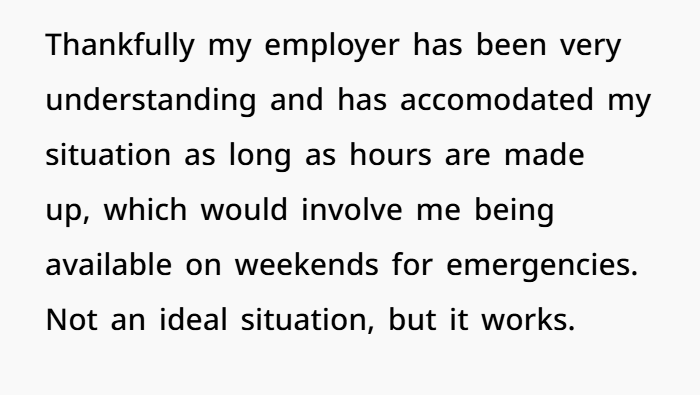
The father followed a fixed schedule and handled school drop-offs and pickups during his custody days. His employer also gave him some flexibility, as long as he worked weekends. This helped him manage work-life balance and his childcare responsibilities in a steady way.
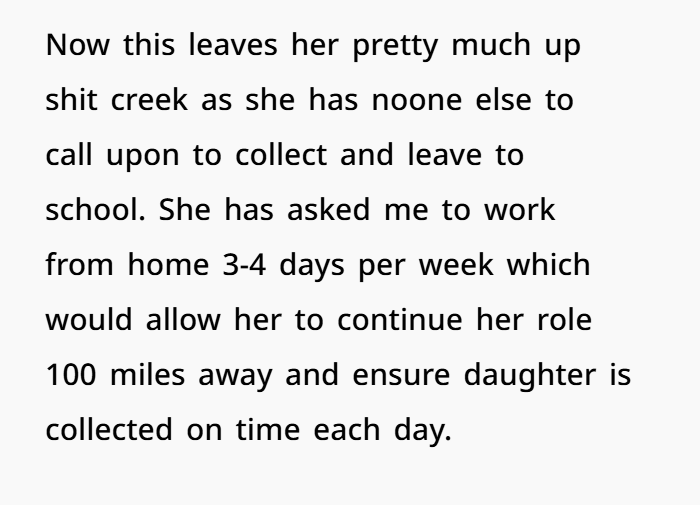
Later, the situation changed when the child’s mother started a new job about 100 miles away. Instead of moving closer to her workplace, she chose to travel long distances every day. At first, she tried to manage school routines with help, but it became too difficult to continue.
After that, she asked the child’s father to work from home three to four days a week so she could handle her job and long commute more easily. However, the father explained that his job does not allow that much remote work or schedule changes.
When he said no, the situation became tense. The mother felt he was not supporting her new job and daily struggles. The father felt that his work structure and the existing custody arrangement should not be changed in that way.
This co-parenting situation shows how stressful things can become when work schedules, parenting duties, and custody plans do not match. Even small changes like a new job or long commute can create pressure in shared parenting arrangements if there is no flexibility or backup plan.
In the end, this case highlights the importance of clear co-parenting plans, honest communication, and realistic expectations. Family law experts often say that custody arrangements should work for both parents as much as possible, but the main focus should always stay on the child’s stability, routine, and well-being.







From a family law point of view, shared custody is mainly based on what is best for the child. It is not based on the personal convenience or work schedule of either parent. In most places, including standard child custody laws and official guidelines, both parents are expected to follow the agreed routine unless the custody order is officially changed through mediation or a court process.
One key issue in situations like this is relocation. If one parent chooses to take a job far away or changes their daily travel plans, the law usually does not require the other parent to adjust their job or working hours to solve the problem. Courts usually focus on the child’s school routine, stability, and overall well-being when reviewing custody changes. In most cases, one parent cannot shift the impact of their personal decision onto the other parent without a legal agreement or updated custody plan.
Another important factor is workplace flexibility. Most employers are not legally required to allow remote work unless it is part of company policy or a specific agreement. A request for working from home depends on the job type and employer rules. Even if a parent has some flexibility, it does not always mean extra changes are possible or reasonable.
In co-parenting arrangements, experts often stress the importance of clear communication and shared responsibility. Research on co-parenting conflict shows that problems often grow when one parent expects the other to change their job or routine because of a personal choice, such as moving for work, without updating the custody agreement. This can lead to stress, frustration, and long-term disagreement if not handled properly.
Family law professionals usually recommend using formal steps when life circumstances change. This may include mediation services, legal discussion, or a court review to update the custody arrangement. These structured options help ensure that changes are fair, practical, and focused on the child’s best interests.
See the comments to know what people said


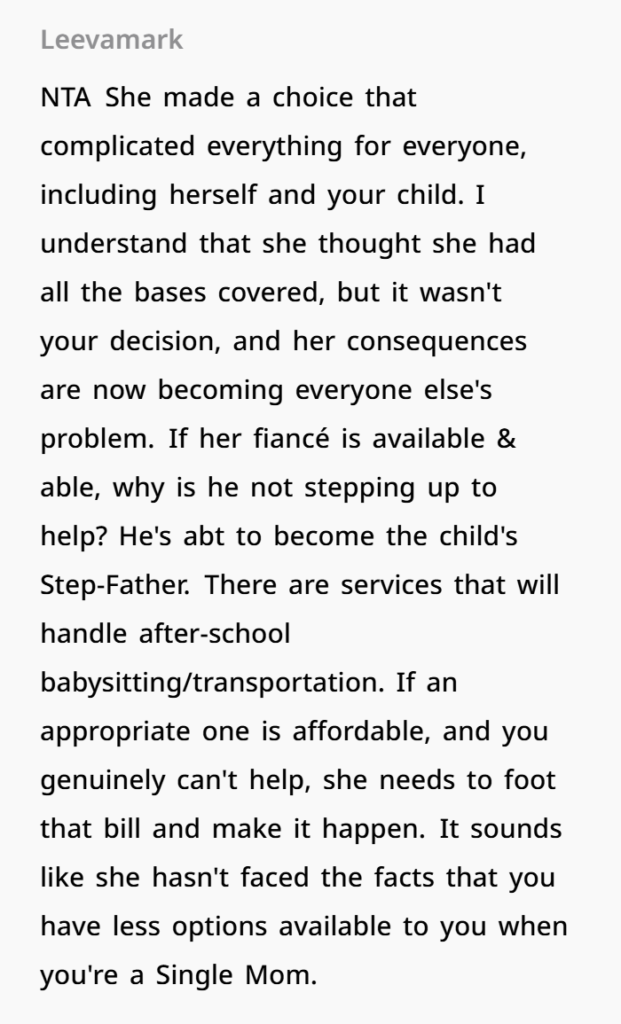



Overall, refusing to change work conditions to match a former partner’s voluntary job change is generally not seen as unreasonable. The better solution is usually to review and adjust the custody arrangement legally so that both parents share responsibility in a fair and practical way, while keeping the child’s best interests as the main focus.