Family Tradition Falls Apart After Disagreement Over Free Table Rules
Family traditions do not always have to be big events. Sometimes, the smallest ideas become the most special because they bring people closer and create lasting memories.
One woman talked about her family’s free table tradition. Family members would place unwanted items on a table, and others could take anything they needed or liked.
It was a simple way to share belongings, reduce waste, and help each other. What started as a small family activity became a tradition that everyone looked forward to.
Sadly, the tradition stopped after her grandmother passed away. Years later, the woman brought it back because she wanted to keep the family bond strong and continue a tradition that meant so much.
Sadly, the tradition did not last long. Her aunt had a different idea about how the rules should work, and the disagreement caused the arrangement to end.

Why Losing a Family Tradition Can Feel So Personal
Family traditions often seem small, but they can mean a lot. They give people a reason to come together, share time, and create memories that can last for years.
Experts say family rituals can help people feel connected and give families a stronger sense of identity. These simple moments can bring comfort because they remind people of their past and the people they love.
For this family, the free table was not just about exchanging old items. It was a tradition started by their grandmother, and bringing it back to her old home was a way to remember her.
The event gave relatives a chance to meet, talk, and spend time together. It turned a simple idea of sharing unwanted items into something that helped keep the family close.
Traditions passed down through generations can also teach younger family members about their family history and values. A small gathering can carry a much deeper meaning when it connects people to those who came before them.
That is why losing a family tradition can hurt. It is not only about stopping an activity. It can feel like losing a special connection and a piece of family history.
Why Some Objects Become More Than Just Things
Some items have a value that cannot be measured by money. A simple object can hold memories, stories, and emotions because of the person it came from.
This is why the woman was upset about her grandfather’s toolbox. To someone else, it may have looked like an old box that was no longer useful. But to her, it was a family keepsake that belonged to her grandfather and still had meaning.
People often feel attached to items connected to important moments in their lives. A gift, an inherited item, or something used by a loved one can remind them of special memories.
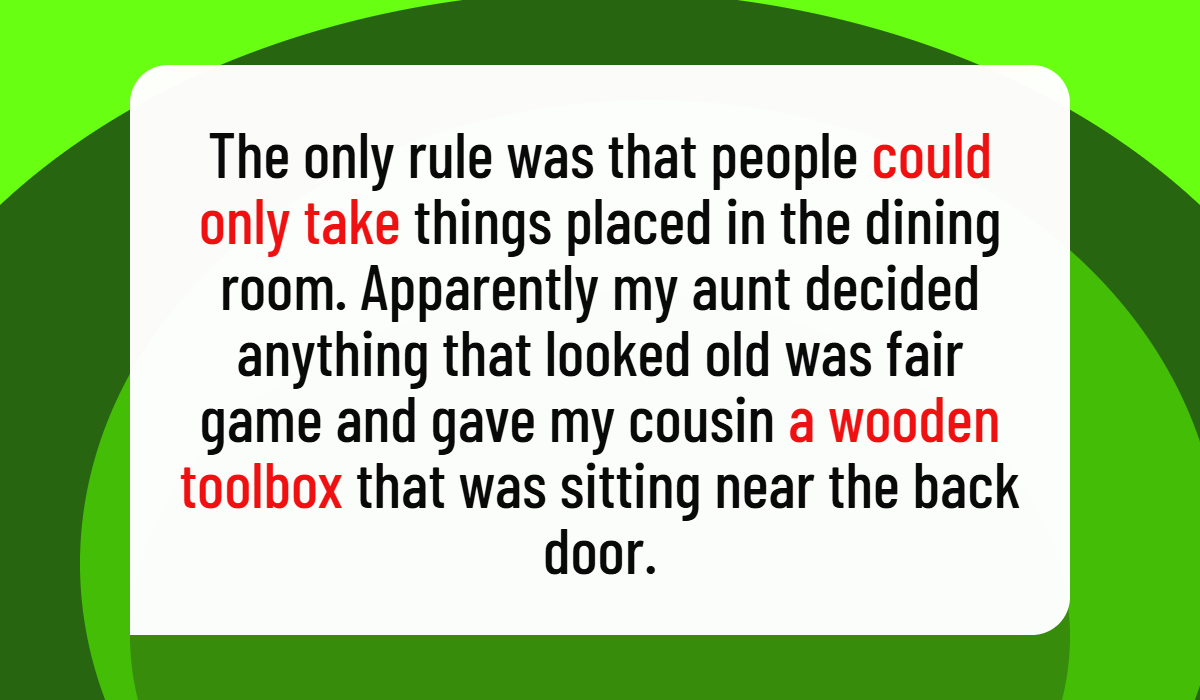
The family’s problem was not only about the toolbox. It was also about trust and respect. The rules of the free table were clear. Relatives could take items placed on the table, but other belongings in the home were not part of the exchange.
When the aunt took something from another area, the woman felt that the trust behind the tradition had been broken. She had opened her home because she believed everyone would respect the rules.
After that happened, she had a difficult choice. She could continue the family tradition, or she could stop it because she no longer felt comfortable hosting it.
Sometimes, one small moment can change how people feel about a tradition they once loved. A family activity meant to bring people together can become difficult when trust is lost.
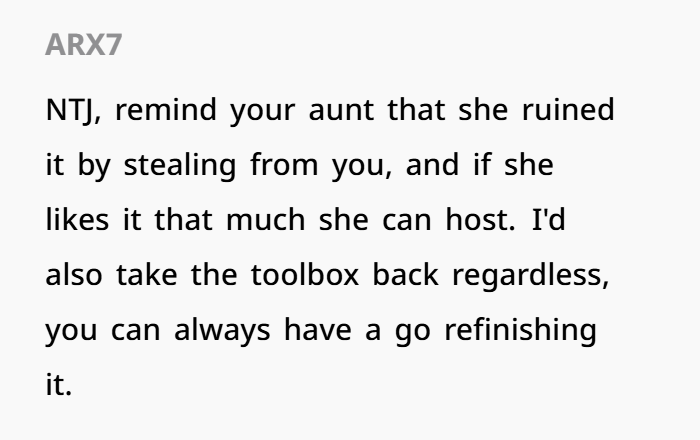
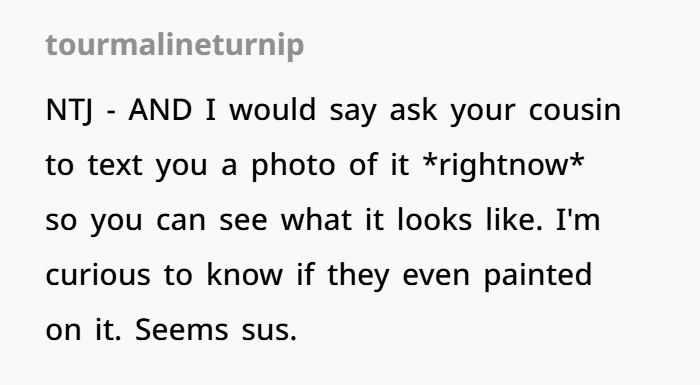
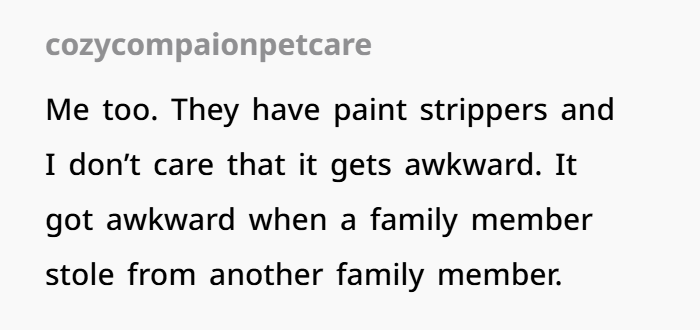
See the comments to know what people said


Family traditions are often about much more than the activity itself. They are about the memories, feelings, and connections people build over time.
The free table was meant to bring relatives together and keep a piece of the family’s past alive. But when personal belongings and family rules were not respected, the tradition became a source of stress instead of happiness.
This story shows how important trust and communication are in any family gathering. Simple traditions can last for generations when everyone treats them with care and respect.