I Let My Divorcing Friend Stay in My New House—Now My Fiancée Wants Him Gone, but He Has Nowhere Else to Go
A man thought he was doing the right thing when he invited his friend to stay at his house. His friend was dealing with a divorce and needed somewhere to live while looking for an apartment. The plan was only meant to last a short time. However, paying for divorce lawyers, child support, and everyday expenses left his friend with very little money. Finding affordable housing became much harder than expected.
The man and his fiancée had just reached an important goal in their lives. They had purchased their first house and were looking forward to enjoying their own space. After spending years living with others, they wanted a quiet and comfortable home. But having another person around made it difficult to enjoy that freedom. Although the friend was only there for part of each month, the couple still felt like they were sharing their home instead of living on their own.
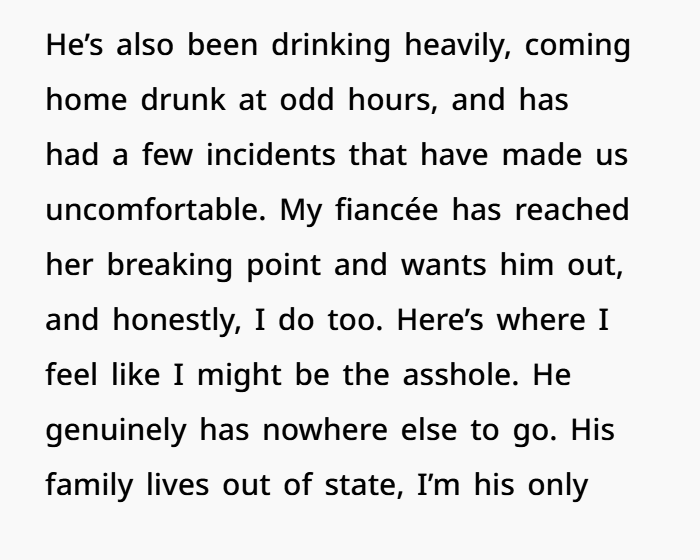
Over time, the situation became more stressful. The friend often drank too much and sometimes came home very late at night. A few uncomfortable incidents made the couple feel that the arrangement was no longer working. The fiancée was ready for him to leave, and her partner agreed. They wanted to focus on their relationship, enjoy their new home, and create a peaceful living environment. Their home was supposed to be a fresh start, not another source of worry.
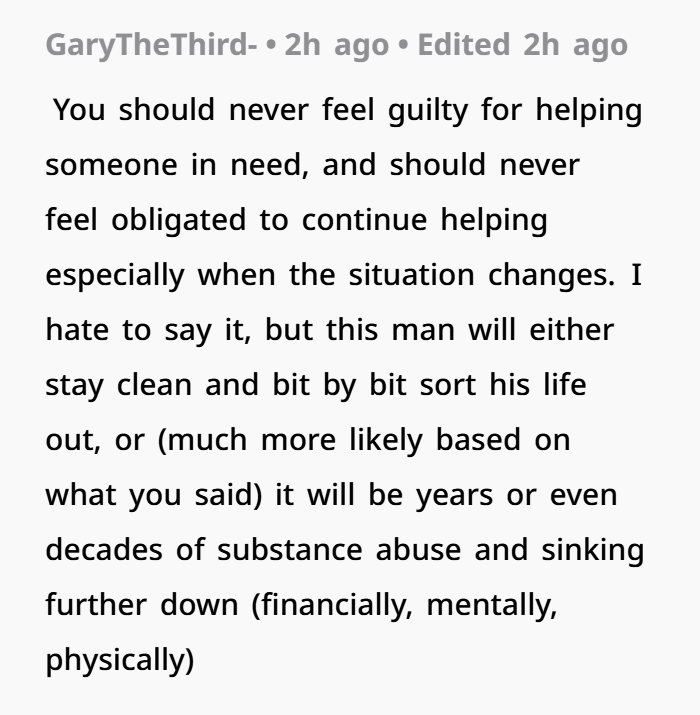
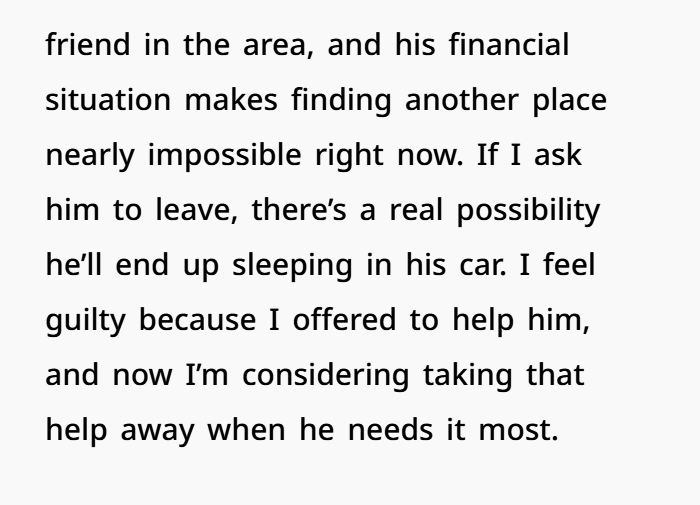
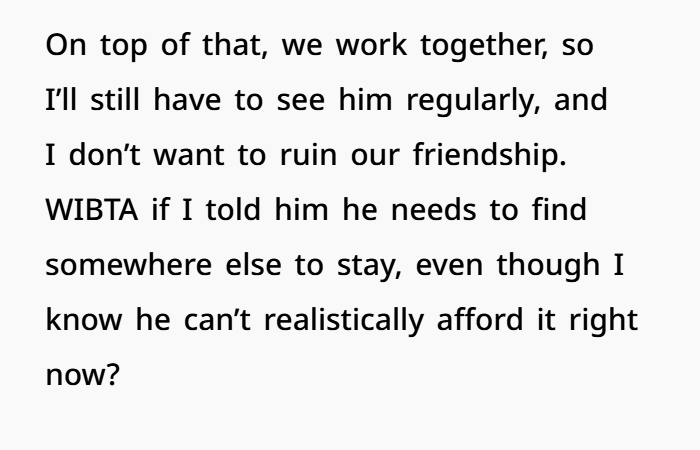
Still, asking a close friend to move out was not an easy choice. The friend had no relatives nearby and could not afford regular apartment rent. He might even have to sleep in his car if he could not find another option. The man felt guilty because he had offered to help in the first place. He also worried about losing a friendship and creating problems at work. Now he was trying to balance kindness with personal boundaries while protecting the home and future he was building with his fiancée.

He Helped His Friend During a Divorce, but Now He Wants His Home Back
Helping a friend during a hard time is a kind thing to do. But what happens when a short stay turns into months, and there is no sign of the person moving out?
That is the problem one homeowner is facing.
He let his friend stay with him during a difficult divorce. His friend was dealing with money problems, family responsibilities, and legal expenses. At first, it seemed like a temporary arrangement.
But things did not go as planned.
The homeowner and his fiancée bought their first house because they wanted a place of their own. They were excited about having more privacy and starting their life together.
Instead, they are still sharing their home with his friend.
Now, the homeowner wants his friend to move out. The problem is that his friend is still struggling financially and has nowhere nearby to go.
So, is it wrong to ask him to leave?
Helping a Friend Does Not Mean Giving Up Your Own Space
There is nothing wrong with helping someone who is going through a difficult time.
Divorce can be stressful and expensive. Between attorney fees, child support, and everyday living costs, a person can quickly find themselves in a difficult financial situation.
The homeowner understood this and offered his friend a place to stay.
That was a generous decision.
But helping someone for a few weeks or months is very different from becoming responsible for their housing needs.
The homeowner has his own bills and responsibilities.
He and his fiancée recently made a major financial commitment by purchasing their first home.
Buying a house often means years of saving, comparing mortgage rates, planning a budget, and preparing for monthly expenses.
There are mortgage payments, property taxes, homeowners insurance, and home maintenance costs to think about.
After making such a big investment, it makes sense that the couple wants to enjoy their home.
They should be able to relax, spend time together, and make plans without worrying about another person living there.
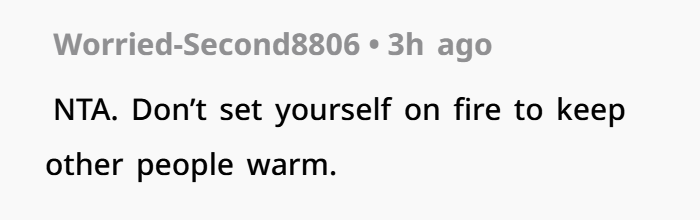
Being a good friend does not mean offering someone a place to live forever.
His Friend’s Financial Problems Are Not Easy
The friend is clearly having a hard time.
Divorce can affect almost every part of a person’s life, especially their finances.
Legal fees, family expenses, and the cost of maintaining a separate household can make it difficult to save money.
A 2018 study by researcher Thomas Leopold, published in Demography, looked at how divorce affects men and women. The research found that divorce can have serious financial effects, although those effects differ between people.
So, it is understandable that the friend may not be ready to rent an apartment on his own.
He also has another problem.
His family lives out of state, and he does not have many friends nearby who can help.
That leaves the homeowner as his main source of support.
But this is where things become complicated.
The homeowner may feel that asking his friend to leave means abandoning him.
However, there is a difference between helping someone and being responsible for solving all their problems.
The homeowner did not cause the divorce or create the financial difficulties.
He simply tried to help.
And he should not have to put his own life on hold because his friend is still struggling.
The Drinking Is Making the Living Situation Uncomfortable
Money is not the only concern.
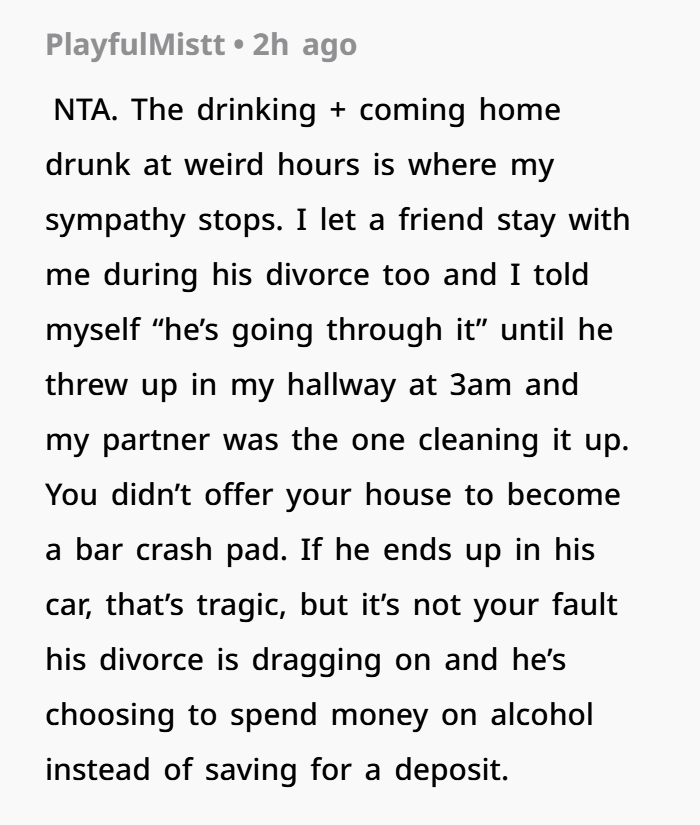
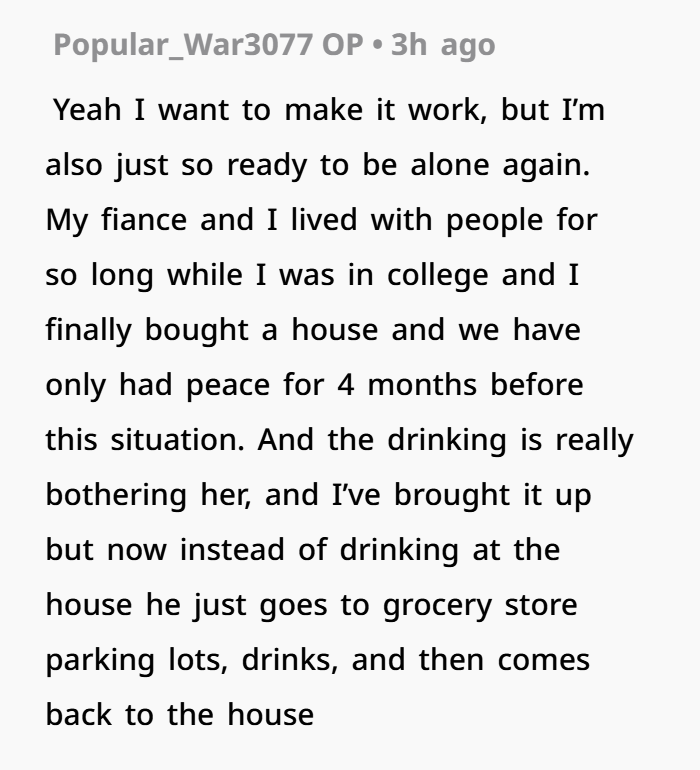
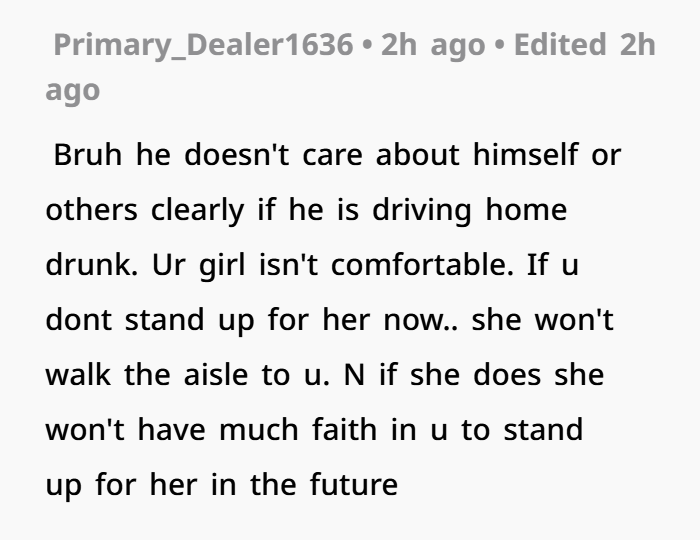
The friend has also started drinking more often.
He sometimes comes home intoxicated late at night, and his behavior has made the homeowner and his fiancée uncomfortable.
This changes the situation.
It is one thing to share your home with a friend who needs temporary help.
It is another thing when that arrangement begins to affect your peace and comfort.
According to the National Institute on Alcohol Abuse and Alcoholism, excessive drinking can affect judgment and create problems in personal relationships.
That does not mean this friend has an alcohol use disorder.
It also does not mean he is a dangerous person.
But the couple should not have to ignore behavior that makes them uncomfortable.
Their home should be a place where they can relax.
If the friend is having trouble dealing with stress, professional counseling or other support services may be helpful.
Still, the homeowner cannot be expected to manage every part of his friend’s personal life.
His Fiancée Has a Right to Enjoy Her Home
Another important part of this story is the homeowner’s fiancée.
She agreed to buy a home with him because they wanted to start their future together.
For many couples, buying a first home is an exciting experience.
They imagine decorating their rooms, planning home improvement projects, inviting family over, and enjoying quiet evenings together.
Having their own space is part of that experience.
But the couple has not been able to fully enjoy it.
Instead, they are still living with someone else.
Even when a guest is a good friend, sharing a home can become tiring.
Simple things like cooking dinner, watching television, or spending time alone may feel different when another adult is always around.
Over time, that can create stress in a relationship.
The fiancée’s feelings matter just as much as the homeowner’s.
If she is uncomfortable with the arrangement, her concerns should not be ignored.
A couple should be able to make decisions about their home together.
The homeowner needs to think about his future marriage, not just his friend’s current problems.
Could Asking His Friend to Move Out Create Legal Problems?
Before asking his friend to leave, the homeowner should understand the possible legal issues.
Many people assume that if someone is staying in their house without a rental agreement, they can simply ask that person to leave at any time.
But that is not always true.
Landlord-tenant laws vary by state and city.
In some places, a person who has lived in a home for a certain amount of time may have legal occupancy rights, even without a written lease.
For example, New York City has rules that protect certain lawful occupants who have lived in a home for at least 30 consecutive days.
However, this rule does not apply everywhere.
The homeowner should check his local housing laws before taking action.
Depending on the situation, he may need to provide written notice or follow a legal process.
Changing the locks or removing someone’s belongings without following the law could lead to legal trouble.
A landlord-tenant attorney or local legal aid service can help explain the rules.
Getting legal advice before making a decision may prevent unnecessary problems and expenses later.
There Are Other Affordable Housing Options
The homeowner may feel guilty because his friend cannot afford a place of his own.
But renting an entire apartment is not the only option.
His friend could look into renting a room in a shared house.
This may be more affordable than paying for an apartment alone.
He could also search for a roommate to split rent and utility bills.
Depending on where he lives, local rental assistance programs or nonprofit housing organizations may offer useful resources.
Another option is speaking with family members.
Even though they live out of state, they may be able to help him explore other living arrangements.
He could also review his monthly budget.
Looking at income, debt payments, rent prices, and other expenses may help him understand what he can realistically afford.
If debt is a major problem, a qualified financial counselor may help him explore budgeting and debt management options.
The homeowner can offer to help with this process if he feels comfortable doing so.
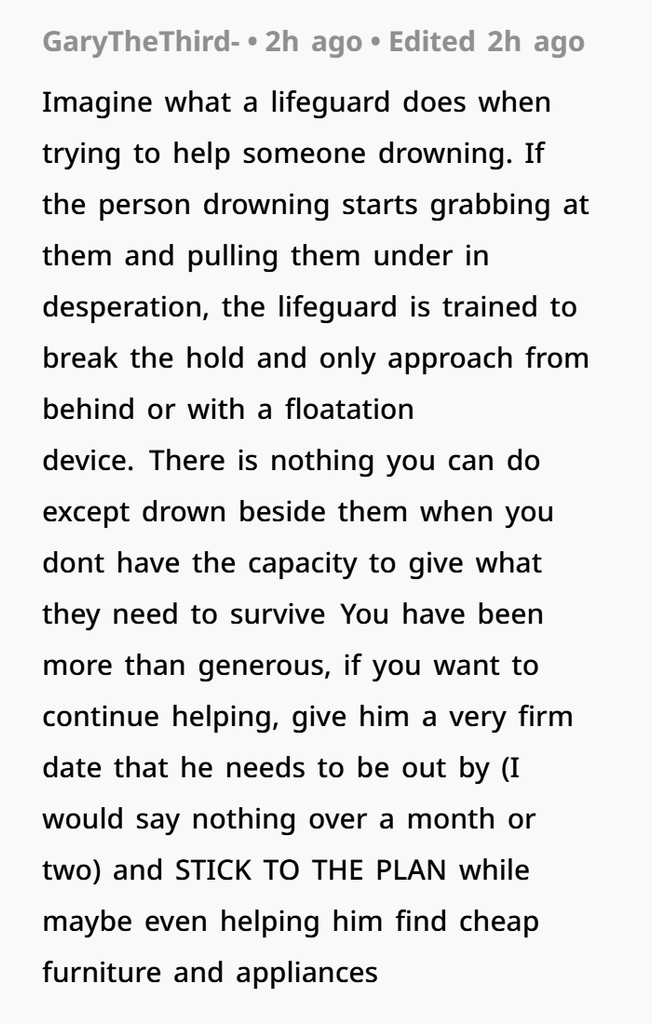
But he does not have to keep providing housing while his friend figures everything out.
How Should He Tell His Friend It Is Time to Leave?
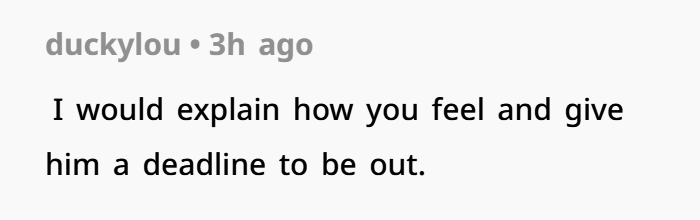
The best approach is to have a calm and honest conversation.
The homeowner should explain that he was happy to help during the divorce, but the living arrangement is no longer working.
He does not need to be rude or make his friend feel ashamed.
He can simply explain that he and his fiancée need their own space.
For example, he could say:
“I know you’ve been going through a difficult time, and I’m glad I could help. But we bought this house because we wanted to start our life together. We need to make a plan for you to find another place.”
This makes the message clear without turning it into an argument.
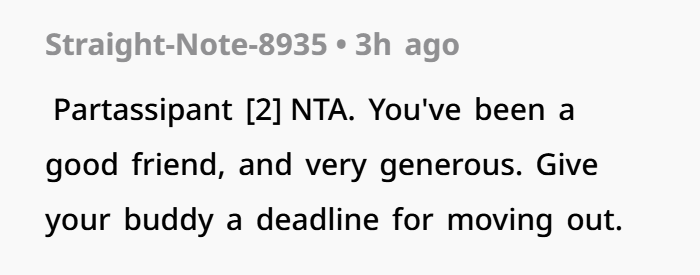
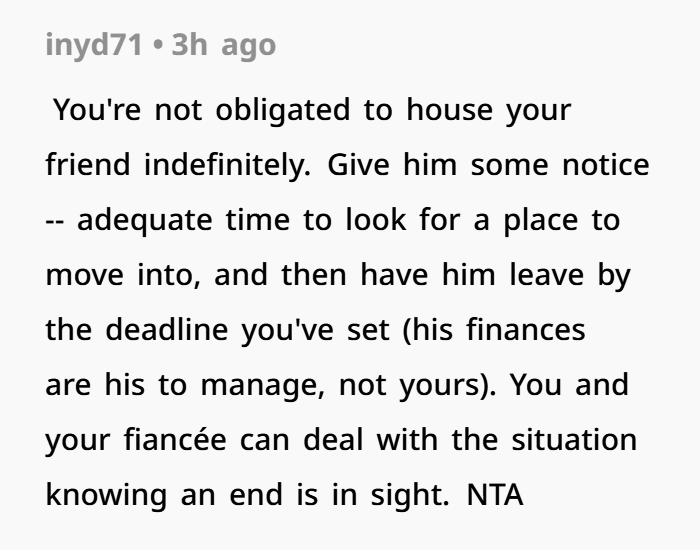
He should also discuss a move-out date that follows local housing laws.
Giving his friend appropriate notice may help him prepare financially and look for another place.
But the homeowner should avoid leaving the arrangement open-ended again.
Without a clear plan, the same situation could continue for many more months.
He Should Not Blame His Fiancée
One mistake the homeowner should avoid is making it seem like his fiancée is the only person who wants the friend to leave.
That could create unnecessary problems.
His friend may start blaming her for the decision.
It could also make her feel unsupported by her future husband.
Instead, the homeowner should explain that this is a decision they have made together.
He should be honest about the reasons.
They want more privacy, the living arrangement has lasted longer than expected, and some recent behavior has made them uncomfortable.
There is no need to make excuses.
A clear explanation is better than placing the blame on someone else.
Setting Boundaries Does Not Make You Selfish
Many people struggle to say no when someone they care about needs help.
They worry about hurting the person’s feelings.
They may also feel guilty because they know the other person has limited options.
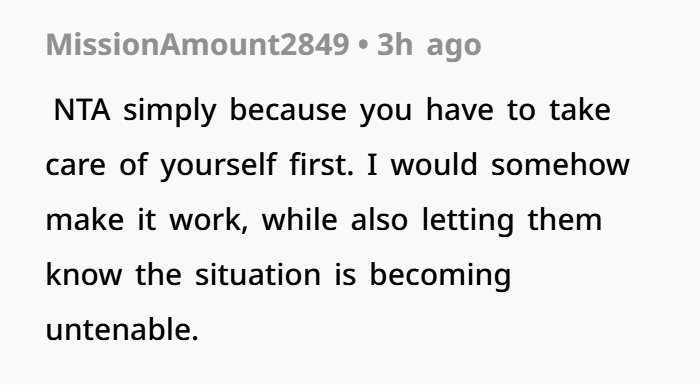
But healthy boundaries are important.
They help people protect their personal space, finances, time, and relationships.
Psychologists Edward Deci and Richard Ryan have studied how personal choice and independence affect well-being through their work on self-determination theory.
Their research is not specifically about friends sharing a house, but it helps explain why having control over your own life and decisions matters.
In this situation, the homeowner has already done something generous.
He gave his friend a place to stay when he needed help.
That kindness does not disappear just because he now wants the arrangement to end.
His friend may feel disappointed.
He may even be upset at first.
But that does not mean the homeowner is making an unfair decision.
Sometimes, setting a boundary is uncomfortable, even when it is necessary.
Final Verdict: NTA — Not the Asshole
The homeowner is not wrong for wanting his home back.
He helped his friend during a difficult divorce and gave him a place to stay when money was tight.
That was a thoughtful thing to do.
But what started as a temporary favor has become a long-term living arrangement.
His friend’s financial struggles are real, and finding affordable housing may take time.
Still, the homeowner and his fiancée have their own responsibilities and plans for the future.
They deserve to enjoy their first home together.
The homeowner should have an honest conversation, provide legally appropriate notice, and offer reasonable help with finding another place if he wants to.
He does not need to be harsh or unkind.
But he also does not need to keep delaying the decision because he feels guilty.
You can care about a friend without becoming responsible for their housing, finances, and personal problems forever.
At some point, helping someone also means giving them the chance to find their own way forward.
And wanting peace, privacy, and comfort in your own home does not make you a bad friend.
Top Comments From Readers