My Landlord Threatened My Extra Month Because I Said No to a Same-Day Viewing
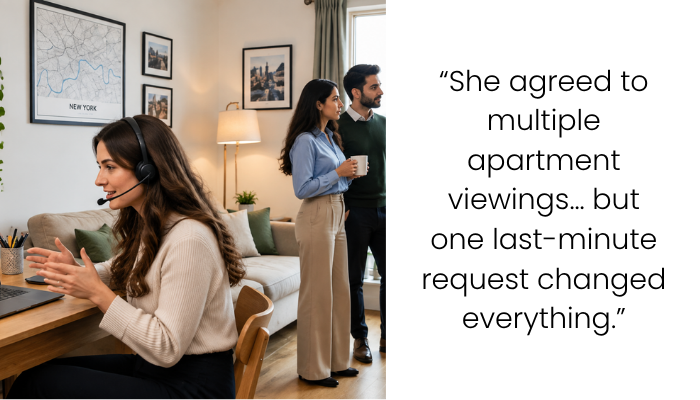
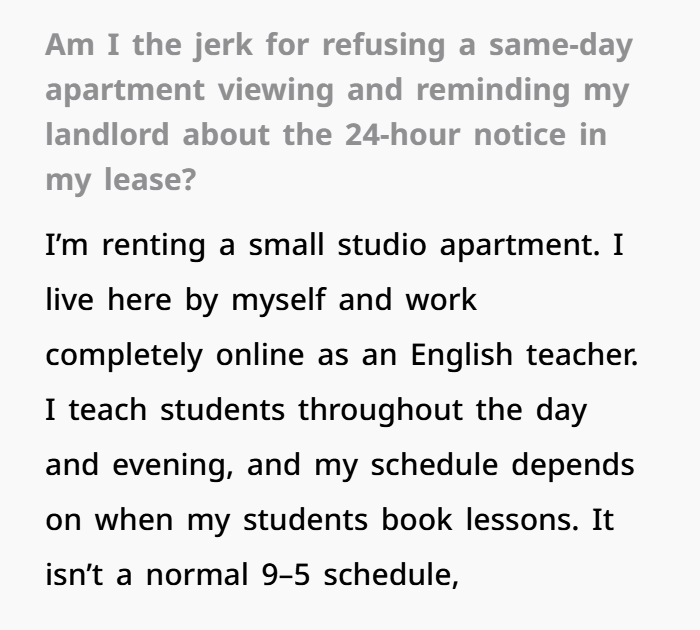
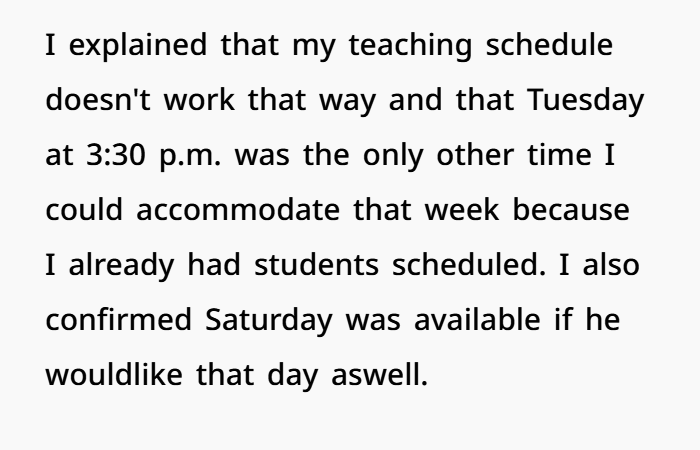
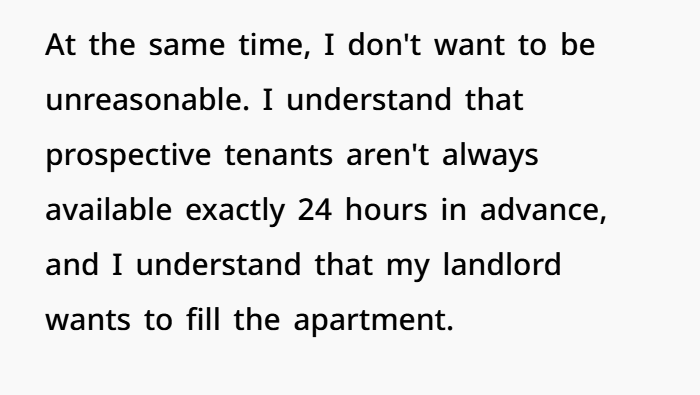
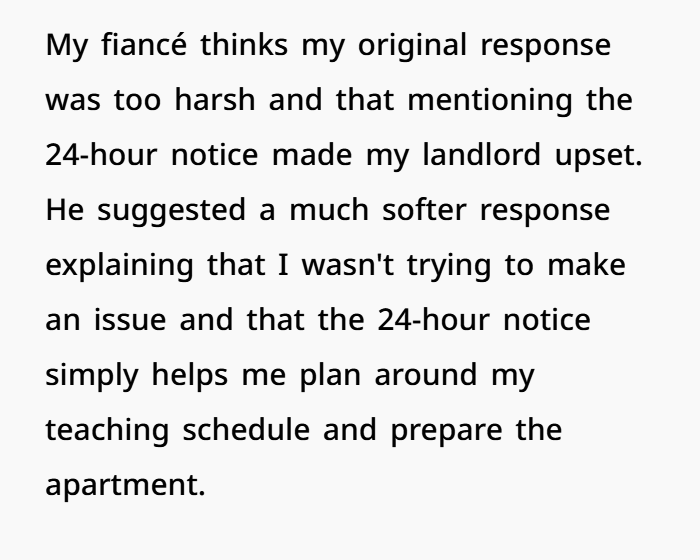
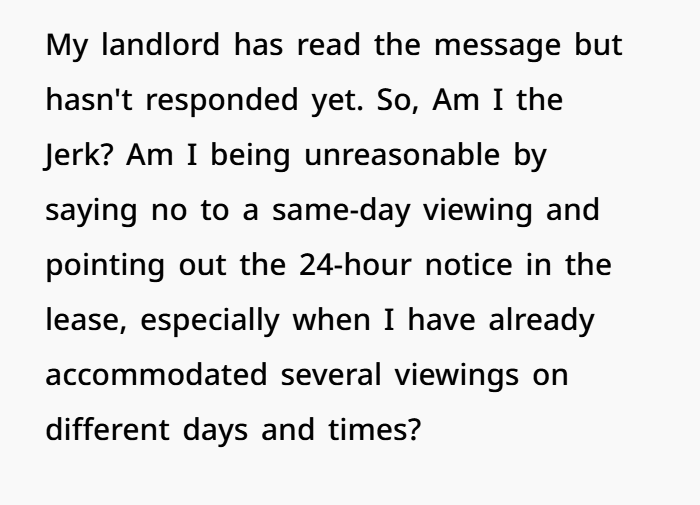
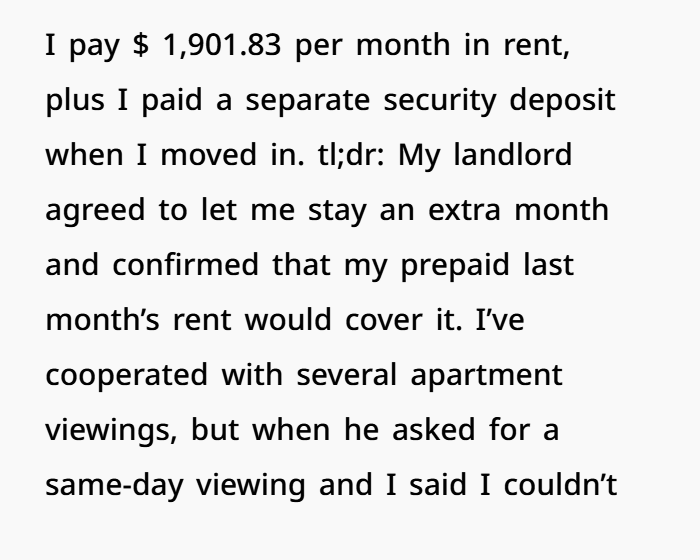
A woman renting a small apartment recently shared her concern about a disagreement with her landlord. She works as an online English teacher from home, which means her working hours can change based on student appointments. Because of her remote work schedule, she needs some notice before making changes to her routine.
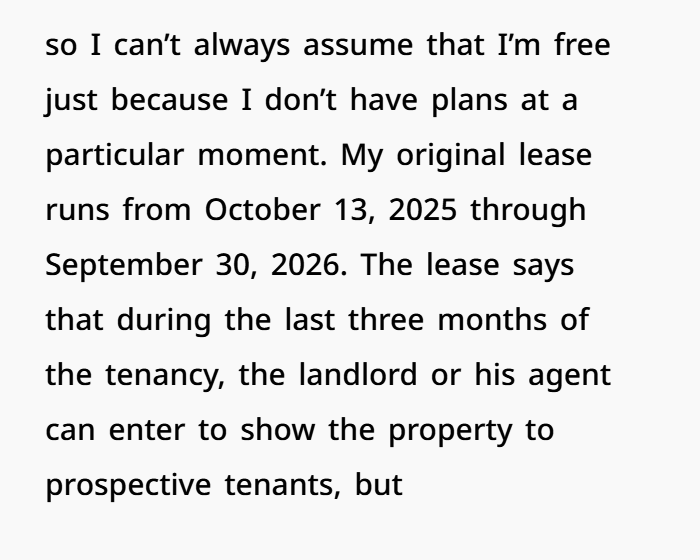
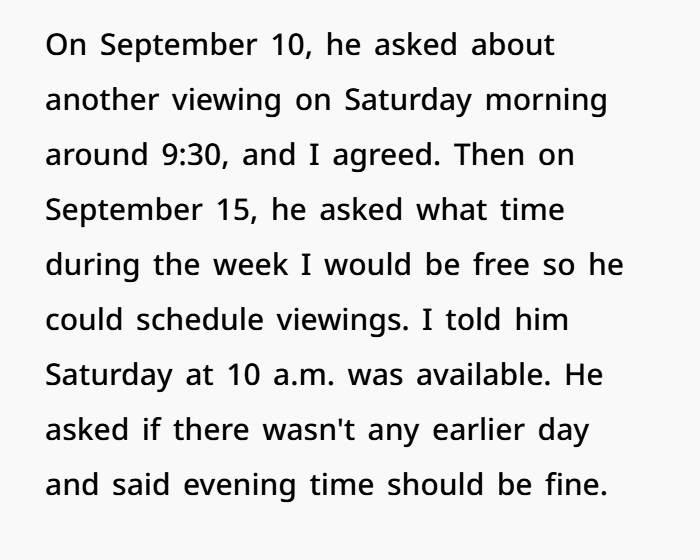
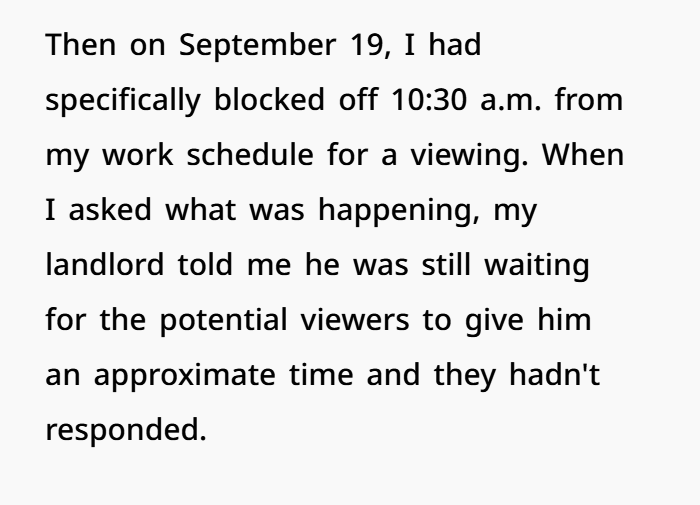
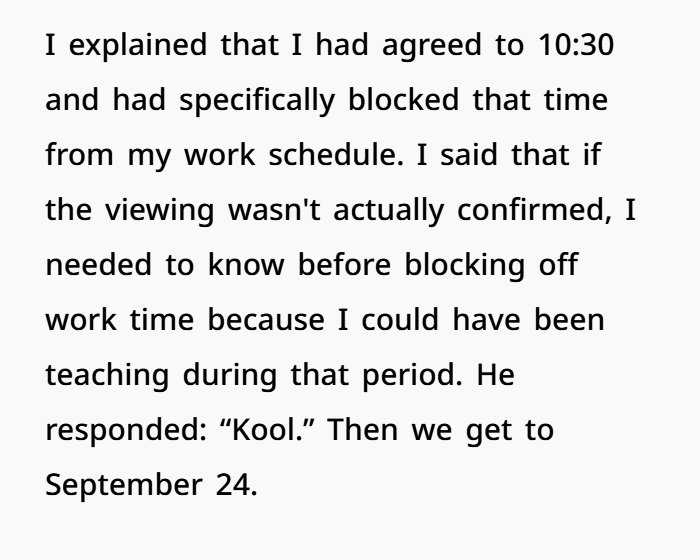
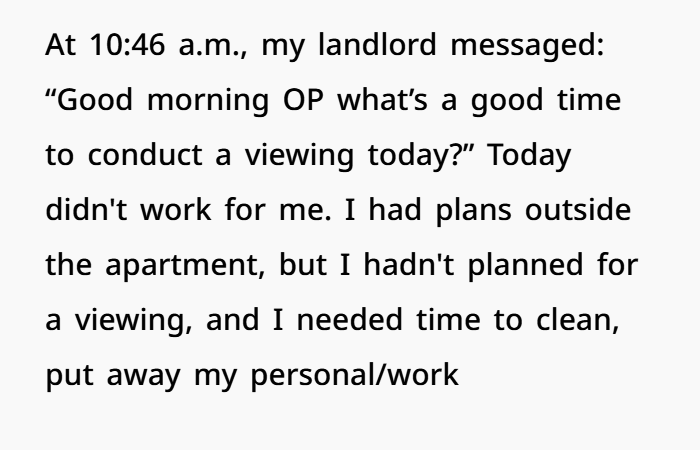
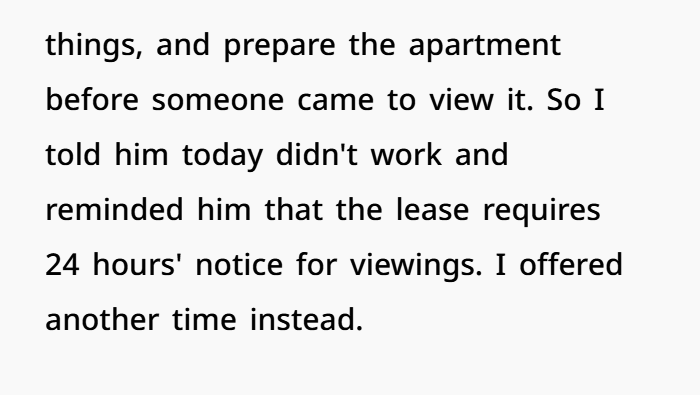
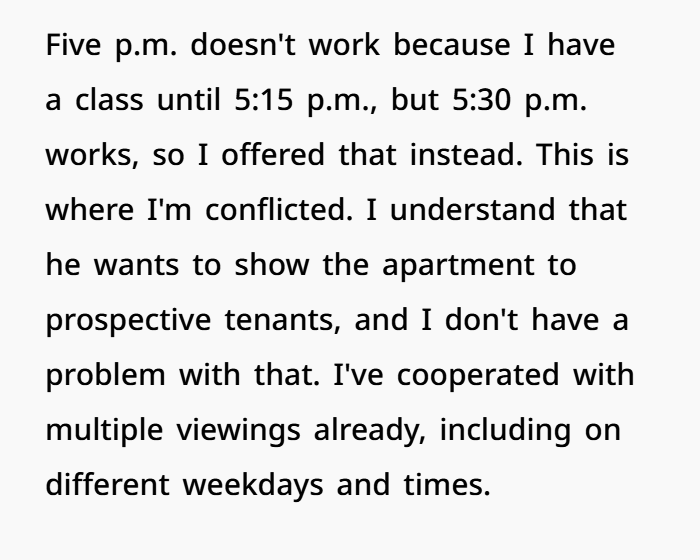
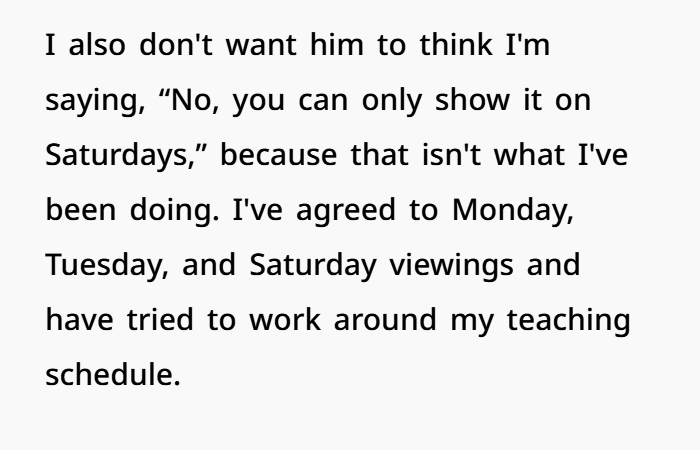
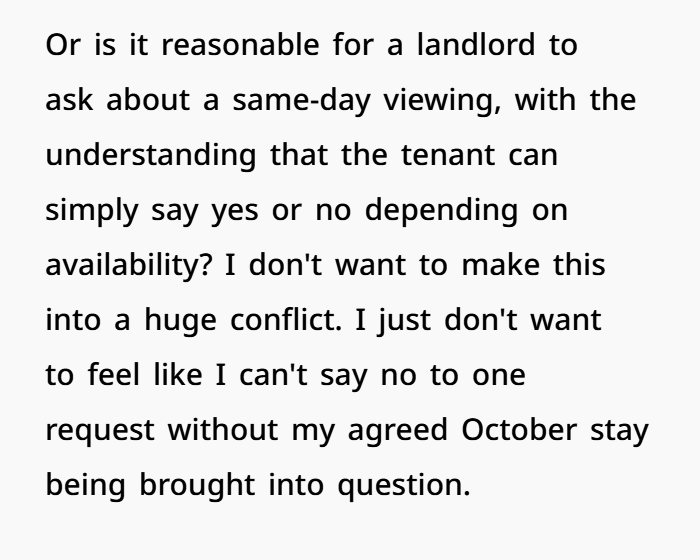
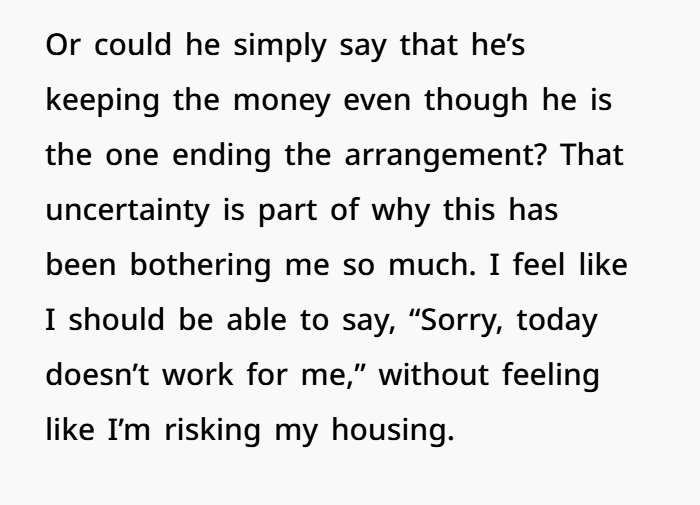
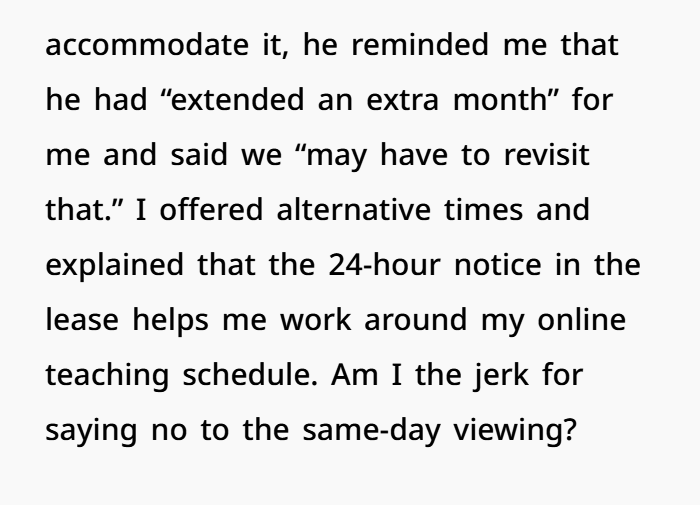
Her lease agreement says apartment viewings require at least 24 hours’ notice. She had already allowed multiple apartment tours and worked with her landlord to make the process easier. But when she received a request for a viewing on the same day, she said she could not make it work.
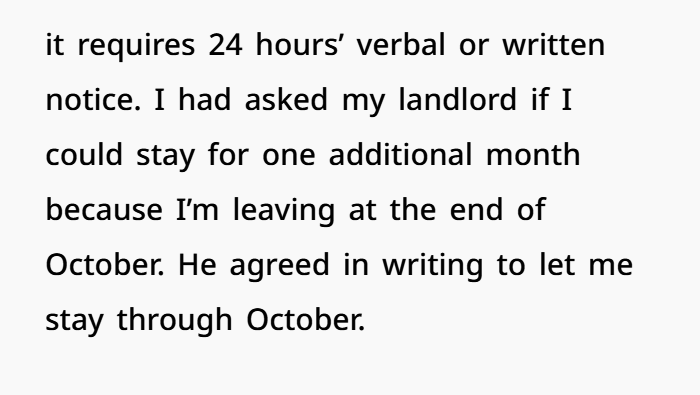
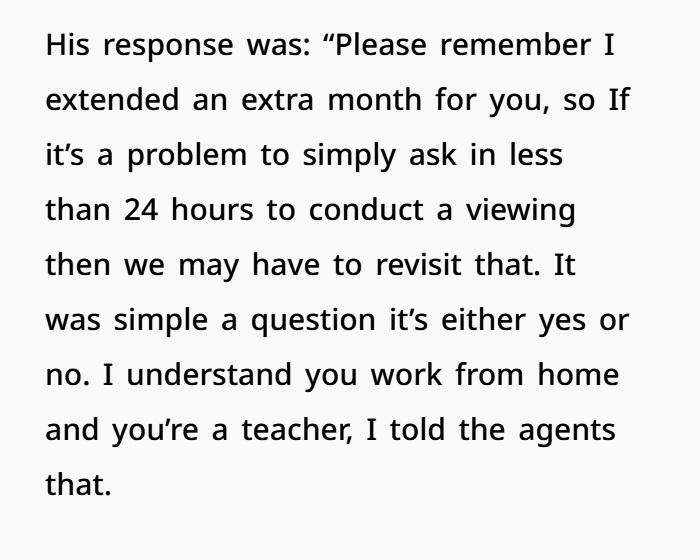
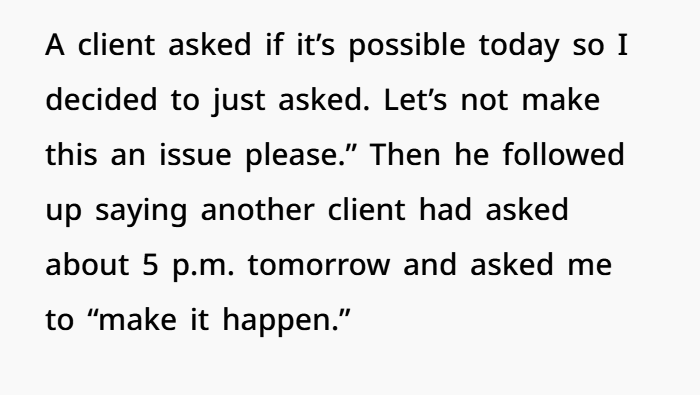
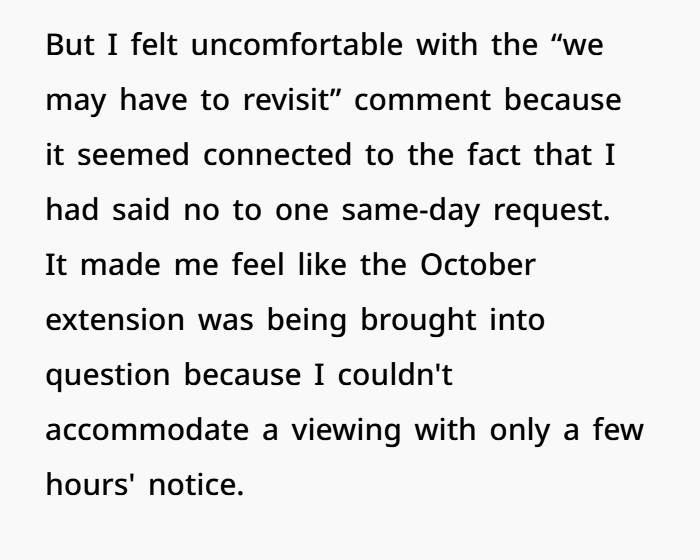
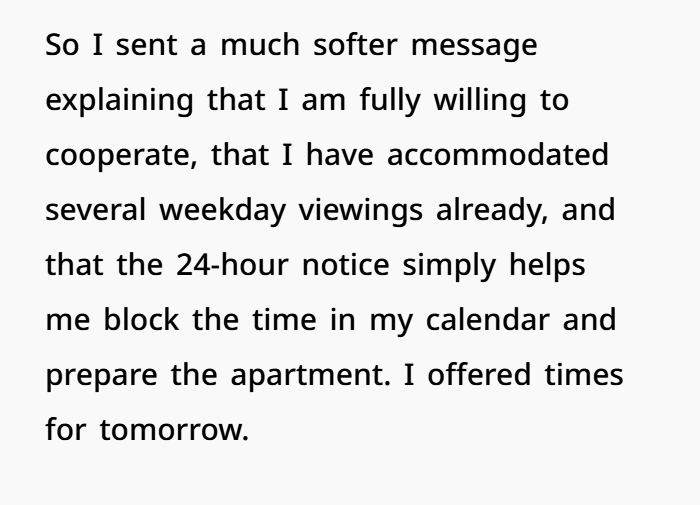
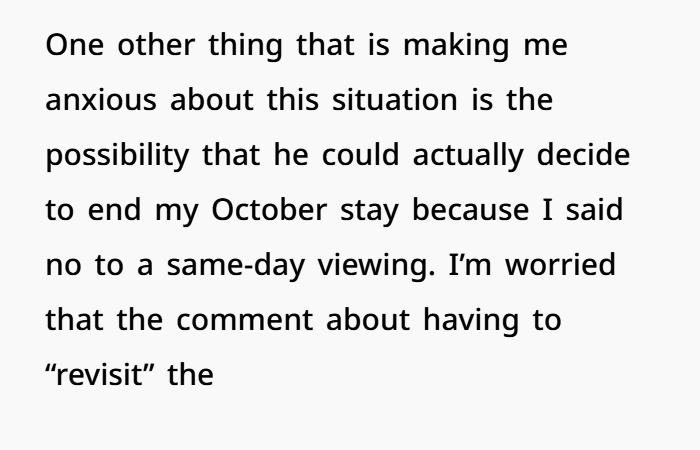
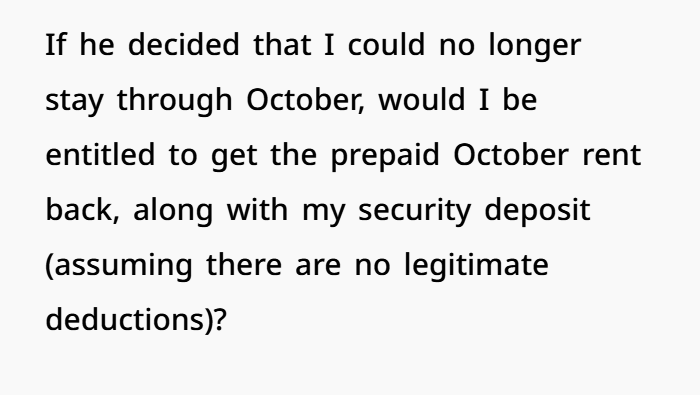
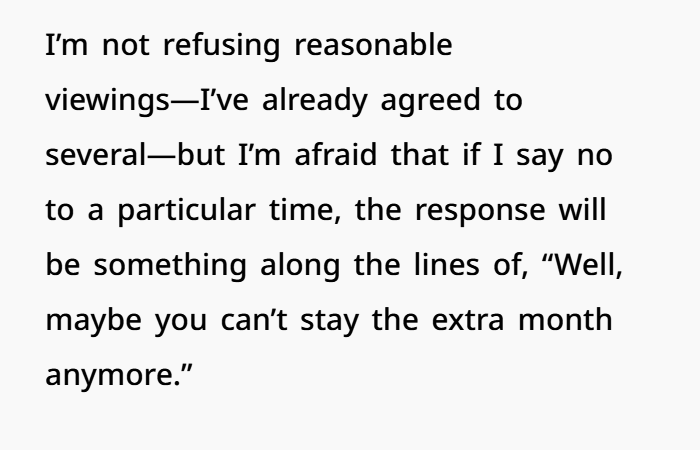
She explained that she needed time to prepare her apartment and move around her teaching schedule. After that, her landlord reminded her that he had allowed her to stay an additional month and suggested that they may need to review the situation.
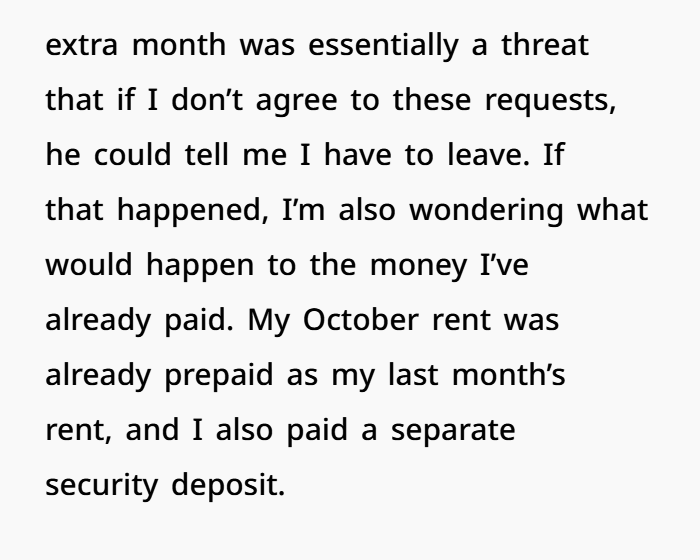
This left her feeling uncertain about her housing situation. She became concerned about her rental rights, security deposit, and whether one declined viewing could create problems with her lease. The experience shows why clear communication and understanding rental policies are important for both landlords and tenants.

Tenant Rights, Lease Agreements, and Why Last-Minute Landlord Requests Can Create Problems
Finding a new apartment can be stressful for both landlords and tenants.
Landlords want to rent their property quickly. They need to show the apartment, find new renters, and avoid long periods without rental income.
Tenants have a different concern. They still live in the home. They have personal belongings, daily routines, work responsibilities, and privacy needs.
Because of this, apartment viewings can sometimes create disagreements between landlords and tenants.
Many rental conflicts are not only about access to the property. They are often about communication, respect, and understanding the rules in a lease agreement.
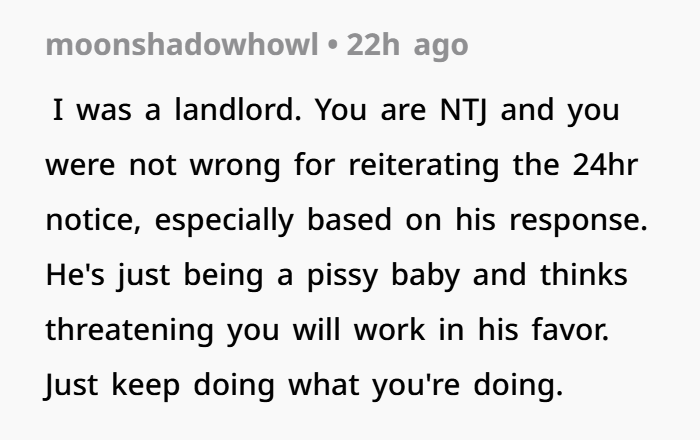
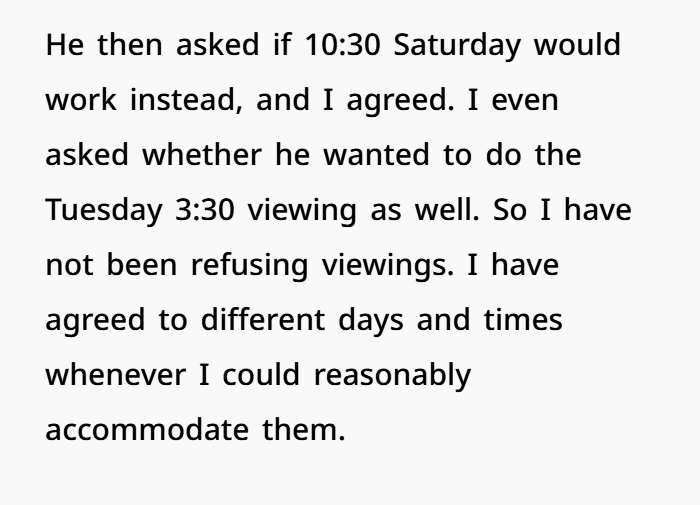
In this situation, the main issue was not that the tenant refused all apartment viewings. The problem was a last-minute viewing request.
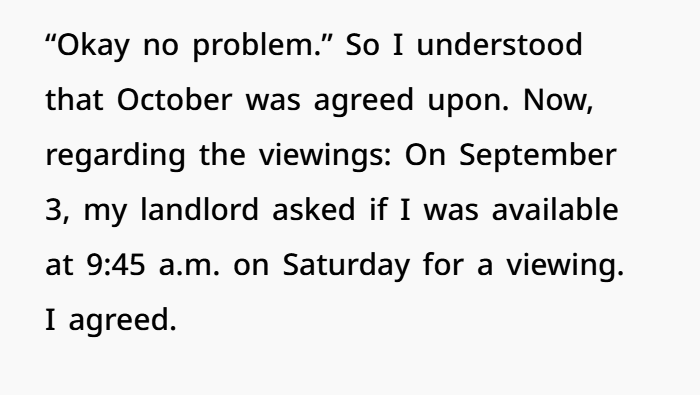
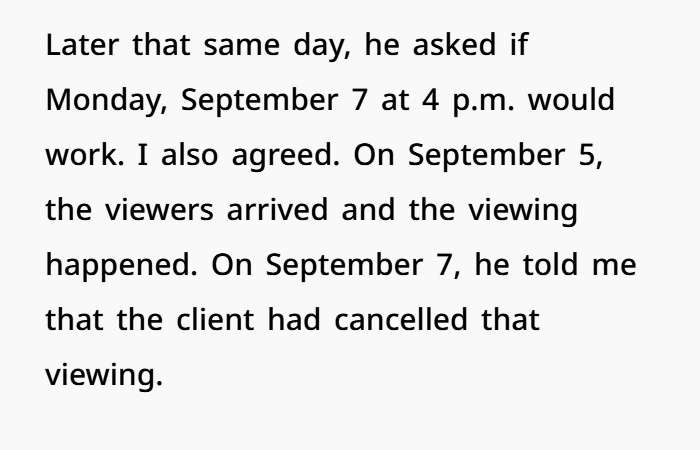
The tenant explained that she had already allowed several showings during different times. However, when the landlord asked for a viewing on the same day, she requested more notice before allowing another visit.
There is an important difference between saying:
“I cannot do today.”
and saying:
“You can never show the apartment.”
These are two very different situations.
Why Lease Agreements Matter
A lease agreement is an important document in any rental relationship.
It explains the responsibilities of both the landlord and the tenant. A rental agreement usually includes information about rent payments, maintenance responsibilities, tenancy dates, and property rules.
Many lease agreements also include rules about landlord access.
Landlords may need to enter a rental property for different reasons, such as:
- Property inspections
- Repairs and maintenance
- Emergency situations
- Showing the apartment to future tenants
These rules exist to protect both sides.
A landlord needs access to manage the property.
A tenant deserves reasonable notice and time to prepare.
In this situation, the tenant said the lease included a notice requirement before apartment showings. She believed the landlord needed to provide advance notice before scheduling a visit.
From the tenant’s point of view, she was not creating a new rule. She was asking the landlord to follow the rental agreement they both accepted.
Why Same-Day Apartment Showings Can Be Difficult
Some people may think a tenant should allow a viewing if they are already home.
However, being home does not always mean being available.
Many people work remotely, and working from home still requires focus and a schedule.
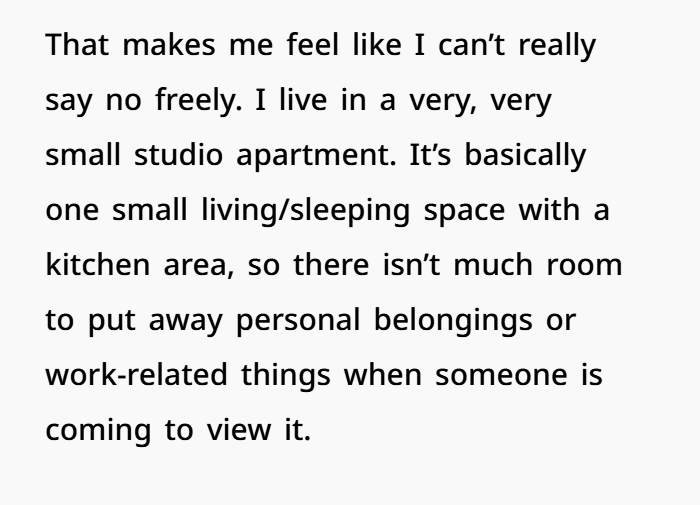
For example, someone who teaches online, attends meetings, or works with clients may not be able to stop their work suddenly for an apartment showing.
There is also the issue of privacy.
A tenant may need time to organize personal items, clean the space, secure belongings, or simply feel comfortable before strangers enter their home.
A rental property is not only a place being advertised.
It is someone’s living space.
Giving notice helps create a better experience for everyone.
Understanding the Landlord’s Side
The landlord’s concerns are also understandable.
When a property becomes available, finding a new tenant quickly can be important. A landlord may worry about losing a potential renter if a viewing cannot happen at a convenient time.
A landlord may think:
“The apartment is available soon, so why not show it today?”
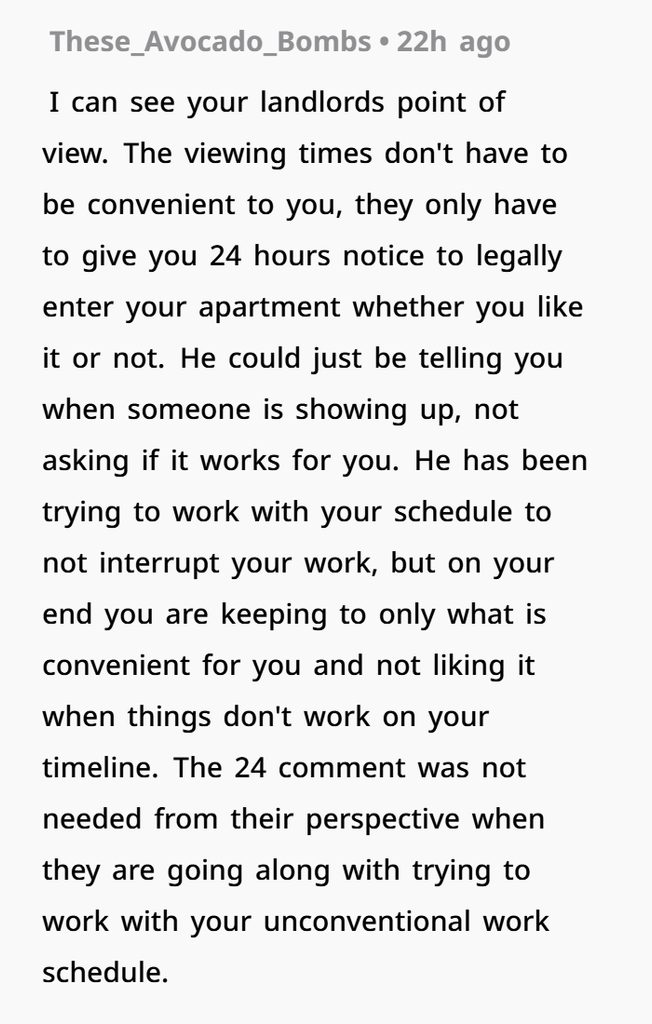
However, tenants are not just part of the rental process. They are still people living in the property.
A good landlord-tenant relationship depends on communication and respect.
A landlord can ask for a same-day viewing.
A tenant can also explain when the timing does not work.
A request is not always the same as an obligation.
Can a Landlord Change a Rental Agreement?
Questions about lease extensions and rental agreements depend on local landlord-tenant laws and the details of the agreement.
If a landlord and tenant agree to extend a rental period, the way that agreement was made can be important.
For example:
- Was the extension confirmed in writing?
- Was there a new lease agreement?
- Was there a written update to the original contract?
- Was it only a verbal conversation?
Written agreements are usually easier to understand because they provide clear records.
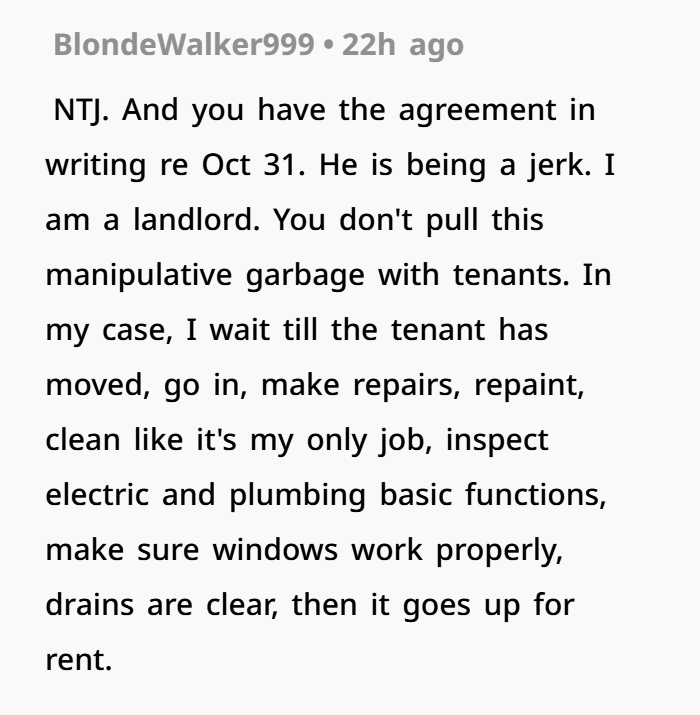
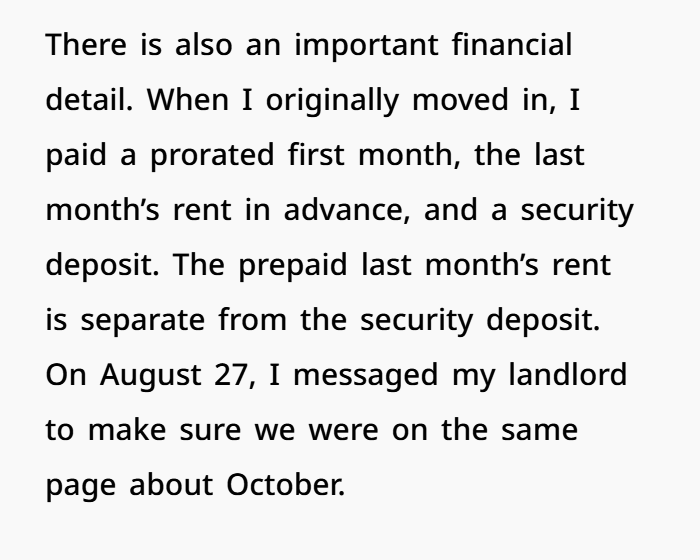
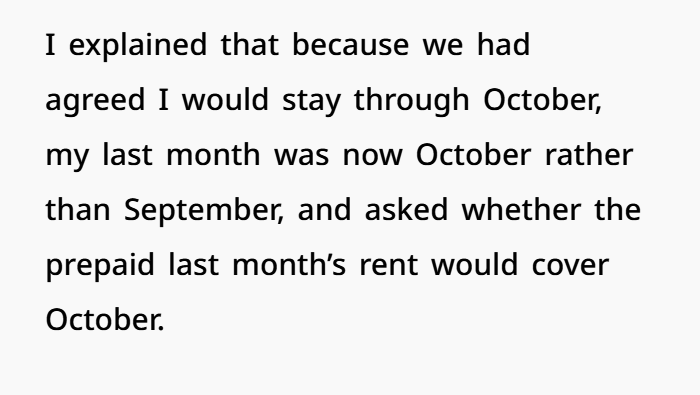
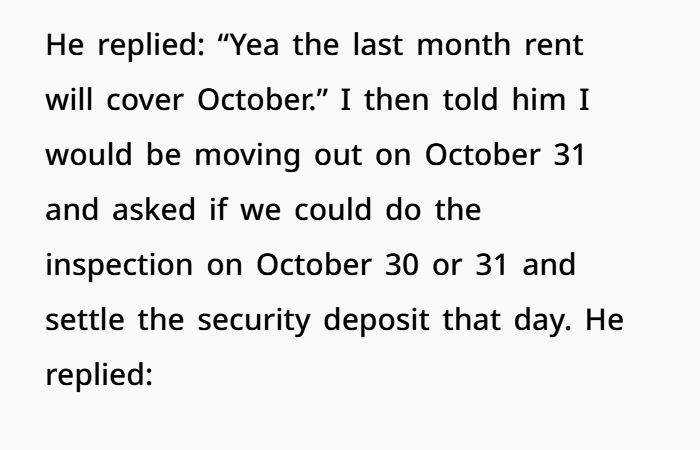
In this situation, the tenant said the landlord confirmed in writing that she could stay longer and that prepaid rent would cover the additional month.
Documents and messages can become important if a disagreement happens later.
Understanding Last Month’s Rent and Security Deposits
Many renters and landlords have questions about prepaid rent and security deposits.
These payments usually have different purposes.
Last month’s rent is generally used to cover rent for a specific rental period.
A security deposit is usually collected for possible issues such as property damage or unpaid costs, depending on local rental laws.
Because these payments serve different purposes, they are normally handled separately.
A disagreement about apartment showings does not automatically change the purpose of these payments.
Why Keeping Written Records Is Important
One of the best ways to avoid rental disputes is keeping clear records.
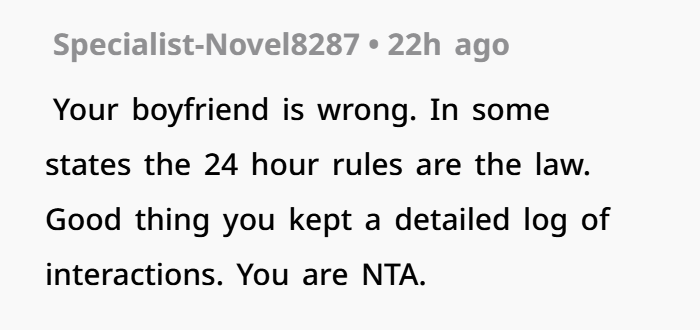
Emails, text messages, and written agreements can help both landlords and tenants remember what was discussed.
In this type of situation, helpful records may include:
- Agreement about a lease extension
- Messages about rent payments
- Dates and times of apartment showings
- Conversations about scheduling requests
Written communication can prevent confusion and reduce “one person said this, another person said that” situations.
Keeping communication polite and professional can also make problems easier to solve.
Building a Better Landlord-Tenant Relationship
Many housing disputes become bigger because of poor communication.
The original issue may be small, but frustration can grow when people feel ignored or pressured.
Tenants usually want stability, privacy, and respect for their lease agreement.
Landlords usually want cooperation, access, and the ability to manage their property.
Both needs are important.
A simple solution is setting clear expectations.
Landlords and tenants can discuss:
- How much notice is needed for apartment viewings
- Which times work best
- How urgent requests should be handled
- The best way to communicate
A tenant can have reasonable boundaries while still cooperating.
A landlord can request flexibility while respecting the tenant’s situation.
The goal is not to create conflict. The goal is to find a fair solution.
Final Thoughts on Rental Conflicts
Landlord-tenant relationships work best when both sides communicate clearly.
Apartment showings, lease agreements, rental payments, and property access can become stressful when expectations are unclear.
A last-minute request may be convenient for one person but difficult for another.
Respect, written agreements, and open communication can help prevent small disagreements from becoming bigger housing problems.
Whether you are a renter or a property owner, understanding tenant rights, rental agreements, and good communication practices can create a better experience for everyone.
What The Comments Reveal