AITA for Being Annoyed That My MIL Treats My Kitchen Like an All-You-Can-Eat Buffet?
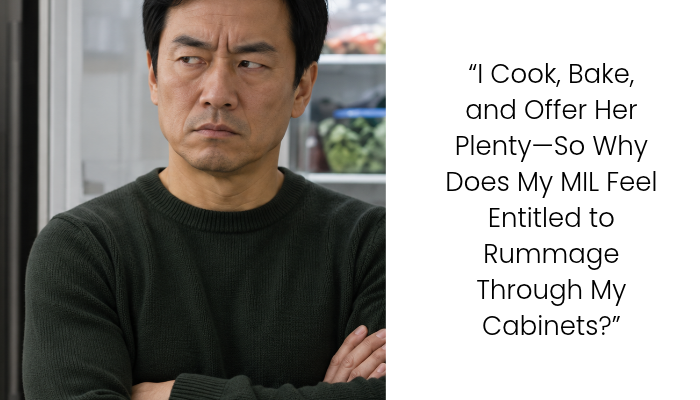
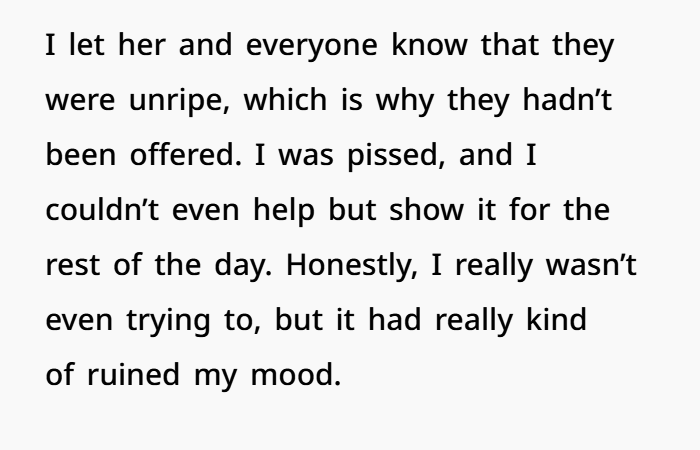
Having family over should feel enjoyable, but one woman says her mother-in-law’s visits have become a little stressful. Her main problem is the way her MIL treats the kitchen and pantry as if everything belongs to her. She explains that her mother-in-law is generally sweet, and she wants her to feel comfortable in their home. Still, she believes there should be some basic respect for other people’s things. Her MIL often opens cabinets, looks through drawers, and takes whatever food she likes without asking. She once removed all the dried cherries from her favorite trail mix. On another visit, she finished an entire box of chocolates that her father had given her. More recently, she cut into two Hachiya persimmons that were meant for a special recipe, even though they were not ready to eat.
The woman says she is not against sharing food with family members. In fact, she works hard to make everyone feel welcome. She prepares delicious home-cooked meals, makes homemade desserts, and keeps the kitchen stocked with snacks for guests. What bothers her is that her mother-in-law takes personal items without checking first. She has also noticed similar behavior with her teenage daughter, whose candy, skincare products, and makeup are sometimes taken without permission. This has made her think more about privacy, personal space, and respect within the family home.
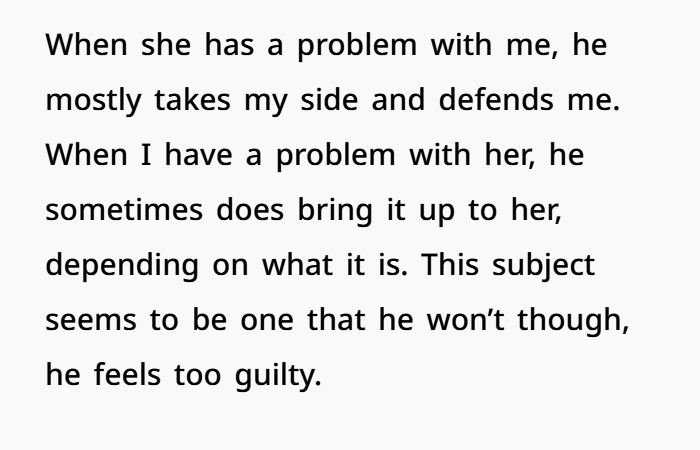
Her husband, however, thinks his mother is simply making herself comfortable. He feels that a guest should not have to ask before taking food from the pantry. He has even suggested that his wife put special ingredients and favorite treats away if she wants to keep them safe. The woman says her husband is usually understanding when family disagreements happen, but this particular issue is different. He feels bad about his mother’s financial situation and wants her to enjoy the comfort of their home without feeling uncomfortable or left out.
Now she is asking herself whether she is making too much of a small issue or whether her mother-in-law should respect some simple household rules. She is happy to share meals, snacks, and homemade treats, but she does not think that means every item in the kitchen is available without asking. She believes a comfortable home should have room for both hospitality and personal boundaries. After all, respecting someone’s belongings is an important part of maintaining healthy family relationships.










When Does Feeling at Home Become Disrespecting Someone Else’s Boundaries?
Being invited into someone’s home means you should feel welcome and comfortable. But does that mean you can take anything you see without asking?
Not really.
There is a difference between enjoying food that someone has prepared for guests and taking personal items without permission. Good manners still matter, even when you are visiting close family members.
This situation brings up an important question about family relationships and household rules. How much freedom should guests have in someone else’s home? And when does feeling comfortable turn into ignoring another person’s boundaries?
Let’s look at both sides of the situation.
1. The Difference Between Shared Food and Personal Belongings
Most homes have things that are meant to be shared. For example, if someone puts a bowl of candy on the coffee table, guests can usually enjoy it without asking.
But not everything in the house is available to everyone.
A box of chocolates received as a gift may be something the homeowner wants to save for later. The same is true for special snacks, favorite treats, and food bought for a particular recipe.
The persimmons in this situation are a good example.
The homeowner had bought the fruit for a recipe and left it on the counter to ripen. Her mother-in-law may have seen the fruit and thought it was available to eat.
However, seeing something does not always mean it is free to take.
A simple question like, “Are these available?” could have prevented the misunderstanding.
This is an important part of good home etiquette. Guests should feel welcome, but homeowners should also feel comfortable knowing their personal belongings will be respected.
2. When Small Incidents Become a Bigger Problem
Taking a snack without asking may not seem like a big deal. Sometimes, people simply misunderstand what is available.
An occasional mistake can happen in any family.
But what happens when the same thing keeps happening?
In this situation, the homeowner remembers several incidents over the years. Her dried cherries, gifted chocolates, other snacks, and now the persimmons have all been taken without asking.
One incident may be easy to forget. But when similar situations happen again and again, they can become frustrating.
The problem is no longer just about food. It is about feeling that your wishes are not being respected.
There is also a difference between asking guests to respect household rules and expecting the homeowner to hide everything she does not want anyone to eat.
People should not have to put away every personal item just to stop someone from taking it.
A healthy home should have simple rules that everyone understands.
3. Why Family Boundaries Can Be Difficult
Setting boundaries with family members is not always easy.
In some families, everyone shares everything. Parents, children, and other relatives may open the refrigerator, take snacks, and use household supplies without asking.
This may feel completely normal to them.
But not every family has the same habits.
When adult children get married and start their own homes, they may develop different ideas about privacy, sharing, and personal belongings.
A mother may feel that she should have the same freedom in her son’s home that she had when he was growing up.
Her daughter-in-law may have a different opinion. She may believe that guests should ask before taking food that has not been offered.
Neither person needs to have bad intentions. They may simply have different expectations.
The husband may believe that allowing his mother to take whatever she wants makes her feel loved and included. His wife may believe that asking before taking something is a basic sign of respect.
Both feelings can be understood.
However, a married couple also needs to agree on the rules of their shared home.
A comfortable family environment should make everyone feel welcome without making anyone feel ignored.
4. Financial Problems Do Not Mean Personal Boundaries Should Be Ignored
The husband’s feelings about his mother’s financial situation add another part to this disagreement.
Perhaps he feels bad because his mother has fewer financial resources than other family members. He may want her to enjoy things she could not always afford.
It is understandable that he wants his mother to feel happy and comfortable.
However, being generous does not mean ignoring personal boundaries.
Someone can have financial difficulties and still understand the importance of asking before taking something that belongs to another person.
In the same way, a homeowner can offer plenty of food, drinks, and snacks without making every item in the house available.
These two things can exist together.
Good family relationships are built on more than money and gifts. They also need kindness, communication, and respect.
It is possible to support a family member while still having reasonable household rules.
This is especially important when couples manage grocery shopping, household expenses, and meal planning together.
If someone buys special ingredients for a recipe or saves certain snacks for later, those items may have a specific purpose.
Respecting that choice is a simple way to avoid unnecessary family disagreements.
5. The Husband’s Response May Be the Bigger Problem
Although the disagreement started with food, the husband’s response may be the more important issue.
He wants his mother to feel welcome. That is understandable.
At the same time, his wife wants her personal belongings and choices to be respected.
Both partners deserve to have their feelings heard.
A husband should not have to choose between loving his mother and respecting his wife. He can do both by helping everyone understand the household rules.
For example, the couple could agree on a few simple expectations:
- Food placed out for guests is available for everyone.
- Personal snacks and gifts should not be taken without asking.
- Ingredients saved for cooking should be left alone.
- Guests can always ask if they are unsure whether something is available.
These rules are simple and do not make anyone feel unwanted.
The husband could also explain the situation to his mother in a friendly way.
He might say:
“Mom, we always want you to feel comfortable when you visit. There is plenty of food available, but please ask us before taking things from the pantry because some ingredients are saved for our meals and recipes.”
This approach makes the household expectations clear without making the conversation uncomfortable.
Good communication can make family visits easier and more enjoyable for everyone.
Final Thoughts
The woman may not be upset simply because her mother-in-law ate two persimmons or a few chocolates.
Her frustration may come from feeling that her personal belongings and preferences are repeatedly ignored.
It is also possible that her mother-in-law does not realize how much these small incidents bother her.
That is why a calm conversation may be more helpful than an argument.
A welcoming home should have room for sharing, kindness, and family traditions. But it should also allow people to keep certain things for themselves.
No one should feel that they must hide their favorite snacks, special gifts, or cooking ingredients just to protect them.
Feeling at home means being treated with kindness, but it also means showing respect for the people who live there.
Sometimes, the simplest way to show that respect is to ask before taking something that has not been offered.
Voices From The Community