My Sister Is Marrying a Man Just Like Our Abusive Father—Now She Says I’m Selfish for Refusing to Accept Him. AITA?

A woman is struggling with her younger sister’s decision to get married. Growing up, both sisters went through difficult times. Their family faced serious money problems, and they sometimes lived without a stable home or enough food. The older sister says their father was often emotionally hurtful and controlling with money. These experiences affected her for many years. As an adult, she started therapy and worked on improving her mental health. Professional counseling helped her understand her feelings and learn the importance of healthy boundaries. When her younger sister started dating a man in the Navy, she noticed some behavior that reminded her of their father.
The couple had been together for around a year before making marriage plans. However, the older sister did not feel comfortable with the relationship. She believed the man sometimes dismissed her sister’s feelings and tried to control financial decisions. Her concerns grew when her younger sister began calling her after arguments with him. During these calls, she often cried and talked about leaving the relationship. The older sister listened and tried to be supportive, but the same problems continued. Eventually, she explained that she could not keep discussing the same situation because it was affecting her emotional health.
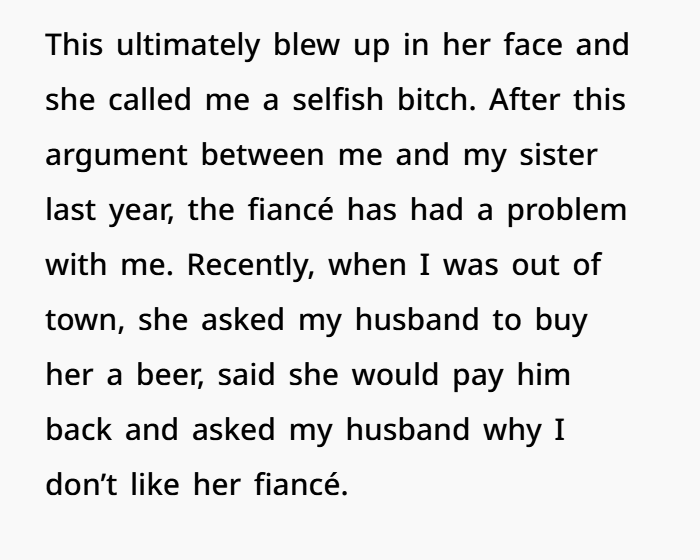
The younger sister was hurt by this decision. She wanted her older sibling to support her relationship and spend time with her future husband. However, the older sister had already tried getting to know him and did not feel comfortable around him. Their disagreements had started the previous year when the younger sister accused her of not being supportive enough. During one argument, she even called her older sister selfish. After another difficult conversation, the younger sister canceled their planned birthday trip. The situation became more uncomfortable when the fiancé also began having problems with the older sister.
Later, the younger sister asked her brother-in-law why his wife had such strong feelings about her fiancé. He explained that the man’s behavior reminded her of their father and brought back painful memories. Instead of accepting the explanation, the younger sister asked why her sibling could not make an exception for her. Now the older sister feels caught between family loyalty and her own emotional well-being. She cares about her sister but does not want to ignore the personal boundaries she worked hard to build through therapy. The story raises an important question about family support and relationship counseling: does loving a family member mean accepting their partner, even when being around that person makes you uncomfortable?







Woman Refuses to Accept Her Sister’s Fiancé Because He Reminds Her of Their Father
What would you do if your sister wanted to marry someone who reminded you of a parent who had treated your family badly?
Would you try to accept him to keep your sister happy? Or would you keep your distance, even if it caused problems between you?
That is the difficult situation one woman described in a Reddit story.
She and her younger sister had a very hard childhood. Their family struggled with money, and there were times when they had no stable home or enough food.
The older sister also described their father as emotionally hurtful and controlling when it came to money.
As an adult, she spent years in therapy to work through those experiences.
Now, her younger sister is planning to marry a man whose behavior reminds her of their father.
The younger sister has called her many times, crying about problems with her fiancé and talking about leaving him.
But she keeps returning to the relationship.
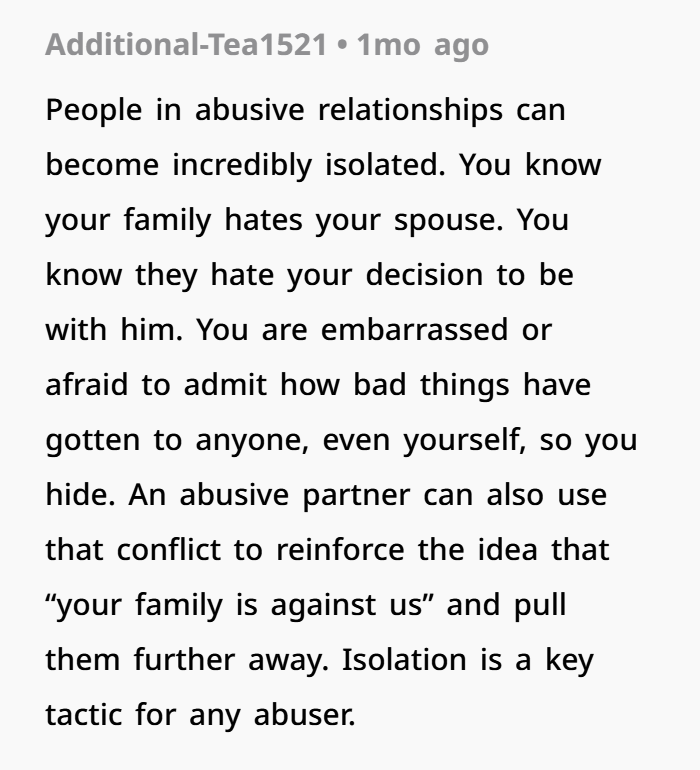
The older sister is tired of hearing about the same problems. She has decided she does not want a close relationship with the fiancé.
Her younger sister believes she should make an exception because they are family.
So, is the older sister being unfair, or does she have every right to protect her peace?
Their Difficult Childhood Changed How They See Relationships
The two sisters grew up in a home where life was not always stable.
According to the story, their family experienced homelessness and sometimes struggled to afford food.
The older sister also says their father caused emotional and financial problems.
Those experiences can stay with someone long after childhood ends.
Growing up without stability can make it harder to feel safe and comfortable in relationships.
Some people become very careful about whom they trust.
Others may struggle to notice unhealthy behavior because it feels familiar.
Research on difficult childhood experiences has found links between early family problems and later health and relationship challenges.
However, this does not mean everyone who has a difficult childhood will experience the same problems as an adult.
People respond in different ways.
The older sister says that therapy and mental health support helped her understand her past.
She learned to recognize behavior that made her uncomfortable.
She also learned that loving someone does not mean accepting everything they do.
Now, when she looks at her sister’s fiancé, she sees behavior that reminds her of painful family experiences.
That is why this situation feels so personal to her.
Why the Two Sisters See the Fiancé Differently
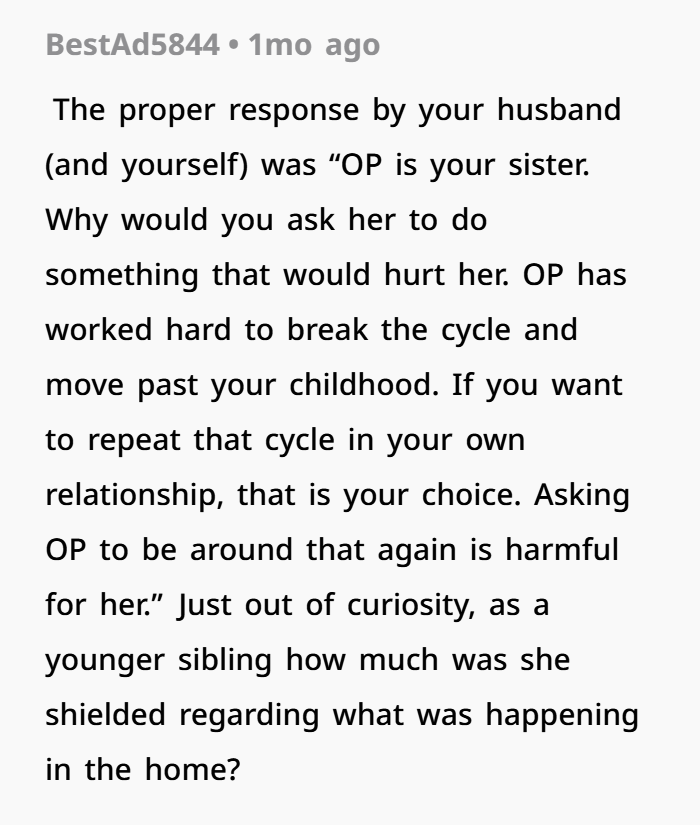
The sisters grew up in the same family, but that does not mean they experienced everything in the same way.
Even children raised in the same home can have different memories and feelings.
One child may remember certain events more strongly.
Another may have found different ways to deal with the same problems.
The older sister has spent years working through her childhood in therapy.
Her younger sister apparently has not followed the same path.
That does not mean one sister is automatically right and the other is wrong.
It simply means they may understand relationships differently.
The older sister believes the fiancé is showing warning signs.
The younger sister loves him and plans to marry him.
She may hope their problems will improve.
She may also feel that her older sister is judging her choice.
Both women have strong feelings, and neither can force the other to agree.
What Is So Worrying About the Fiancé?
According to the older sister, the fiancé often dismisses feelings and behaves unfairly when it comes to money.
She believes some of his actions are similar to their father’s behavior.
Her concerns are also based on what her younger sister has told her.
The younger sister has reportedly called several times while crying about the relationship.
During some of those calls, she has talked about leaving him.
That would worry many family members.
It is difficult to hear someone you love describe an unhappy relationship, especially when the problems keep happening.
However, the Reddit story does not provide enough detail to know everything that is happening between the couple.
It would also be unfair to give the fiancé a mental health diagnosis based only on another person’s account.
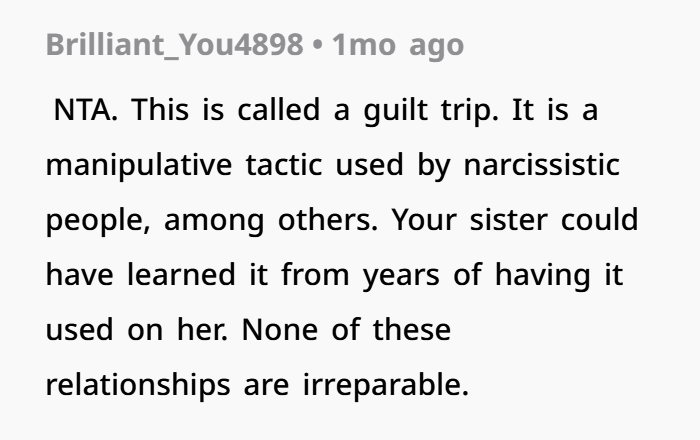
Sometimes people use words like “narcissist” when describing someone who behaves selfishly or tries to control others.
But a personality disorder can only be diagnosed by a qualified professional.
The more useful question is whether the fiancé treats his partner with respect.
A healthy relationship should allow both people to feel heard, respected, and comfortable making their own choices.
If one partner regularly feels ignored or pressured, that deserves attention.
Why Money Is Another Concern
The older sister also worries about the fiancé’s behavior around money.
She describes it as financially manipulative.
The story does not explain exactly what he has done, so readers should not assume details that have not been shared.
Still, money problems can create serious tension in relationships.
For example, it may be concerning if one partner controls all the household money, prevents the other from making financial decisions, or pressures them into taking on debt.
Couples preparing for marriage should be able to discuss money openly.
That includes income, savings, credit card debt, monthly bills, and future financial goals.
Financial planning before marriage can help couples understand how they will manage their money together.
It is also important for both partners to understand their financial situation.
Having access to personal money and being able to make reasonable financial decisions can help protect financial independence.
In this story, the older sister’s concerns about money make her even more uncomfortable with the engagement.
But without specific examples, it is not possible to say exactly what financial problems the couple is facing.
The Older Sister Is Tired of Hearing the Same Complaints
One of the biggest problems between the sisters is their repeated conversations about the fiancé.
The younger sister calls when she is upset.
She cries, talks about the relationship, and sometimes says she wants to leave.
The older sister listens and worries.
But later, her younger sister decides to stay.
After this happens many times, the older sister feels emotionally exhausted.
She has worked hard to move forward from her own childhood experiences.
Hearing about behavior that reminds her of their father brings back uncomfortable feelings.
She does not want to keep having the same upsetting conversations.
That is understandable.
Everyone has limits on how much emotional stress they can handle.
Setting healthy boundaries is not the same as being unkind.
The older sister can decide that she is not able to discuss the relationship for hours at a time.
She can also take a break from conversations that leave her feeling overwhelmed.
But there is one thing she should be careful about.
If she tells her sister not to come to her unless she is ready to leave, her younger sister may stop asking for help altogether.
And that could create another problem.
Why Leaving an Unhappy Relationship Can Be Difficult
People sometimes wonder why someone stays in a relationship that makes them unhappy.
From the outside, leaving may seem like the obvious answer.
But relationships are rarely that simple.
A person may still love their partner.
They may remember the good times and hope things will improve.
They may also worry about money, housing, family expectations, or changing their wedding plans.
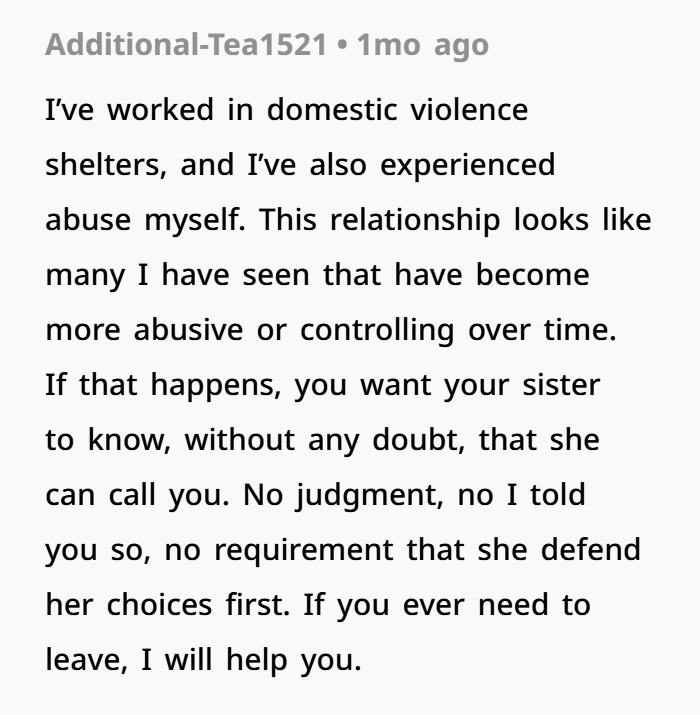
If there is controlling behavior, leaving can become even more complicated.
Someone may need emotional support, financial resources, or a safe plan before making a major change.
That is why repeated conversations about leaving do not always mean a person is ready to end the relationship.
The younger sister may be confused about what she wants.
She may also be struggling with concerns that are difficult to explain.
The older sister cannot make that decision for her.
But she can decide how much support she is emotionally able to provide.
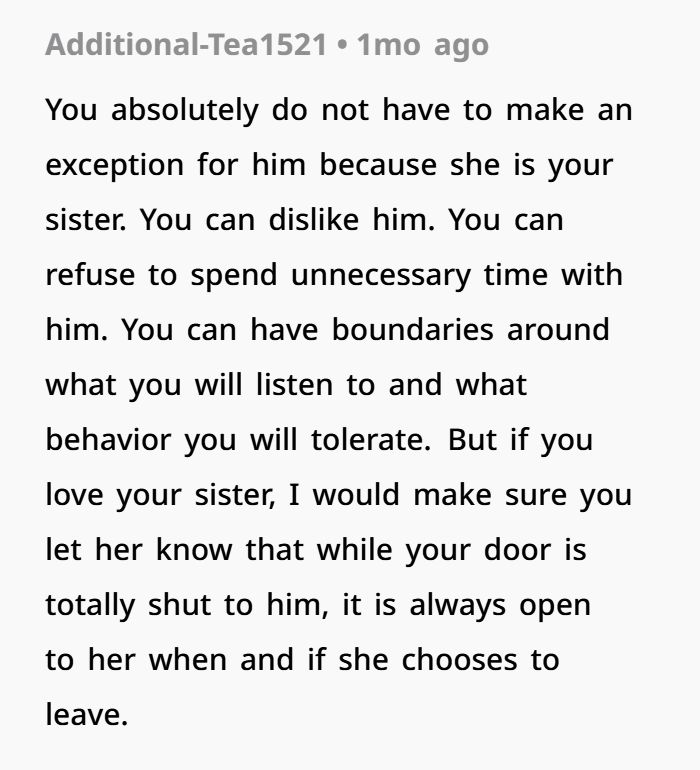
Can You Love Your Sister Without Accepting Her Partner?
Yes, and that is an important part of this story.
The older sister does not have to become close friends with her future brother-in-law.
She does not have to spend time alone with him.
She also does not have to pretend she approves of his behavior.
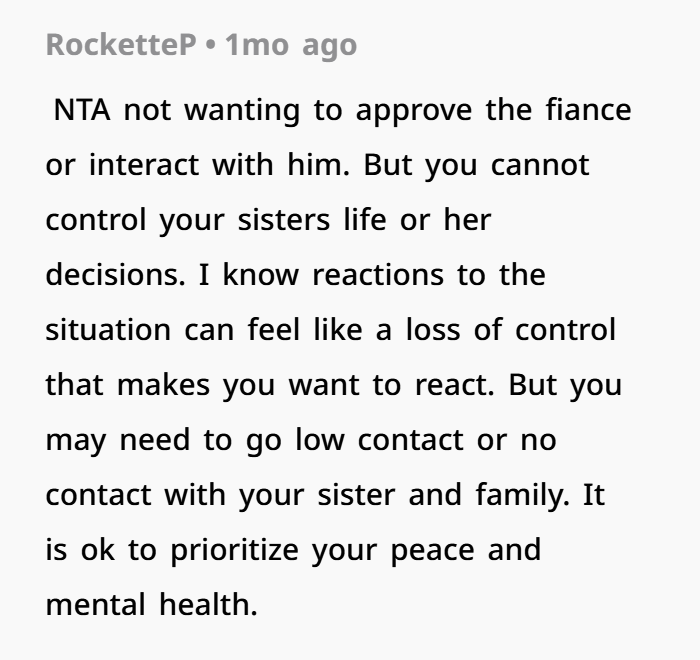
Her younger sister has the right to choose her partner.
But the older sister has the right to choose whom she spends time with.
Those choices can exist together.
Family relationships do not require everyone to agree on everything.
Sometimes, the healthiest approach is to respect another person’s decision while keeping your own boundaries.
The older sister can tell her younger sister that she loves her but does not feel comfortable around the fiancé.
She can also explain that her decision is based on her own experiences and concerns.
That may not make the younger sister happy.
But being honest is better than pretending everything is fine.
Why the Younger Sister Feels Rejected
The younger sister reportedly asked the older sister’s husband why her sibling could not make an exception for her.
She seems to believe that family members should support each other, even when they disagree.
From her point of view, she may feel hurt.
She is preparing for marriage and probably wants her family to share her happiness.
Instead, her older sister refuses to build a relationship with the man she plans to marry.
That could feel like rejection.
But there is a difference between supporting someone and agreeing with every choice they make.
The older sister can care about her sibling without approving of the engagement.
She can wish her a happy future while still being concerned about the relationship.
The challenge is making sure the younger sister understands that she is still loved.
A disagreement about a partner does not have to end a relationship between siblings.
Could This Disagreement Push the Sisters Apart?
There is a real risk that the sisters could become less close because of this situation.
If the younger sister feels judged every time she talks about her fiancé, she may stop sharing her problems.
She might also avoid family gatherings or spend less time with her older sister.
That would be sad, especially because they have already been through so much together.
If the fiancé is genuinely controlling, keeping supportive family connections may be especially important.
This does not mean the older sister should ignore her own feelings.
It means she may want to separate her relationship with her sister from her feelings about the fiancé.
She can choose not to socialize with him while still checking in with her sister.
She can also remind her sibling that she is available if she ever needs serious help.
That approach allows her to protect her own mental health without completely closing the door.
How Therapy Can Help With Family Problems
The older sister says therapy helped her understand her childhood and set boundaries.
That work may have made a big difference in her life.
Individual therapy and family counseling can help people talk about difficult experiences, understand their feelings, and improve communication.
Therapy can also help someone recognize when they are taking on too much responsibility for another person’s problems.
However, attending therapy does not mean someone will always understand every situation perfectly.
Past experiences can make certain behavior easier to recognize.
They can also make some situations feel more upsetting.
That is why it is helpful to focus on specific actions rather than labels.
Instead of arguing about whether the fiancé has a certain personality type, the sisters could talk about what actually happens in the relationship.
Does he listen when the younger sister shares her feelings?
Does she have a say in financial decisions?
Does she feel comfortable disagreeing with him?
These questions may help her think more clearly about the relationship.
If there are concerns about controlling behavior or safety, confidential individual support is generally a better first step than couples counseling.
How the Older Sister Can Set Boundaries Without Losing Her Sister
The older sister does not need to change her opinion of the fiancé.
She can continue keeping her distance.
But she may be able to explain her boundaries in a gentler way.
For example, she could tell her younger sister that she loves her and worries about some of the things she has described.
She could also explain that repeated conversations about the relationship are affecting her emotional well-being.
Instead of saying she never wants to hear about the fiancé again, she could set limits on when and how long they discuss the relationship.
Most importantly, she could remind her sister that she is still available if there is a serious problem.
That does not mean promising unlimited time or emotional support.
It simply means keeping a connection open.
You can protect your peace and still care about someone who makes choices you disagree with.
Sometimes, that balance is the best way to protect a family relationship.
Final Verdict: NTA — But Keep Your Relationship With Your Sister
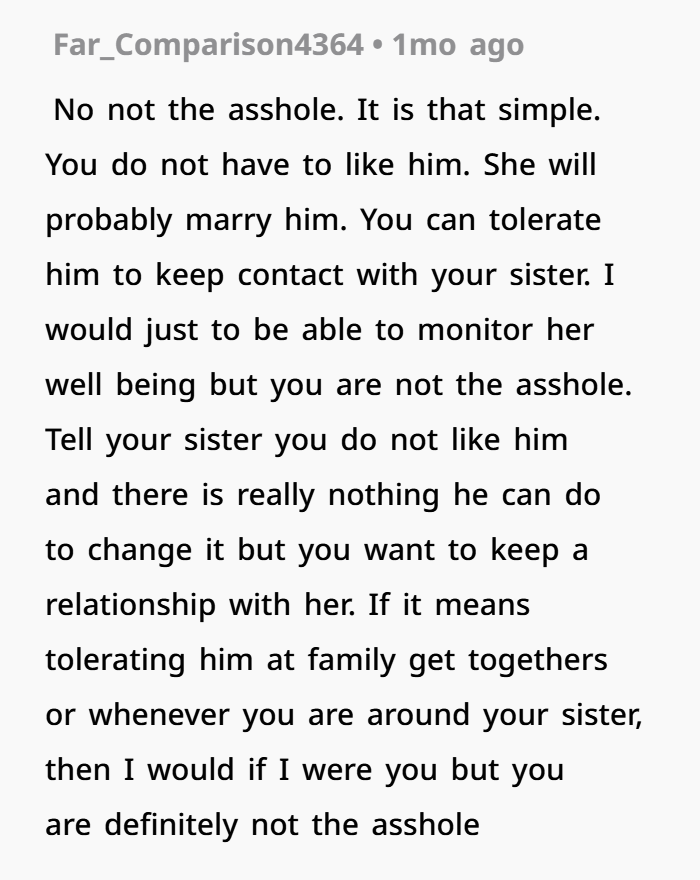
Based on the Reddit story, the older sister is NTA (Not the Asshole) for refusing to accept her sister’s fiancé as someone she wants to be close to.
She has concerns about his behavior.
She also feels that some of his actions remind her of painful experiences from childhood.
She should not have to ignore those feelings simply because her sister is planning a wedding.
She has the right to protect her mental health and set personal boundaries.
However, she should be careful not to make her younger sister feel that support is only available if she ends the relationship.
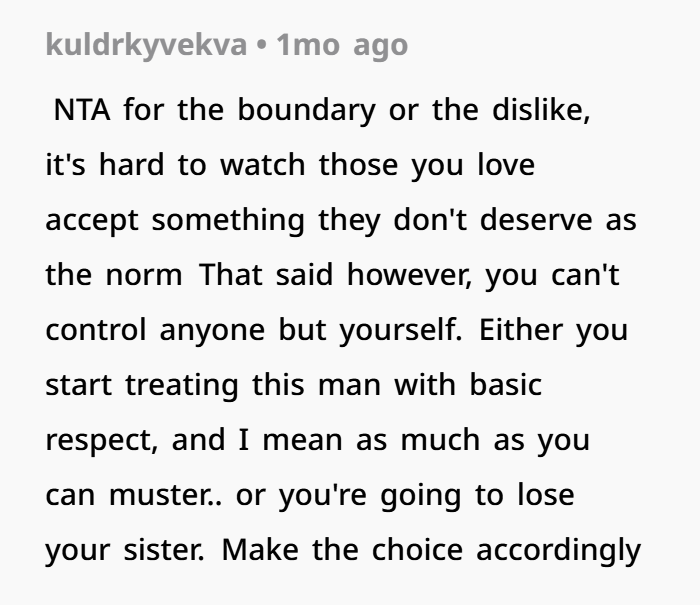
If her sister is dealing with serious relationship problems, she may need a trusted family member.
The older sister does not have to approve of the engagement.
She does not have to attend every gathering or pretend to like the fiancé.
But keeping communication open could help protect their bond.
In the end, the younger sister has the right to choose whom she marries.
The older sister has the right to decide whom she spends time with.
Neither should be forced to give up those choices.
The best outcome would be for both sisters to respect each other’s decisions while keeping their relationship strong.
What would you do?
If your sibling wanted to marry someone who reminded you of a parent who had treated your family badly, would you keep your distance or try to accept the relationship to stay close to your sibling?
Comments You Can’t Miss