Struggling to Accept My Dad’s New Family After the Divorce
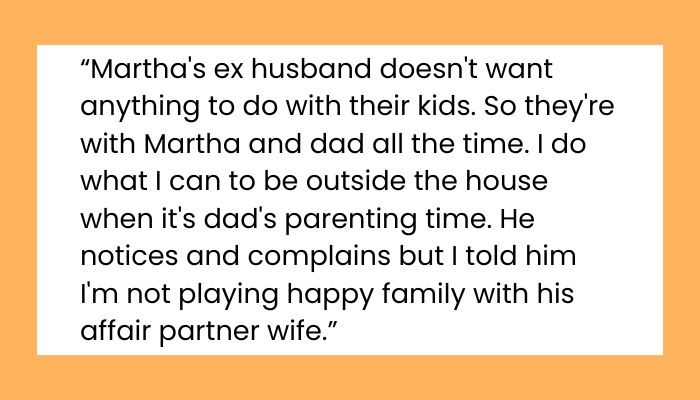
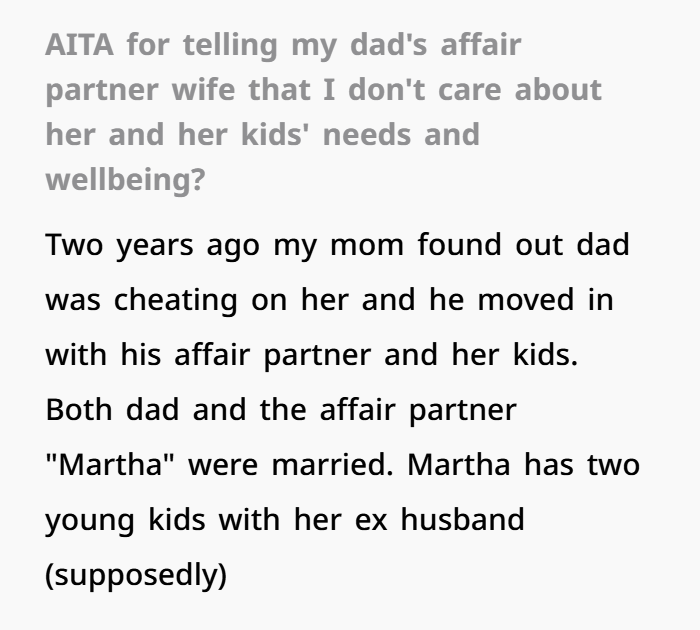
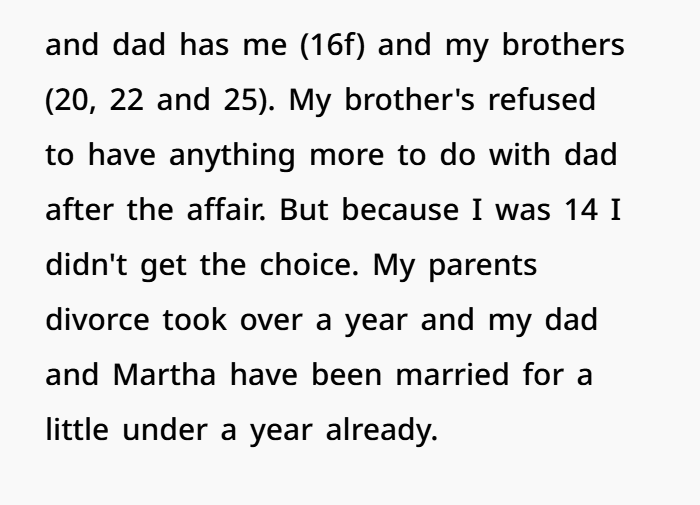
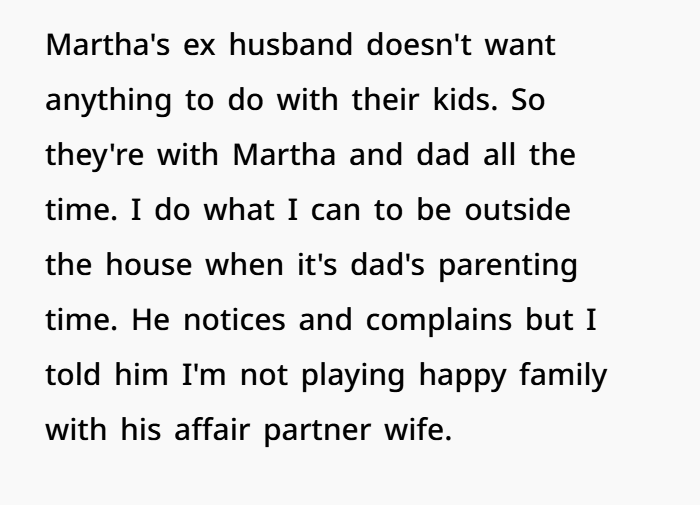
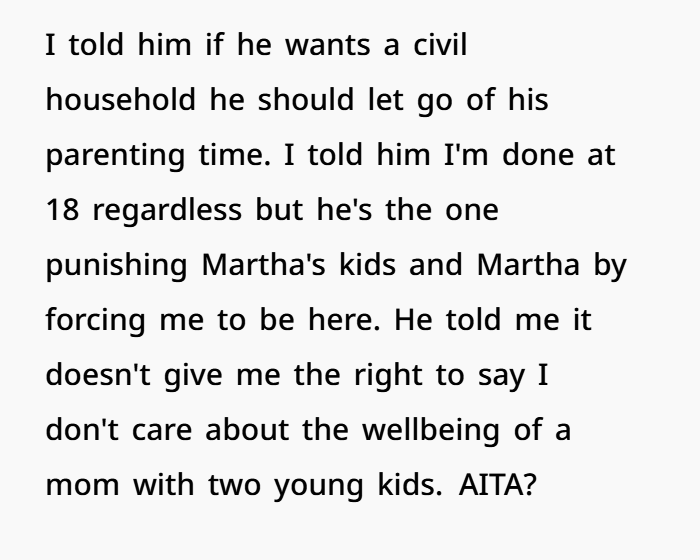
A 16-year-old girl has been adjusting to a difficult family situation since her parents divorced two years ago. After the separation, her father started a new relationship with a woman named Martha, who also has two children. Because of the child custody arrangement, the teenager spends time living with her father, even though she still finds it hard to feel comfortable in the new household. Her older brothers decided not to stay in contact with their father, but she does not have the same choice because she is still a minor.
Living in a blended family has been challenging for her. She does not feel a close connection with Martha or her children, and she often feels like she is trying to fit into a family that does not feel like her own. While everyone is adjusting in different ways, the emotional changes have been difficult for all involved.
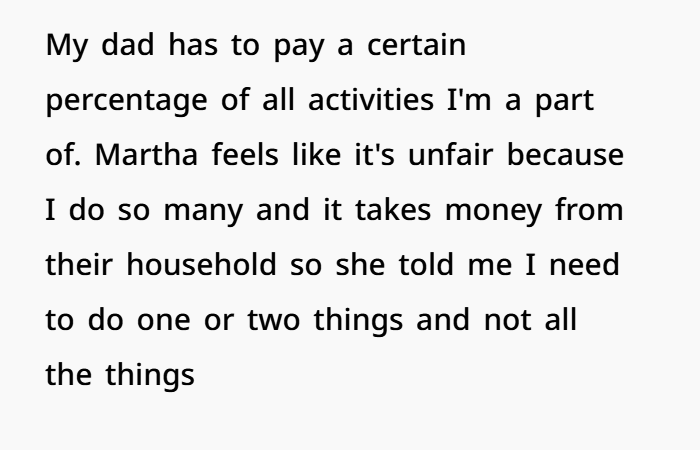
The biggest disagreement started over money. According to the family’s child support agreement, her father is responsible for paying for her extracurricular activities. Martha became concerned that these expenses were affecting the household budget and asked the teenager if she would consider reducing some of her activities. The request upset the teenager because she felt it was unfair to ask her to give up something that was already included in the family agreement.
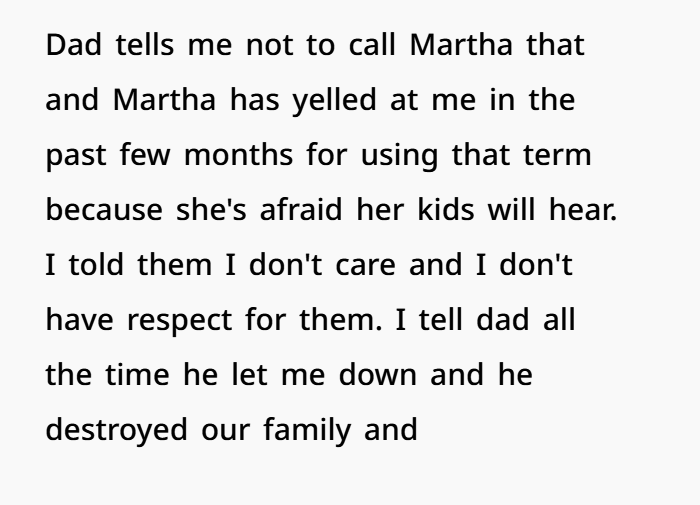
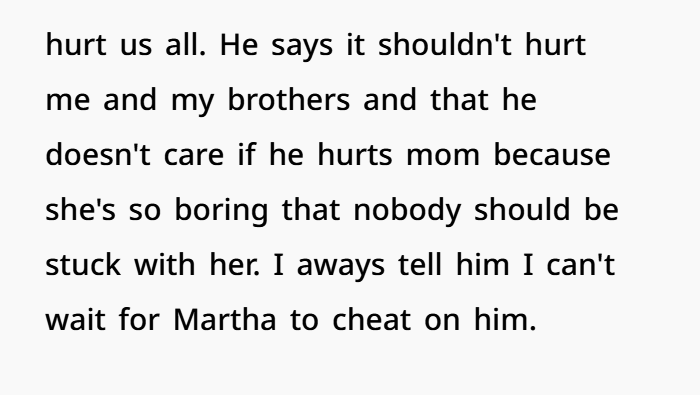
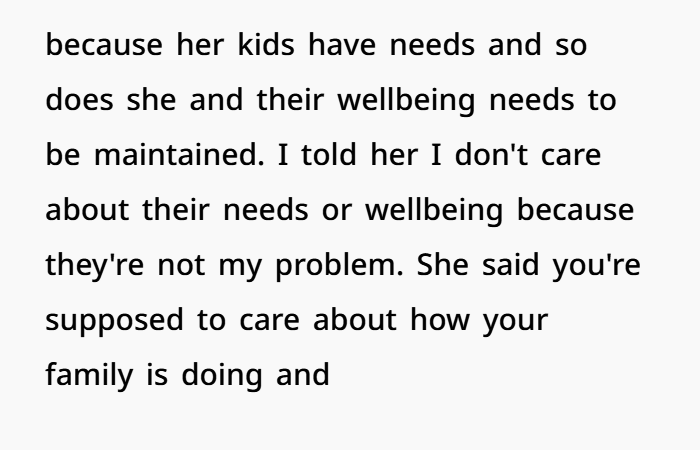
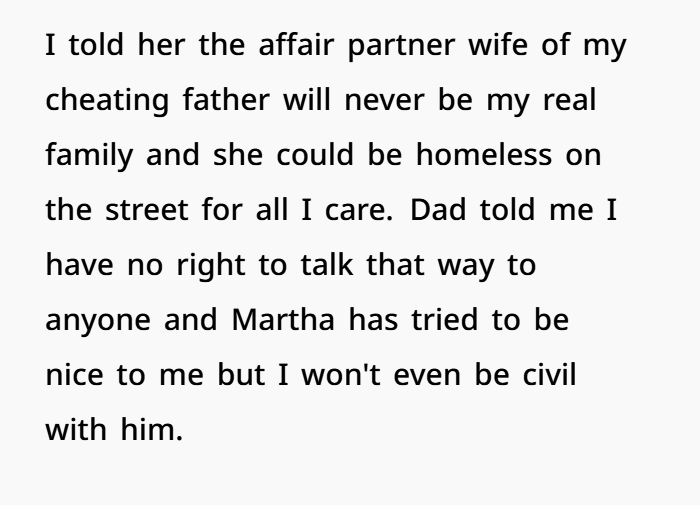
The conversation became emotional, and the teenager said she did not feel responsible for Martha or her children. Her father believed her words were hurtful, while she felt that her own feelings had been ignored throughout the changes in the family. Situations like this can be difficult for everyone involved. Open communication, co-parenting, family counseling, and mental health support can often help blended families better understand one another and work toward healthier relationships over time.
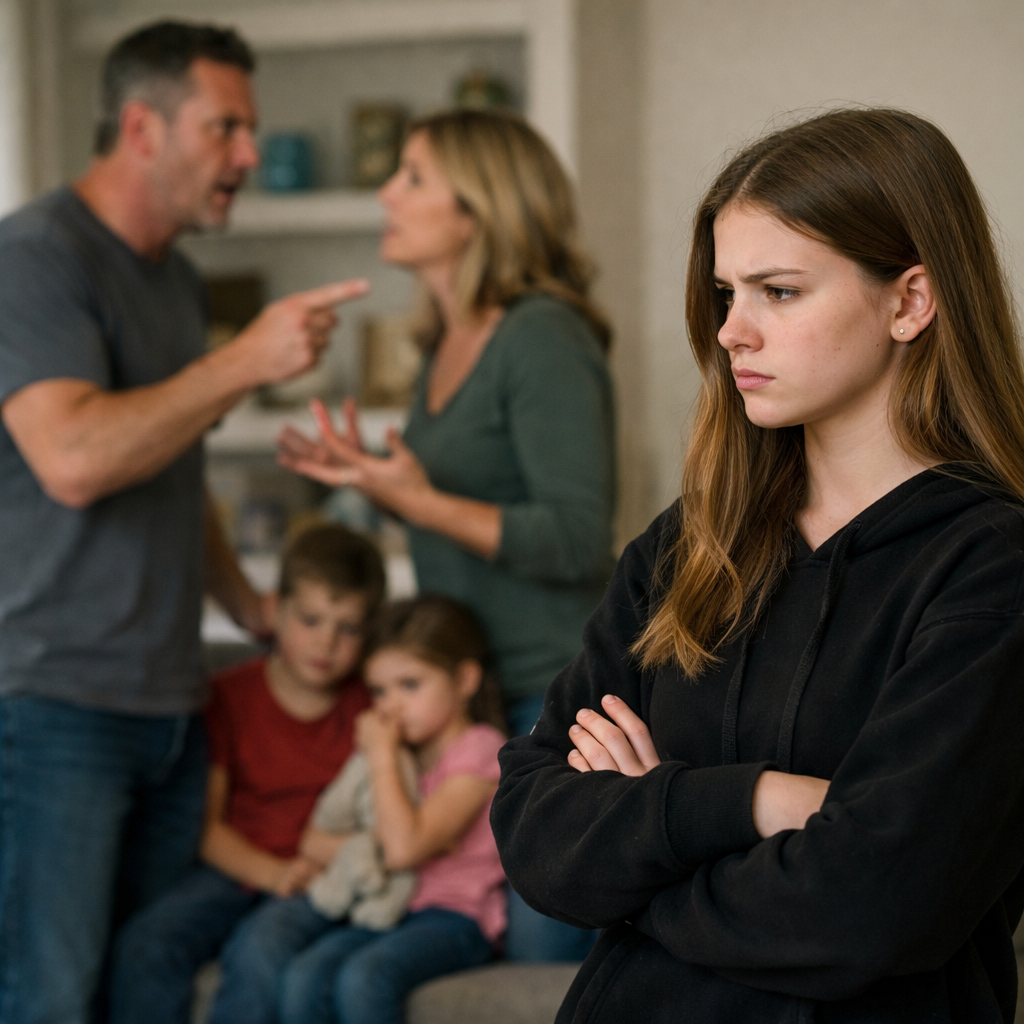
A Difficult Blended Family Situation
This story is about much more than a teenager being upset.
It is about divorce, family relationships, trust, money, and learning how to live in a blended family after painful changes.
There are strong emotions on every side, and there is no easy solution.
1. Divorce Can Affect Children Deeply
When parents separate after an affair, the whole family is affected.
Children often feel hurt, confused, or angry.
They may struggle to trust the parent who had the affair, especially if they believe that parent caused the family to break apart.
Family counseling experts often explain that teenagers need time to adjust after major family changes.
Healing does not happen overnight.
2. Respect Matters
The father’s comments about the child’s mother made the situation even harder.
Speaking negatively about the other parent can place children in an uncomfortable position.
Many family therapists encourage separated parents to avoid criticizing each other in front of their children.
Children should never feel pressured to choose sides.
3. Building a Blended Family Takes Time
Blended families can become happy and supportive, but trust cannot be forced.
A teenager may need months or even years to accept a new family situation.
That is normal.
Trying to force a close relationship too quickly often creates more tension instead of bringing people together.
Healthy relationships grow with patience, respect, and understanding.
4. Money Can Add More Stress
The disagreement became even bigger when money was mentioned.
If a child support agreement or family law order includes paying for school activities or extracurricular programs, those responsibilities usually remain in place after divorce.
Financial planning after divorce can be difficult, but children should not feel responsible for solving adult financial problems.
If parents disagree about money, they should work through those issues together or seek legal advice if needed.
5. The Teen’s Feelings Make Sense
From the teenager’s point of view, it may feel like everything changed because of decisions made by adults.
It may seem unfair to be asked to make more sacrifices after already going through so much.
Those feelings are understandable.
Teen mental health professionals often explain that anger is a common response to major family changes.
6. Some Words Can Still Cause Harm
Even when emotions are very strong, words matter.
It is okay to say:
- “I am not comfortable with this.”
- “I need more time.”
- “I am still hurt.”
Those are healthy ways to express feelings.
However, saying you do not care if someone suffers can create more pain and make future conversations harder.
Strong emotions are real, but respectful communication usually leads to better outcomes.
7. Adults Also Have Responsibilities
The adults in this situation also have an important role.
Parents should listen to their teenager’s feelings instead of expecting immediate acceptance.
They should also respect personal boundaries and avoid placing adult problems on a child.
Building trust takes consistent actions over time.
It cannot be demanded.
Family counseling or relationship counseling may also help families improve communication after divorce.
8. Focus on Moving Forward
Everyone in this family has experienced difficult changes.
The teenager is still learning how to manage painful emotions.
The adults are trying to build a new family structure.
None of this is easy.
The best path forward is honest communication, healthy boundaries, patience, and respect for everyone’s feelings.
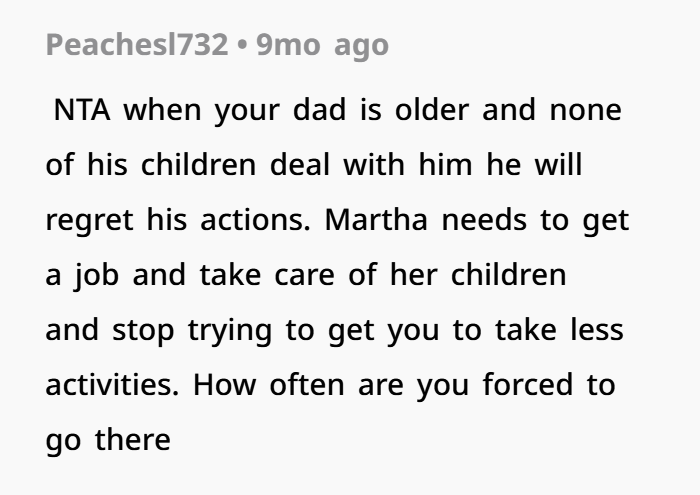
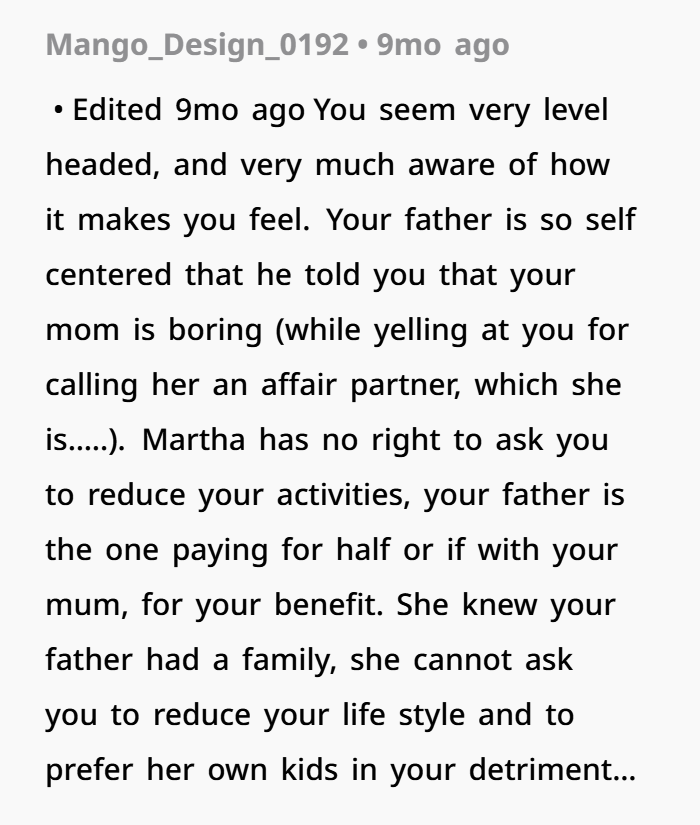
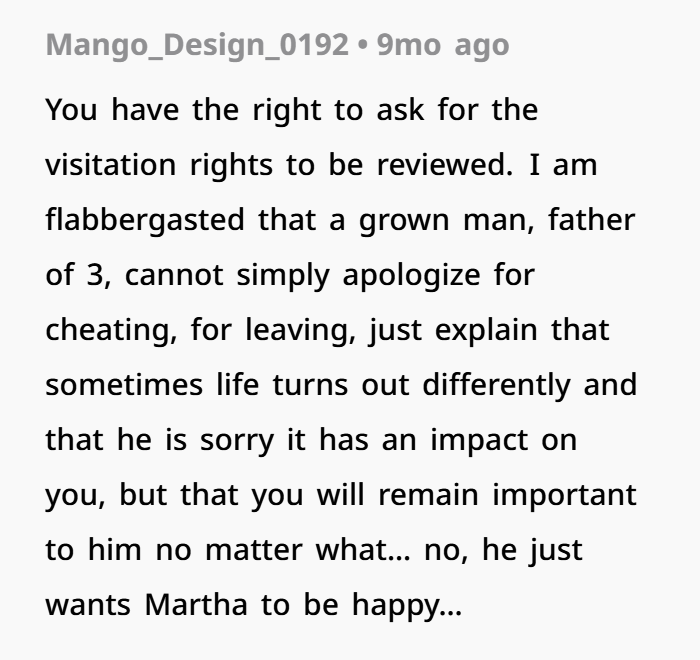
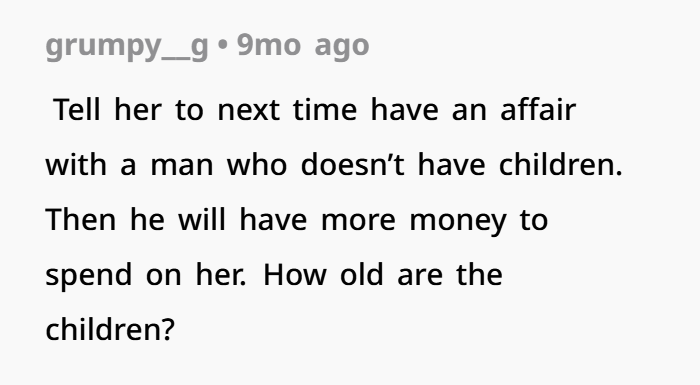
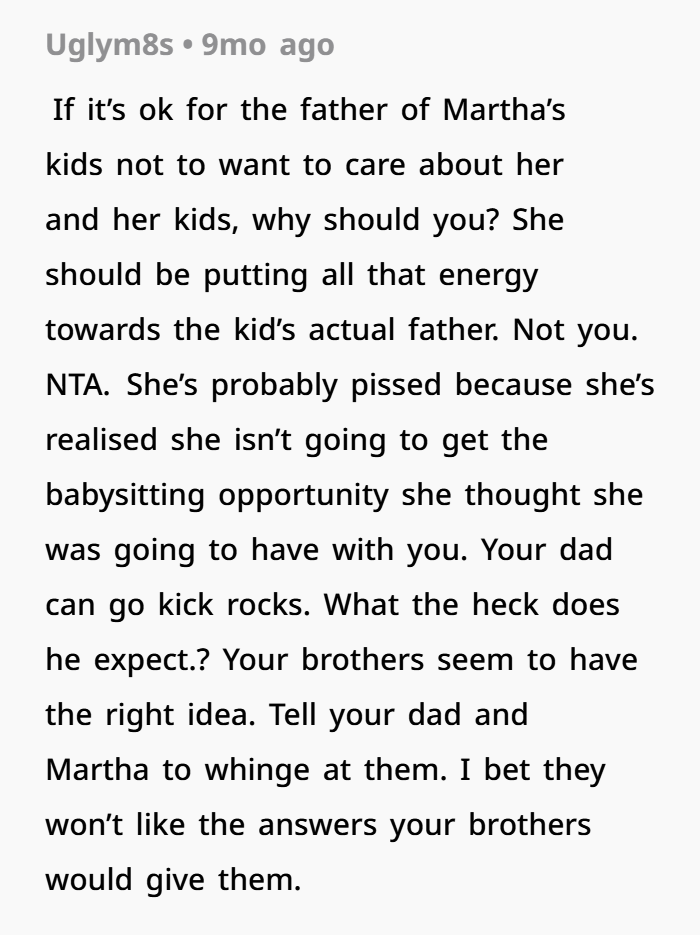
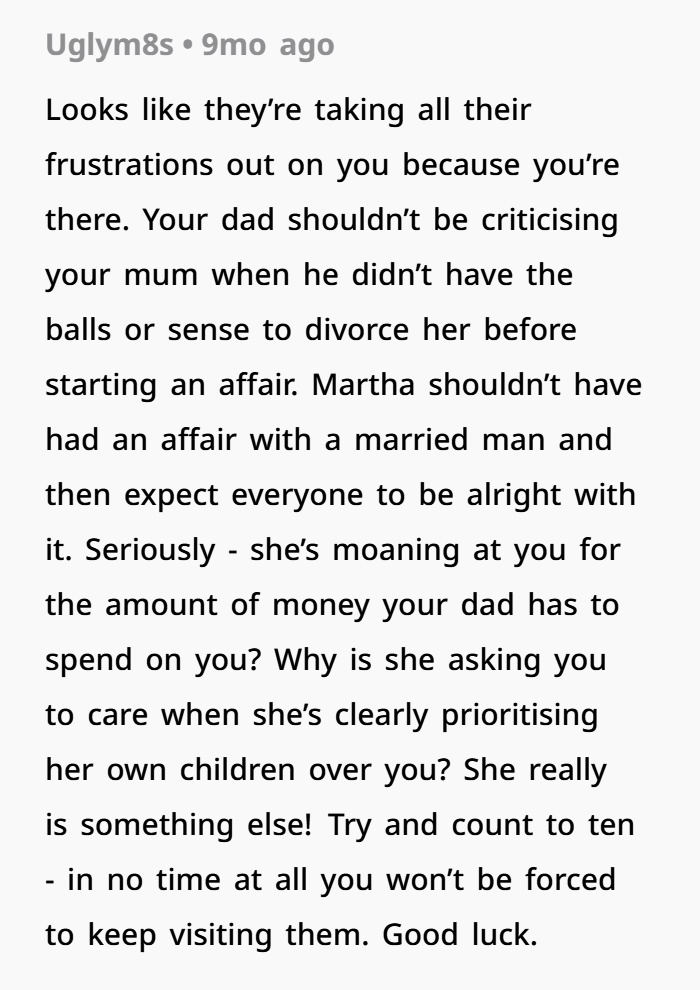
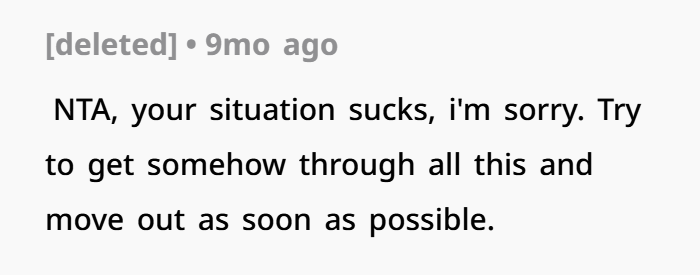
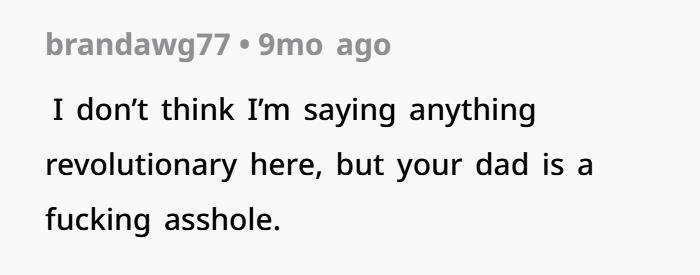
Top Comments From Readers


Final Thoughts
This situation is not simply about rude words.
It is about a teenager trying to understand major changes after divorce while adults are also adjusting to a new family life.
The teenager’s feelings are understandable.
At the same time, expressing those feelings with respect can help protect future family relationships.
If the conflict continues, support from a licensed family counselor, teen mental health professional, or experienced family law attorney may help the family find healthier ways to communicate and solve problems.
With time, patience, and open conversations, it is possible to build healthier relationships, even after very difficult family changes.