Family History Research Reveals a Possible Secret Son, Leaving One Person Torn Over Whether to Contact Him
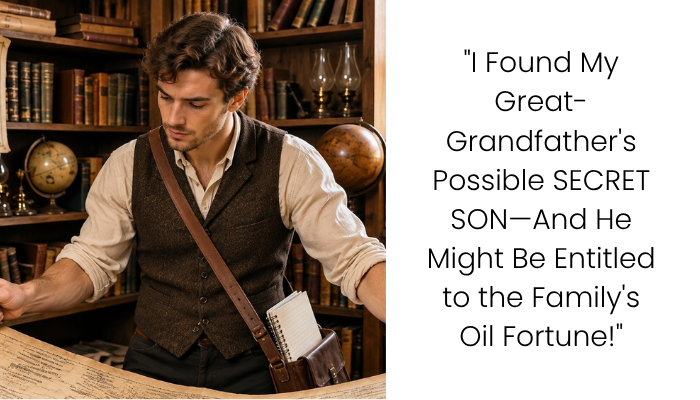
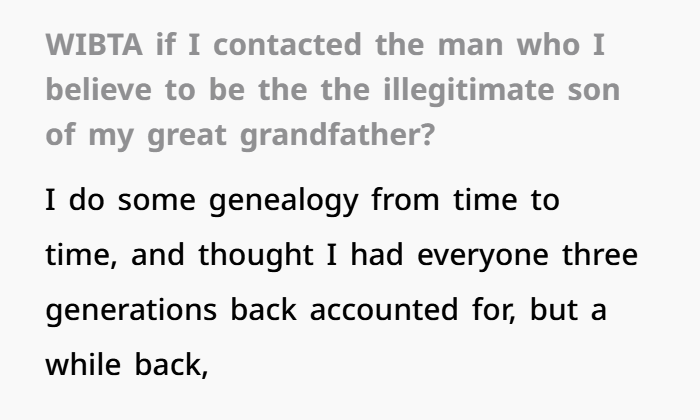
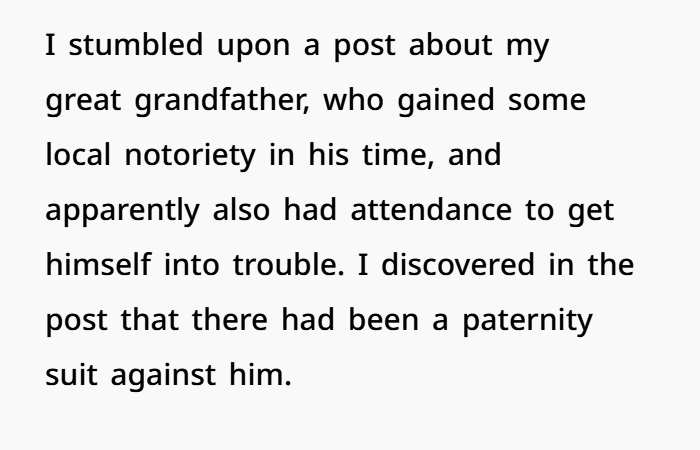
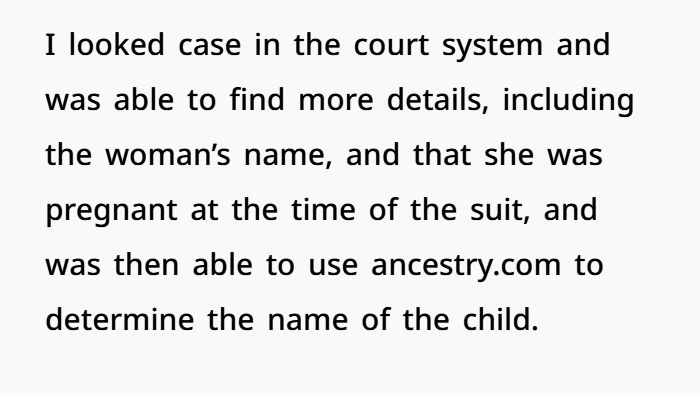
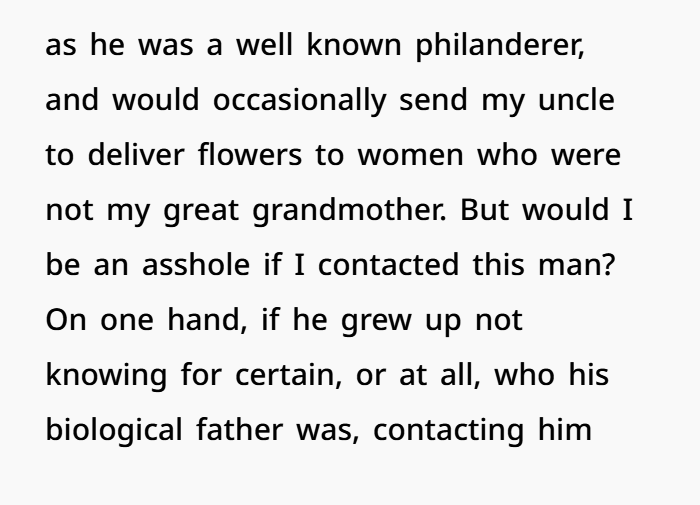
A Reddit user has made an unexpected discovery while researching their family tree, and now they are wondering whether to share it with a stranger. The person was looking through old family history records when they found an article about their great-grandfather. He had been an important man in his local community, but family stories also described him as someone who had relationships outside his marriage. The article mentioned a paternity lawsuit from many years ago. Interested in learning more, the person searched through court documents and genealogy websites, including Ancestry.com. They found the name of the woman connected to the case and discovered that she had been expecting a child around that time. This led them to a possible new branch of their family tree.
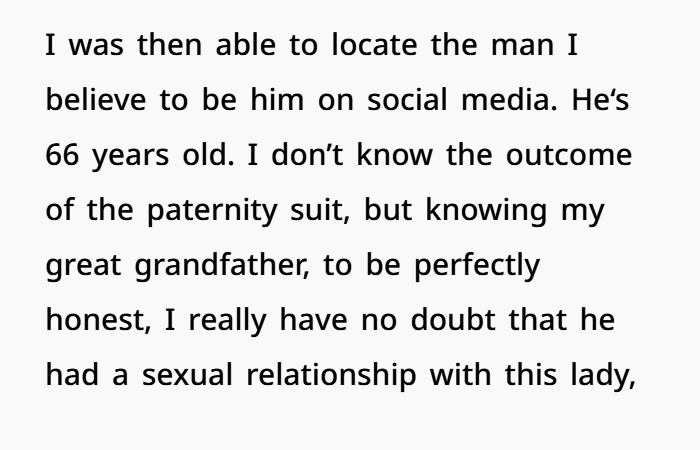
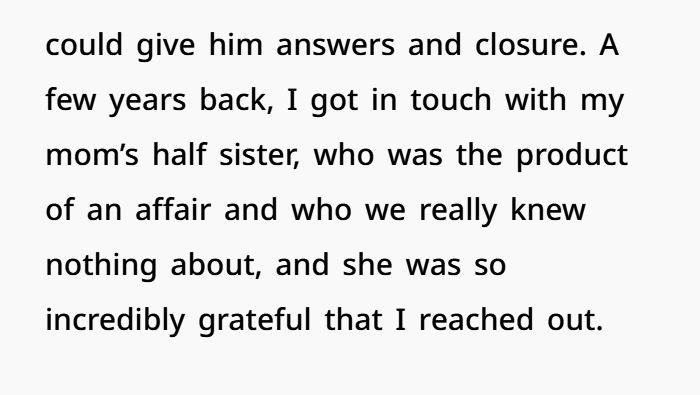
After more searching, the person found a 66-year-old man on social media who appeared to match the old records. They began to wonder if he might be their great-grandfather’s son and therefore their great-uncle. They could not find the final result of the original court case, so nothing was certain. However, the great-grandfather’s past made the possibility seem believable. According to family stories, he often spent time with women outside his marriage and sometimes asked his son to deliver flowers to them. The Reddit user also remembered finding another unknown relative in the past. Their mother’s half-sister had been very happy when they reached out and helped her reconnect with family members. That positive experience made them hopeful that this new discovery could also lead to something good.
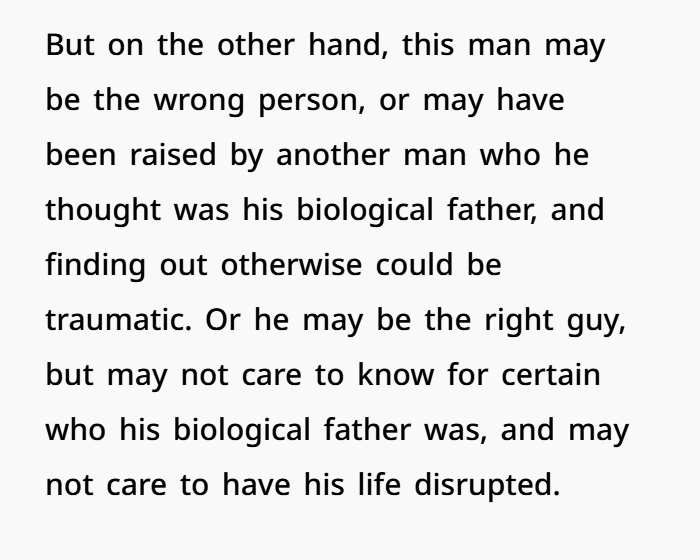
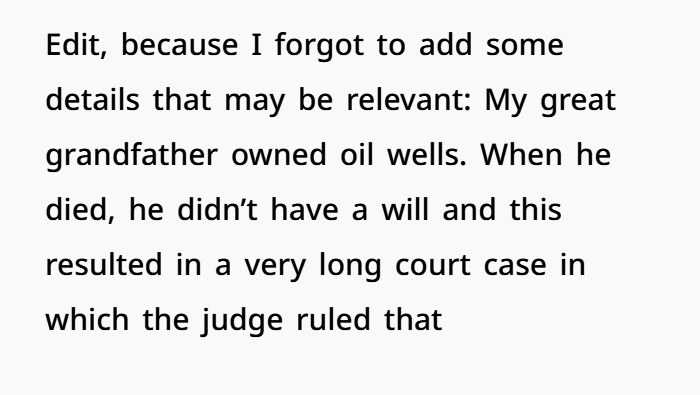
The biggest concern was how the man might react to hearing this information. He might already know about his family background, or he might not want to discuss it. There was also a chance that the records were wrong and the person had found someone who was not related at all. The discovery could also bring up questions about family property. The great-grandfather had owned oil wells and passed away without a will. His estate reportedly became part of a long legal disagreement, and some grandchildren received assets while others did not. If the man is truly his son, there could be questions about estate inheritance and legal rights. Still, the Reddit user did not know whether any inheritance claim would be possible under the law.
Now the person is caught between wanting to share the discovery and worrying about the problems it might cause. They feel that the man should have the chance to learn about a possible biological connection, but they also understand that family history can be personal. A simple message could help him find answers, or it could bring up memories and questions he would rather avoid. If he wanted to explore the connection, family records and voluntary DNA testing might help confirm the relationship. Any legal questions about inheritance would need separate professional advice. The Reddit user is left wondering what the kindest choice would be. Should they contact the man and let him decide whether to learn more, or should they leave the family mystery alone?

Family Research Reveals a Possible Secret Son Who May Have Been Left Out of an Oil Well Inheritance
A family history search led to a surprising discovery.
Someone looking into their great-grandfather’s past found an old newspaper article about a paternity lawsuit.
The records suggested that their great-grandfather might have had a son the family did not know about.
After more searching, they found information about the child and a social media profile that might belong to him.
The man would now be around 66 years old.
But there was another part of the story.
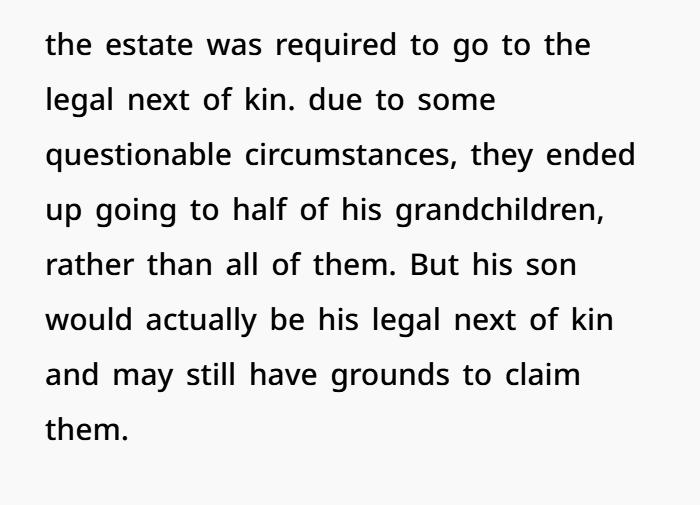
The great-grandfather had owned oil wells and died without a will. His estate had gone through a long legal dispute, and only some of his grandchildren received property.
If this man really was his son, could he have been left out of the inheritance?
And should the researcher contact him when he might not know anything about the possible family connection?
An Old Newspaper Article Started the Search
The researcher had been looking through old family records.
They wanted to learn more about their relatives and the family’s past.
During the search, they found an article connected to their great-grandfather.
The article mentioned a paternity lawsuit.
That caught their attention.
They looked for more information and found court records involving a pregnant woman.
The records suggested that she had made a claim involving the great-grandfather.
The researcher then looked into the woman’s family history.
They found information showing that she had a son.
This raised an interesting possibility.
Could that child have been the great-grandfather’s biological son?
The researcher did not have a definite answer.
But the discovery was enough to make them keep looking.
They Found a Man Who Might Be the Child
The researcher continued checking genealogy records.
They compared names and other available details.
Eventually, they found a social media profile that seemed to match the child mentioned in the records.
The man would now be about 66 years old.
For a moment, it seemed possible that they had found a previously unknown relative.
But they were not completely sure.
Two people can have the same name.
Old documents can contain mistakes.
Social media profiles may also leave out important information.
The researcher knew there was a chance they had found the wrong person.
That made contacting him a difficult decision.
The Paternity Lawsuit Did Not Prove Everything
One important detail was still missing.
The researcher had found records of a paternity lawsuit, but they did not know the final result.
A lawsuit means someone made a legal claim.
It does not automatically prove that the person named was the child’s biological father.
The case may have been dismissed.
It may have ended in a settlement.
Or a court may have made a decision that the researcher had not yet found.
Without those details, the family connection remained uncertain.
That matters because the researcher was considering sharing the information with someone who might have no idea the lawsuit existed.
Before making any strong claims, they would need more evidence.
Why Family History Research Can Lead to Surprises
Many people begin genealogy research because they want to know more about their ancestors.
They may be interested in old family photographs, birth records, marriage records, or the places their relatives once lived.
Online genealogy services have made this kind of research easier.
Websites such as Ancestry and FamilySearch help people explore historical records and build family trees.
Some people also use DNA ancestry testing to look for possible biological relatives.
These tools can reveal family connections that were never discussed.
Sometimes the results are exciting.
People may discover distant cousins or learn about relatives who moved to another country.
Other times, the information is more personal.
A record may suggest that a family relationship was different from what everyone believed.
That is why genealogy research requires both patience and care.
The Man Might Not Know About His Possible Father
The researcher wondered whether the 66-year-old man knew anything about the old lawsuit.
Maybe he grew up without knowing who his biological father was.
If that happened, he might welcome new information about his family.
But there were other possibilities.
He may have grown up with a father he loved and never questioned his family history.
He might already know about the lawsuit.
He may even have looked into the matter himself years ago.
The researcher had no way to know.
A message from a stranger could be a welcome surprise.
It could also bring up questions the man did not want to revisit.
That made the situation more complicated than simply finding a new name on a family tree.
The Great-Grandfather Had Owned Oil Wells
The discovery became even more interesting because of the family’s property history.
According to the researcher, their great-grandfather had owned oil wells.
Oil wells and mineral rights can sometimes remain valuable long after the original owner dies.
But ownership can become complicated when property passes through several generations.
The great-grandfather died without leaving a will.
His estate then became involved in a long inheritance dispute.
Eventually, only some of his grandchildren received assets.
The researcher began wondering whether a previously unknown son could have been entitled to something.
If he was the great-grandfather’s child, would he have had a stronger claim than the grandchildren?
It was a reasonable question to investigate.
But there was not enough information to answer it.
Could He Have a Right to the Inheritance?
When someone dies without a valid will, their property is usually distributed under the inheritance laws that apply to the estate.
This process is often called intestate succession.
The rules determine which family members may inherit.
Children are often among the closest heirs.
But inheritance law is not the same everywhere.
The rules can depend on the state, the date of death, the person’s legal family relationships, and earlier court decisions.
A biological connection does not automatically mean someone can claim property decades later.
The old estate may already have been settled.
There may also be legal deadlines or court judgments that affect any possible claim.
So even if the man is confirmed as the great-grandfather’s son, it would not guarantee that he could receive money or property today.
A qualified probate attorney would need to review the old estate records before anyone could know whether a claim might exist.
Why Oil and Mineral Rights Can Be Complicated
Oil wells are not always handled like ordinary family property.
In some places, mineral rights can be owned separately from the land above them.
Those rights may also be divided among several people.
Over time, family members may inherit, sell, or transfer their interests.
That can make it difficult to know who owns what.
A property that once belonged to one person may later have many owners.
Some owners may receive payments connected to oil production, depending on the property and agreements.
Others may hold interests that produce little or no income.
In this story, the researcher did not know enough about the current ownership of the great-grandfather’s oil interests.
The old estate records would be an important starting point.
An attorney familiar with probate and mineral rights could help explain what those documents mean.
The Original Inheritance Case Was Already Complicated
The great-grandfather’s estate had been involved in a long legal dispute.
Only some grandchildren eventually received assets.
That detail made the researcher wonder whether someone had been left out.
But the story does not explain why the property was divided that way.
There may have been legal reasons.
Some relatives may have reached agreements.
Others may have had claims that were denied or settled.
Without the court records, it would be unfair to assume that anyone received property improperly.
The possible son may have had no legal connection to the estate.
Or there may be important facts that the researcher has not found yet.
This is why the inheritance question needs to remain separate from the family history question.
Finding a possible relative is one thing.
Proving a legal right to property is another.
Could the Discovery Cause Another Family Argument?
Money can make family history discoveries more difficult.
If the man really is a biological relative, some family members may be happy to meet him.
Others may worry about what the discovery means for the estate.
The original inheritance dispute had already taken a long time to resolve.
Questions about a possible additional heir could bring back old disagreements.
That does not mean the researcher should hide the discovery.
But it does mean they should avoid making promises about money.
The first conversation with the man should focus on the possible family connection.
There is no reason to suggest that he is entitled to valuable oil wells before the evidence and legal records have been reviewed.
That could create expectations that may never be supported.
The Researcher Had Contacted an Unknown Relative Before
This was not the researcher’s first experience finding an unexpected family connection.
They had previously contacted their mother’s half-sister.
That experience went well.
The woman welcomed the contact and appreciated learning more about her family.
It showed the researcher that reaching out to a previously unknown relative could be a positive experience.
But every person is different.
One relative may be excited to learn about family history.
Another may prefer not to discuss the past.
The 66-year-old man might welcome the information.
He might also decide that he does not want to explore the connection.
Both responses deserve respect.
Why Finding the Right Person Matters
Before contacting the man, the researcher should make sure the social media profile is likely to belong to the right person.
Old records are not always accurate.
Names may be spelled differently.
Birth dates may be missing.
Several people may share similar personal details.
A social media profile may not provide enough information to confirm someone’s identity.
Contacting the wrong person with a claim about their biological father could cause unnecessary confusion.
The researcher could continue comparing public records, dates, and locations.
They could also look for the final result of the original paternity case.
The more reliable information they have, the less likely they are to make a mistake.
Even then, they should describe the connection as possible unless it has been confirmed.
Would DNA Testing Help Confirm the Relationship?
DNA testing may be useful in some family history cases.
Consumer DNA testing services can help people identify possible biological relatives when matching information is available.
The results may offer clues about shared ancestry.
But DNA testing is not always a simple answer.
The type of test, the relatives involved, and the available matches all matter.
In this situation, DNA testing might help if the man and suitable relatives willingly agreed to participate.
However, no one should feel pressured to take a genetic test.
DNA information is personal.
The man should be able to decide whether he wants to explore that part of his family history.
The researcher should also avoid treating an unverified online family tree as proof of biological parentage.
How Could the Researcher Contact Him?
If the researcher decides to reach out, the first message should be short and respectful.
It does not need to mention a secret father or a possible inheritance.
A simple message could explain that the researcher has been looking into family history and found old records suggesting a possible connection.
The man could then decide whether he wants to hear more.
For example:
Hello, I hope you don’t mind me reaching out. I’ve been researching my family history and found some old records that suggest our families might be connected. I’m still checking the details, but I wondered if you would be interested in talking about it. I completely understand if you would rather not.
This approach does not make any strong claims.
It also gives the man control over what happens next.
If he replies, the researcher can explain the records slowly and carefully.
If he does not respond, the respectful choice would be to leave the matter alone.
What If He Does Not Want to Know?
Not everyone wants to explore unexpected family information.
The man may be happy with the family relationships he already has.
He may know about the lawsuit and prefer not to discuss it.
Or he may simply have no interest in genealogy.
That does not mean the researcher’s discovery is unimportant.
It means the information is personal.
The researcher can offer him a chance to learn more.
But they cannot decide for him.
Repeated messages or contacting his family members without permission could make the situation uncomfortable.
One respectful attempt is enough unless he chooses to continue the conversation.
Should the Researcher Speak to a Lawyer?
Because the discovery involves possible inheritance rights, legal advice may be useful.
A probate attorney in the relevant location could review the historical estate documents.
If the property involves oil wells or mineral rights, a lawyer experienced in those matters may also be helpful.
Important questions would include when the great-grandfather died, where the estate was handled, and what the court decided.
The attorney would also need to understand whether the possible son was ever legally recognized.
Without those facts, no one can reliably say whether he has an inheritance claim.
The researcher should not tell the man that he is owed property or money.
If he becomes interested in the legal question, he can decide whether to seek his own advice.
Is It Better to Share the Discovery or Stay Silent?
There is no perfect answer.
The researcher may have found information that could help someone understand their family history.
But they also know that the connection has not been confirmed.
And they do not know how the man would feel about receiving the information.
That is why a careful approach makes sense.
The researcher can continue checking the records.
If the evidence supports a possible connection, they can send one polite message.
They can explain that they are not certain and let the man decide whether to continue.
This avoids making a major announcement about his family history.
It also avoids keeping the information hidden when he might genuinely want to know.
Final Thoughts: Should a Possible Family Secret Be Shared?
The researcher found old records suggesting that their great-grandfather may have had another son.
They also found a possible social media match for that child, who would now be around 66 years old.
The discovery became more complicated because the great-grandfather had owned oil wells and died without a will.
His estate had already been involved in a long legal dispute.
But several important questions remain unanswered.
The paternity lawsuit does not prove biological parentage by itself.
The social media match has not been confirmed.
And a possible biological relationship does not automatically create a legal right to inherited property.
The researcher has good reasons to investigate further before making strong claims.
If they decide to contact the man, a simple and respectful message may be the best starting point.
The most important thing is giving him the choice to learn more—or leave the past alone.
What would you do? If you discovered that someone might be a long-lost relative with a possible connection to valuable family property, would you reach out or respect their privacy?
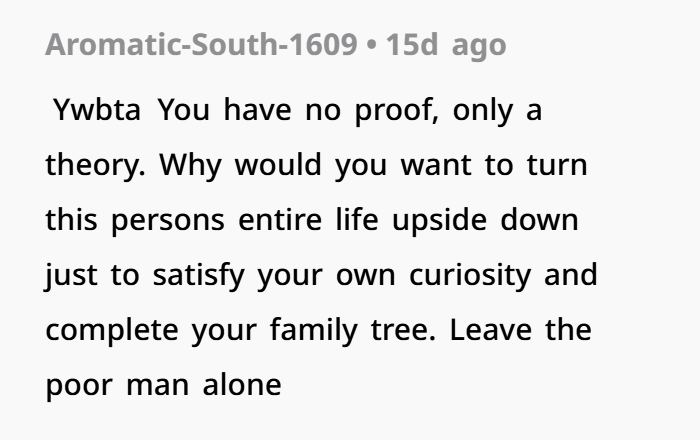
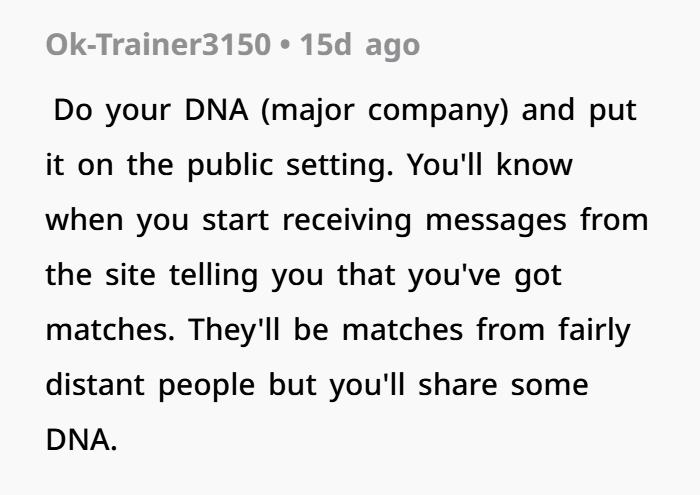
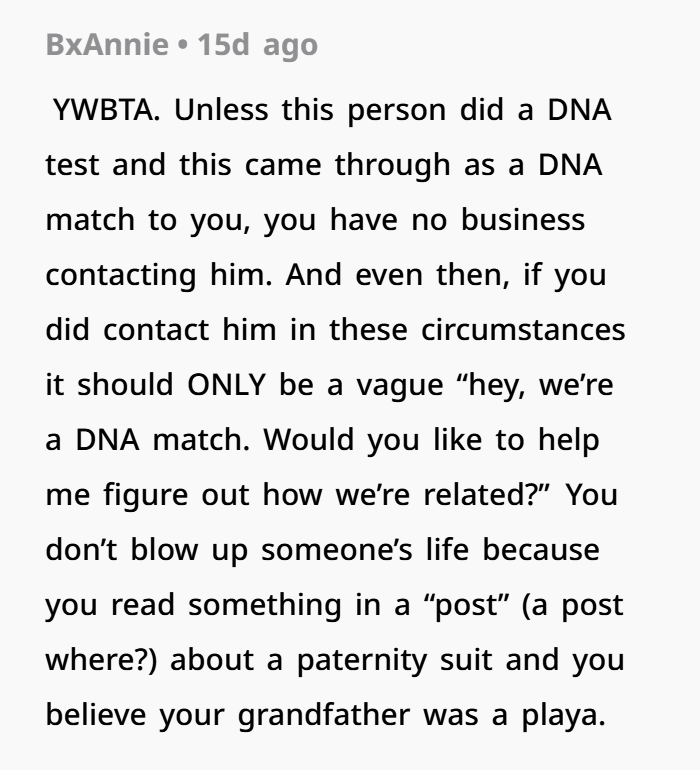
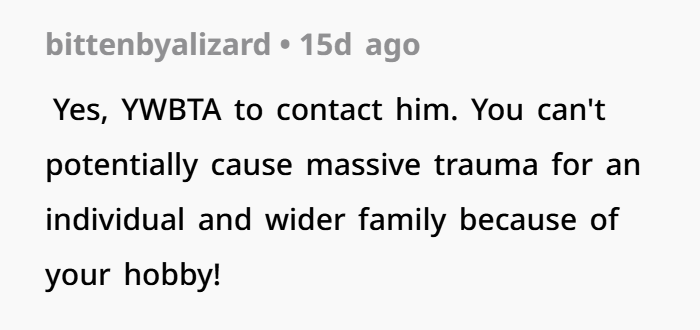
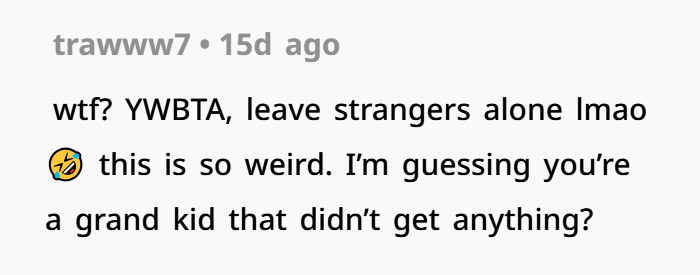
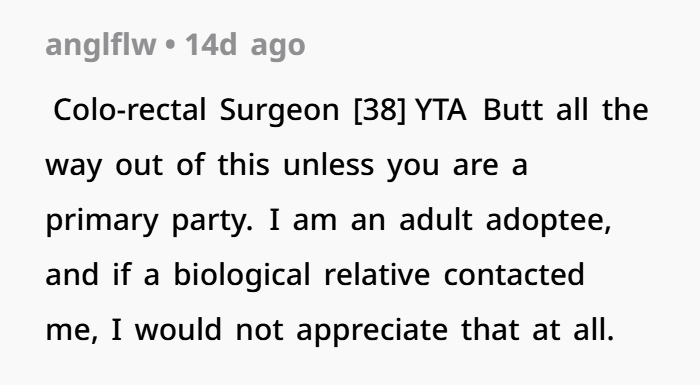
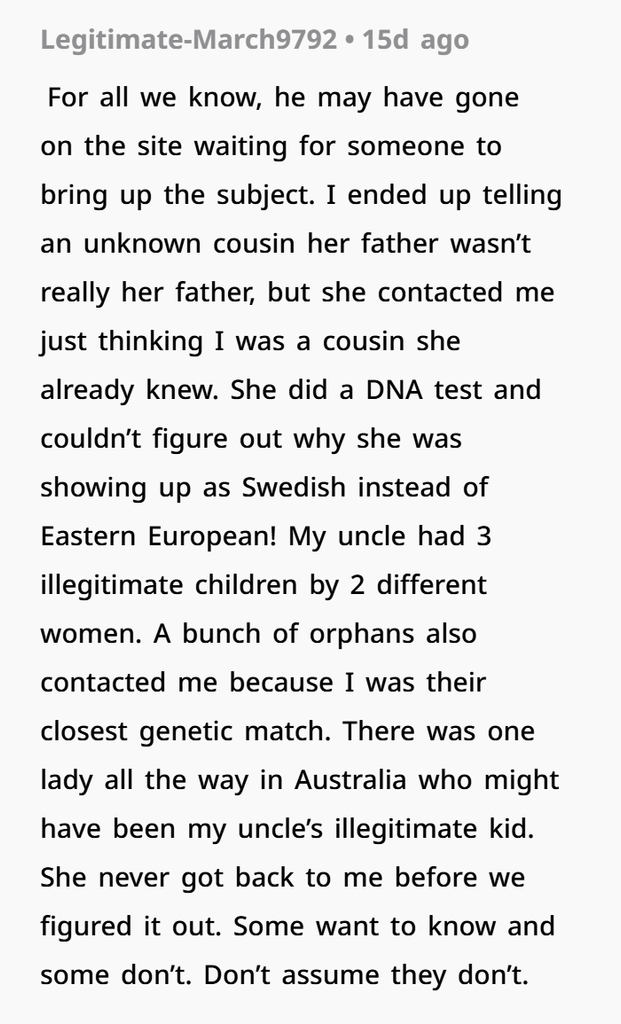
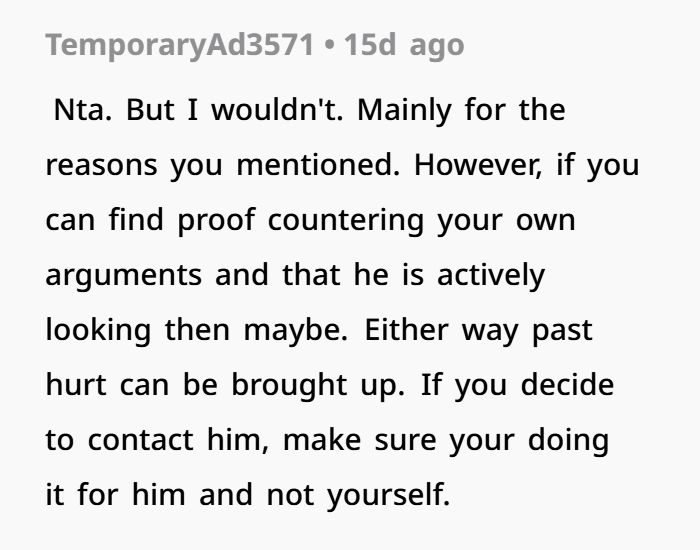
Opinions Flooded In